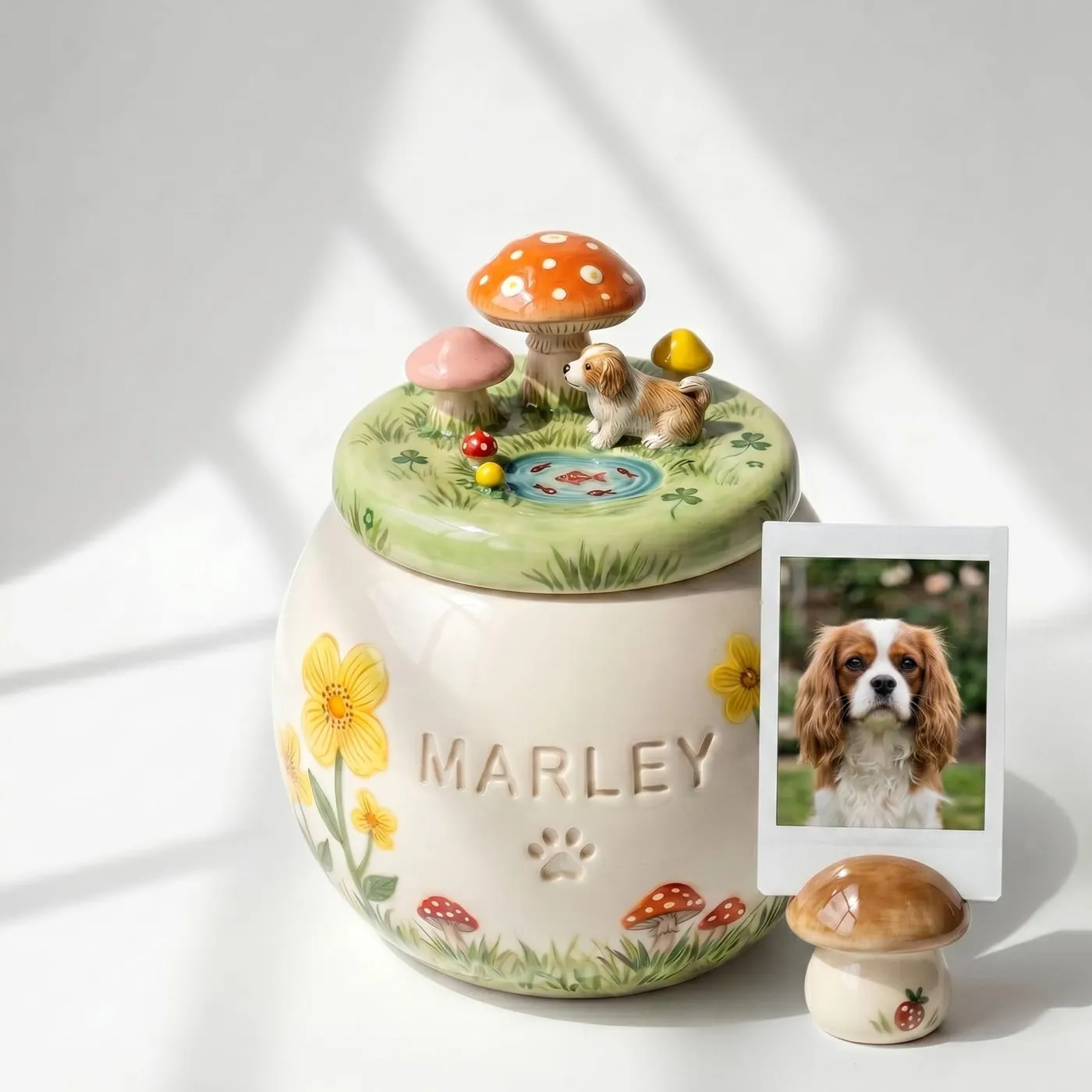
How a Sculpted Pet Urn Lid Is Built
A blanket, a ball, a ring of mushrooms or a pet sinking into a cloud: how the small sculpted scenes on our urn lids are made, and why some take the longest.
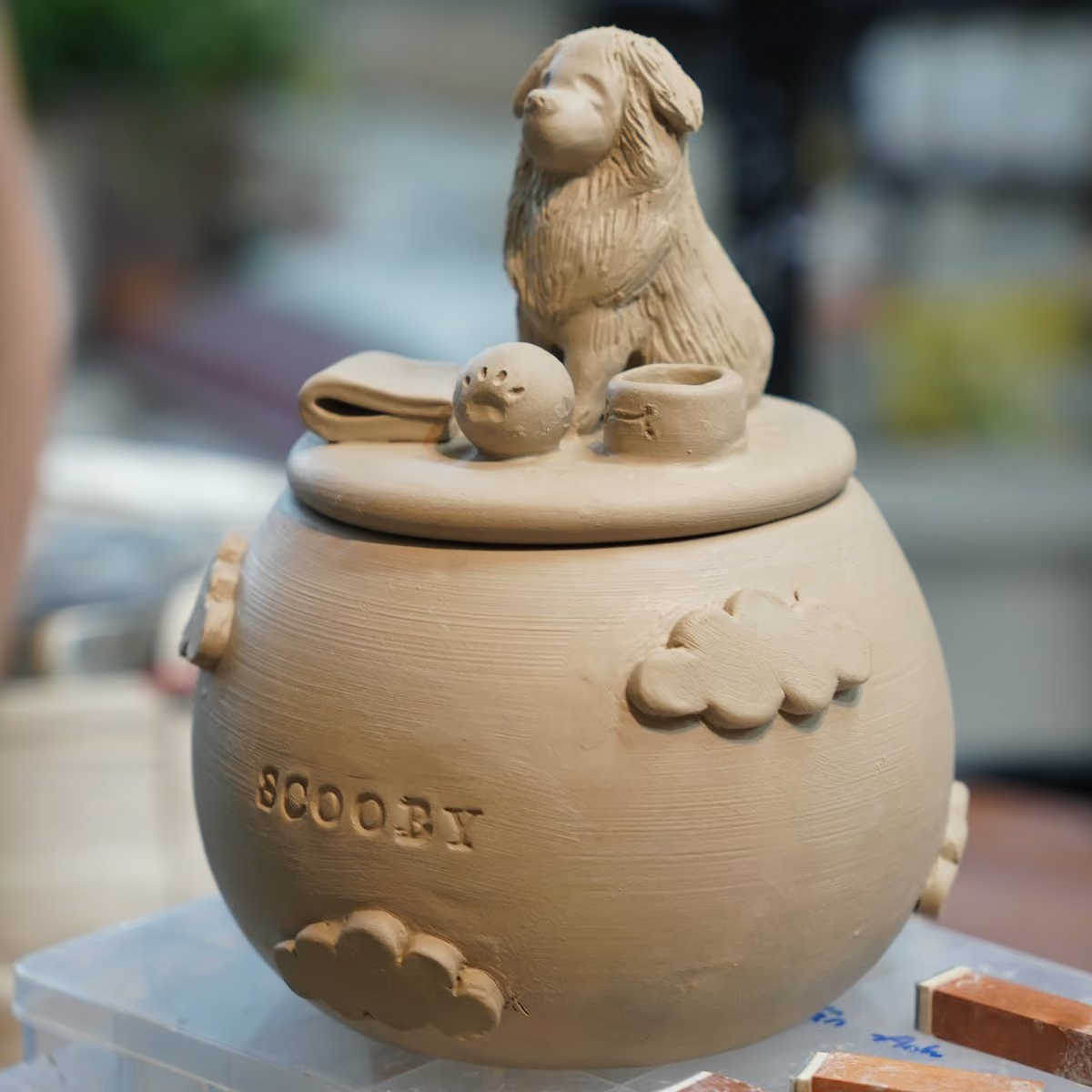
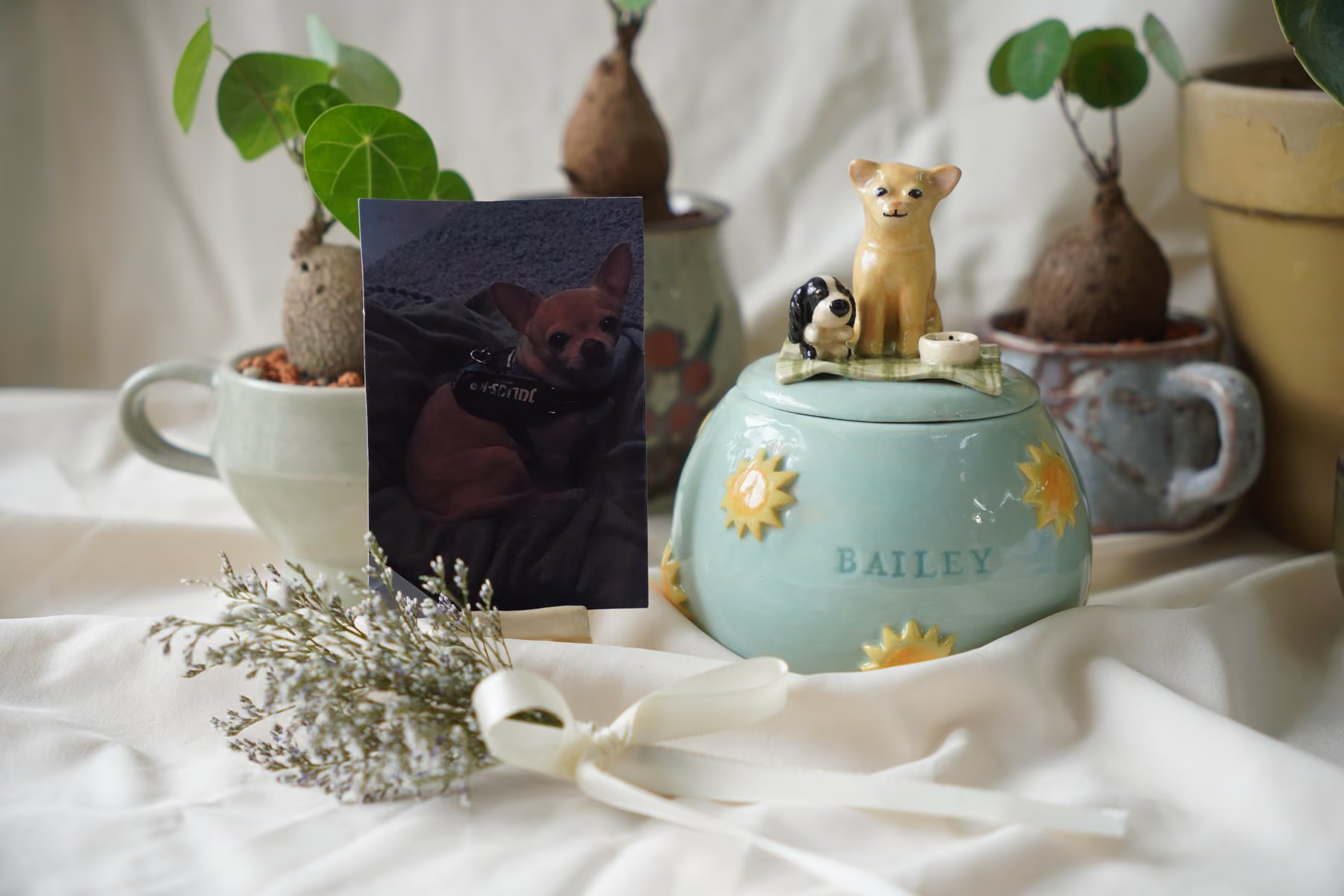
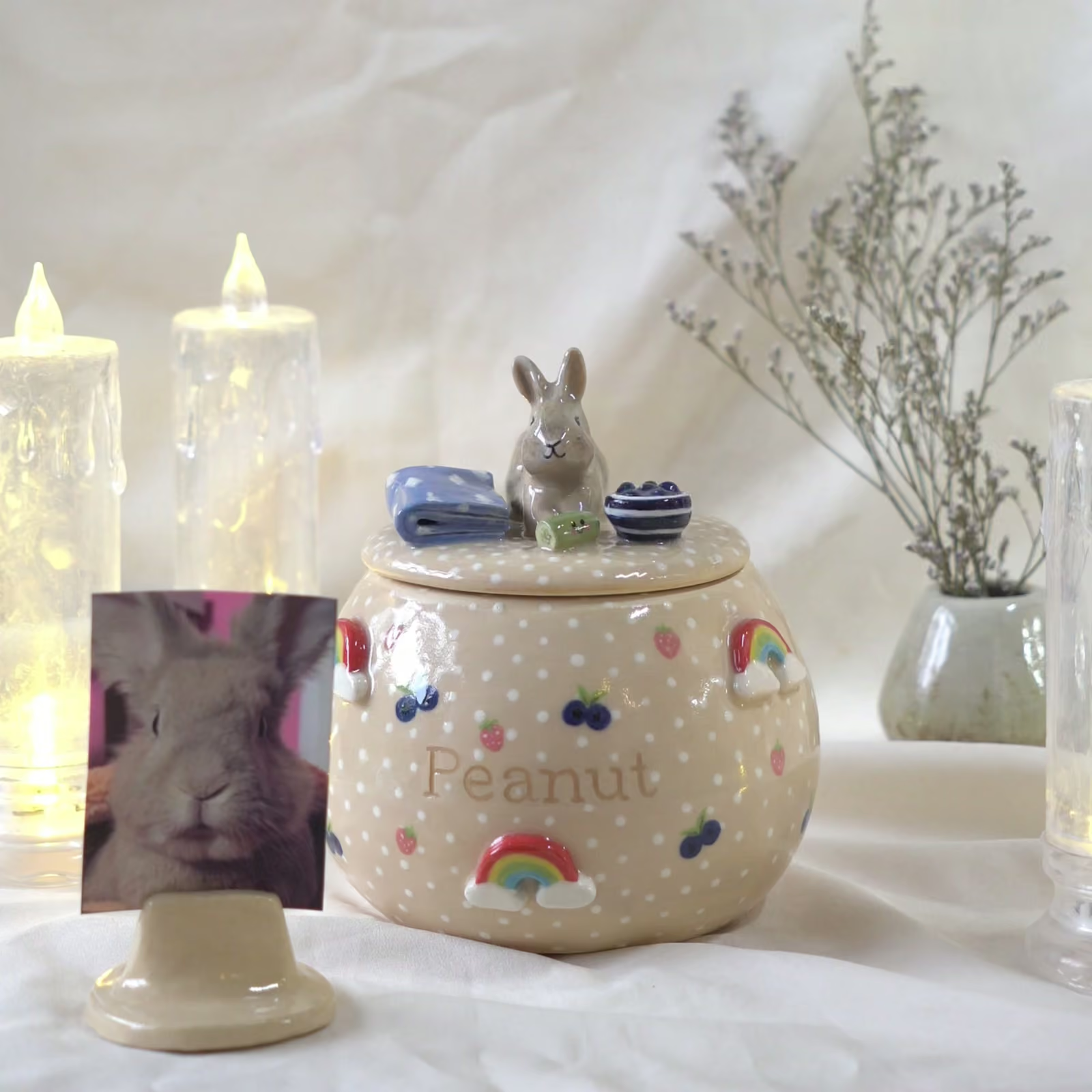
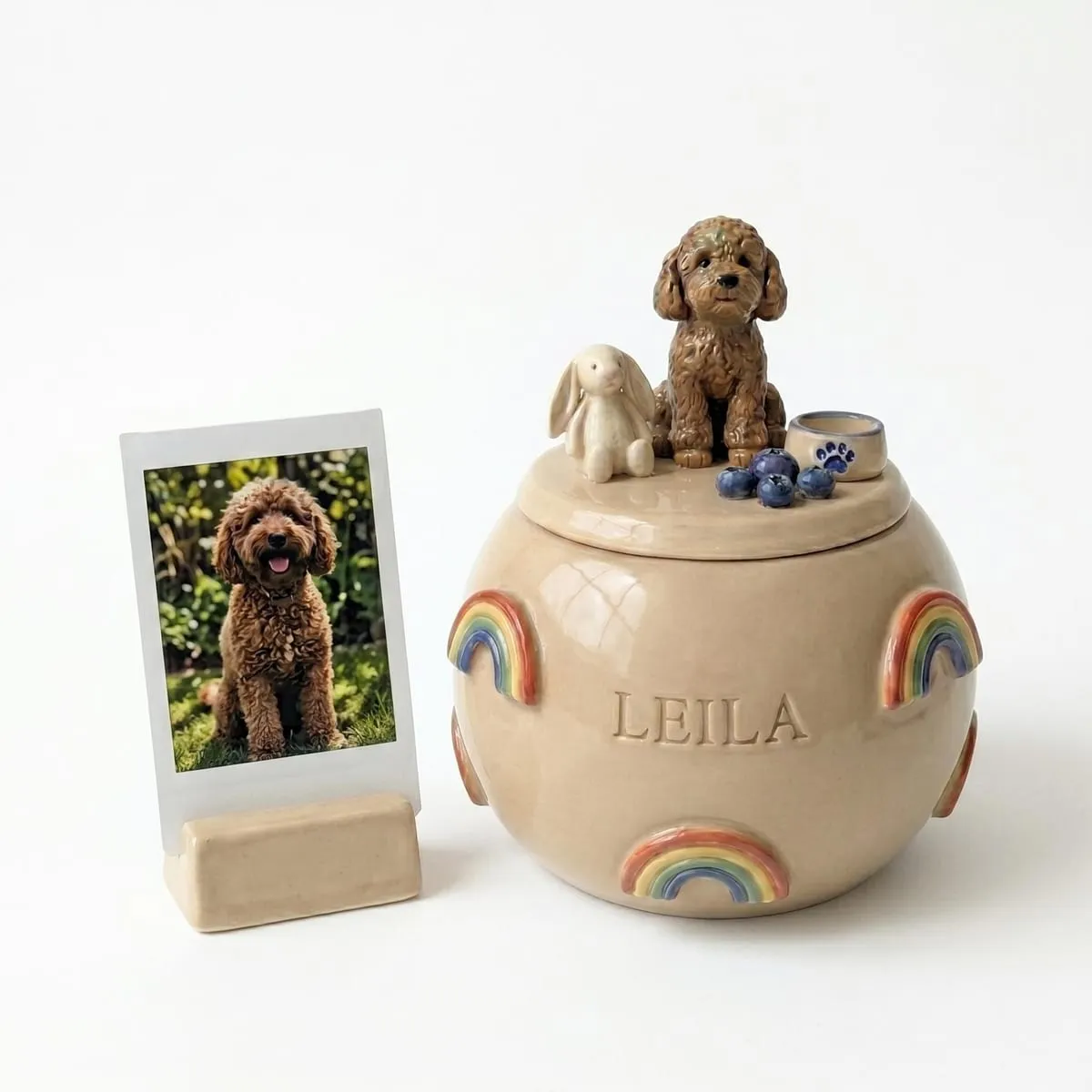
A sculpted pet urn lid is built as one small clay scene: the figurine of your pet and every object beside it are shaped by hand as separate pieces, joined to the lid while the clay is still soft enough to bond, and then fired together at 1200°C. At Pepple Studio the whole scene fits on a lid you can hold in one hand.
The more pieces a lid carries, the longer it takes to dry and the more likely it is to need a second attempt, which is why the busiest lids sit at the slow end of the making time.
How is a sculpted scene on an urn lid made?
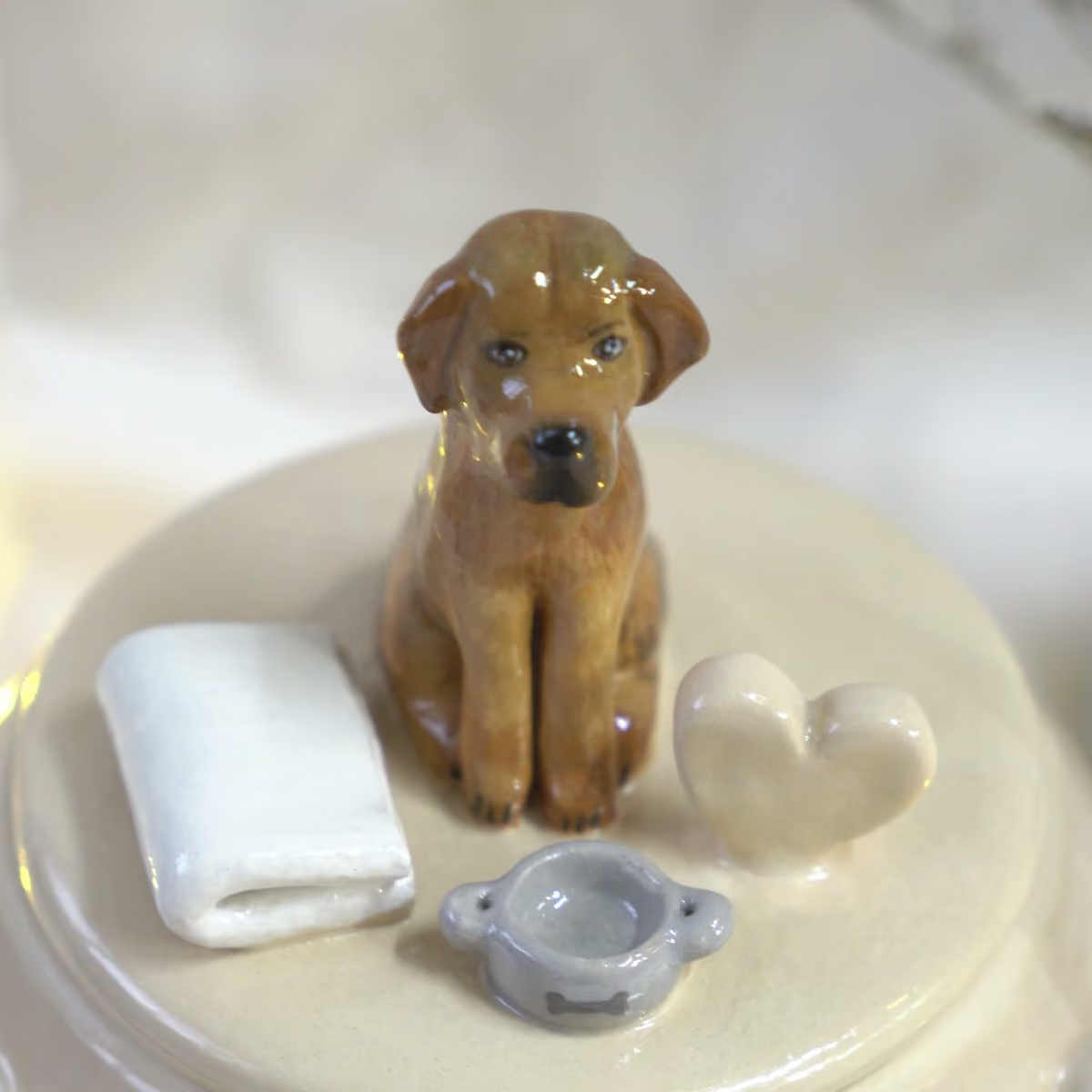
A sculpted scene on a Pepple Studio urn lid is made from several small pieces of clay rather than one carved block. The figurine is modelled by hand from your photos, and on long-coated animals the fur is cut in with a fine tool once the form is firm enough to keep the marks. The objects around it, such as a folded blanket, a ball or a bowl, are each shaped separately and joined to the lid, so the scene goes into the kiln as a single piece. The lid below belongs to the standard urn, which carries a blanket, a ball and a bowl beside the pet as part of the design. Each of those objects is a separate scrap of clay: the blanket is a thin slab folded over, the ball is rolled and pressed with a paw print, and the bowl is a tiny hollow cylinder. Look closely and you can still see where each one meets the lid.
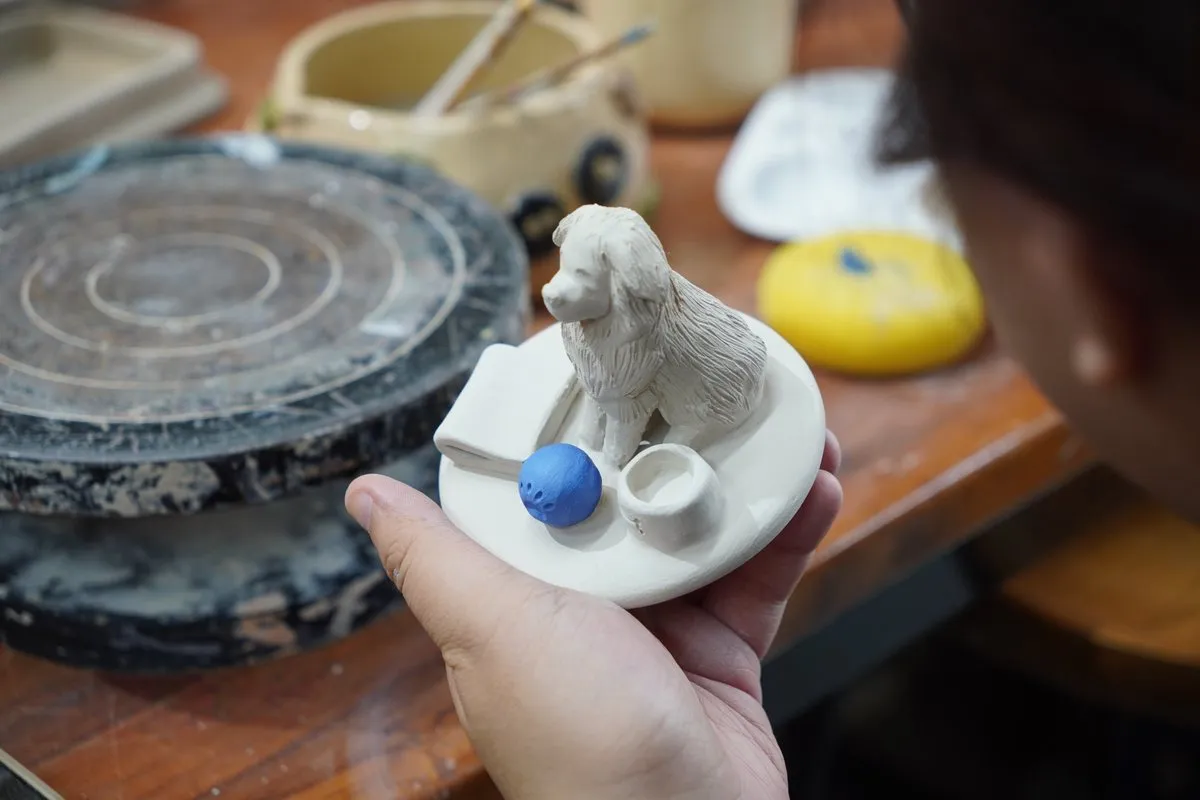
A lid photographed in our workshop before firing, like every picture on this page. The dog, the blanket, the ball and the bowl were each shaped on their own and then joined to the lid, and only the ball has colour so far.
Colour goes on while the clay is still unfired, so it fuses into the surface in the kiln rather than sitting on top. On the same lid a little later, the dog has been painted from the owner’s photos, with the darker coat, white chest and tan points picked out. A glaze follows, and then the whole lid is fired at 1200°C.
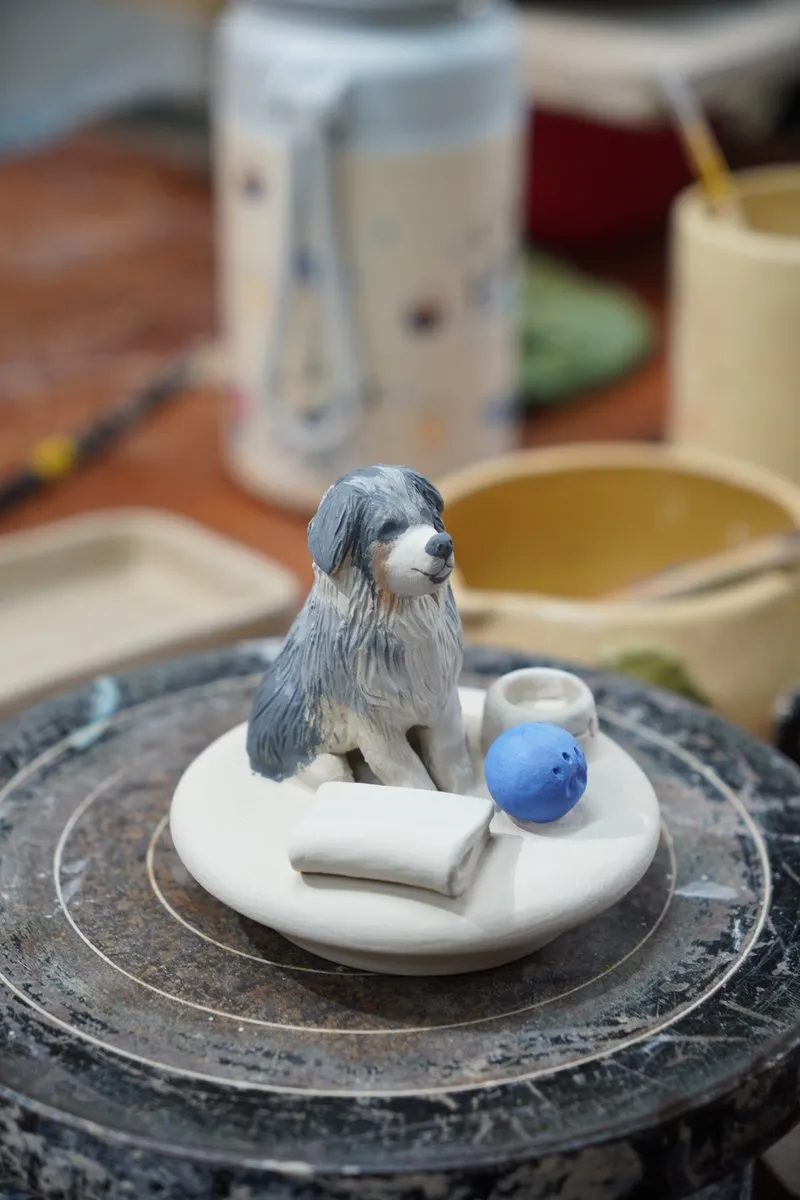
The same lid after the dog has been painted, still unfired. The colours look flat and chalky before firing.
Which urn designs carry a scene on the lid?
Most Pepple Studio urn designs put the pet on the lid, but only some build a scene around it. On those designs the extra pieces are part of the design itself, and on a few you choose them when you order. What you can add and what is included is covered in choosing a pose; the table below is about what each scene is made of.
| Design | What shares the lid with your pet | How it is built |
|---|---|---|
| Standard urn | A folded blanket, a ball and a bowl | Each object shaped separately and joined |
| Pastel Clouds | A few miniatures you pick | Each object shaped separately and joined |
| Forest & Mushroom | Six or seven mushrooms at different heights, with moss | Every cap and stem made apart, then joined |
| Botanical & Ladybug | A mushroom and a ladybird | Set beside the figurine as one small scene |
| Poppy & Butterfly | A butterfly, in one of five styles | Sculpted and set on the lid |
| Cherry Blossom | Sometimes a few loose petals | Tucked around the figurine’s paws |
| Sleeping Cloud | A cloud the pet rests in | Figurine built directly onto the cloud |
Sleeping Cloud is the one design where the pet is built straight onto its cloud instead of being made first and placed, so the body sinks in a little; resting on top, it would look stuck on.
Why do some lid scenes take longer to make?
Lid scenes with many pieces take longer at Pepple Studio because every joined piece adds drying time and another place where the work can fail before it is fired. Clay joins only bond well within a narrow range of dampness, so the mushrooms on Forest & Mushroom go onto their lid at the leather-hard stage, when the clay is firm enough to handle and still damp enough to join. Six or seven of them, each made as a cap and a stem and then put together, with moss pressed through a fine mesh between them, is a great deal of clay in a small space. No other urns of ours take as long to dry or need a second attempt as often, so these sit towards the longer end of the making time. A plain lid with a single figurine has one join to worry about; a forest lid has one for every cap, every stem and every mushroom. The full timeline is on how it works.
Is a busy lid more fragile than a plain one?
A busy lid is more fragile than a plain one while it is being made, before it goes into the kiln. At that stage each small object is soft clay held on by a join, and raised work of any kind is at its most delicate before firing. Thick raised detail is also more likely to crack in very hot firing, a trade-off covered in why we fire at 1200°C. Once fired, the objects on the lid are the parts that stand proud, so lift the urn by its body rather than by anything on top.
Can you change the scene before it is fired?
Yes. Before the lid is glazed or fired, Pepple Studio sends you a photo of the raw sculpture, in unfired clay like the pieces pictured here, and you can ask for changes at no cost at that point. That is the moment to say if the blanket should sit on the other side, or if the ears are not quite right. After firing, the scene is fixed.
Seeing the designs
Each design in the table has a page of its own with photographs of the finished urn, and the full set of urn designs puts them side by side. The urns themselves are all in the ceramic urn collection.