How to Cope With Losing a Dog: The First Weeks
How to cope with losing a dog in the first weeks: what to do with their things, how to get through the empty routines, other pets in the house, and when to find support.
There is no right way to cope with losing a dog, and no timetable. What helps most in the first weeks is usually small and practical: leaving decisions about their things until you are ready, giving the empty parts of the day a new shape, keeping any other animals’ routines steady, and telling people plainly so you are not grieving in silence.
If, weeks on, you still cannot sleep, eat properly or get through a working day, that is the time to reach for support, and there are people trained for exactly this.
How do you cope with losing a dog?
You cope with losing a dog one day at a time, by letting the grief be as big as it is and taking care of the small, practical things it disrupts. A dog shapes a household more than most people realise until the dog is gone: the walks, the meals, the noise at the door, the weight on the end of the bed. The first weeks are often less about one large feeling than about a hundred small moments when the habit runs ahead of you and the dog is not there. None of that is a sign that you are coping badly with the loss. It is what losing a daily companion is like, and why losing a pet hurts so much looks at why a loss like this can feel so large.
What should you do with your dog’s things?
You do not have to do anything with your dog’s things straight away. The bed, the bowls, the lead on its hook and the toys under the sofa can stay exactly where they are for as long as you need them to, and there is no point at which keeping them becomes the wrong choice. Some people find the sight of them unbearable within a day; others take months before they can move a single toy. If you do want to clear them, it often helps to keep one or two things aside first, such as the collar with its tag, a favourite toy or the lead, and to decide about the rest later. Beds, blankets and unopened food can go to a local rescue when you are ready, which can feel easier than throwing them away. If you share the house, agree on the timing together, because one person’s relief at an empty corner can be another person’s shock.
How do you get through the empty routines?
The empty routines are often the hardest part, because the day still has dog-shaped gaps in it: the early walk, the evening meal, the moment you reach for the lead. It can help to decide what goes in those gaps rather than letting them simply hurt. Some people keep walking the same route at the same time, because the habit and the fresh air are worth keeping even without the dog. Others need a different route for a while. A phone call to a friend at the old walk time, or a few minutes outside with a cup of tea, gives that part of the day a new purpose without pretending nothing has changed. Be patient with the reflexes: the glance at the door, the plate edge saved for someone who is not there. They fade slowly, and they are part of how much the dog belonged to your life.
Do other pets in the house need anything?
Other pets in the house mostly need their own routine kept steady while yours is upside down. Feed them at the usual times, keep their walks and play going even when you do not feel like it, and give them a little extra attention if they seem unsettled. Animals that lived alongside the dog may notice that something has changed. A 2022 study in Scientific Reports surveyed 426 people in Italy whose dog had died while another dog in the house lived on, and 86 percent of them saw a change for the worse in the surviving dog, most often less play and less activity. If one of them stops eating or behaves differently for more than a few days, ask your vet rather than waiting it out. And if there are children at home, they will be watching how the adults cope as well as dealing with their own loss; telling a child their pet has died covers what helps them.
When should you look for support?
Look for support when grief stops easing and starts taking over: when you are not sleeping, not eating, or cannot manage work or family for weeks on end, or when you simply have no one around who understands. Help made for pet loss exists. In the UK, the Blue Cross runs a free Pet Loss Support service by phone, email and webchat; in the US, Cornell University runs a Pet Loss Support Hotline, answered by veterinary students trained in grief support. Neither is a medical service, so if the weight of it feels heavier than grief should, see your doctor. Pepple Studio makes ceramics, not counselling, and these people are far better placed to help than we are. If the hardest question in your house becomes whether to bring another dog home, getting another pet after losing one is a gentle place to start.
Something to keep, when you are ready
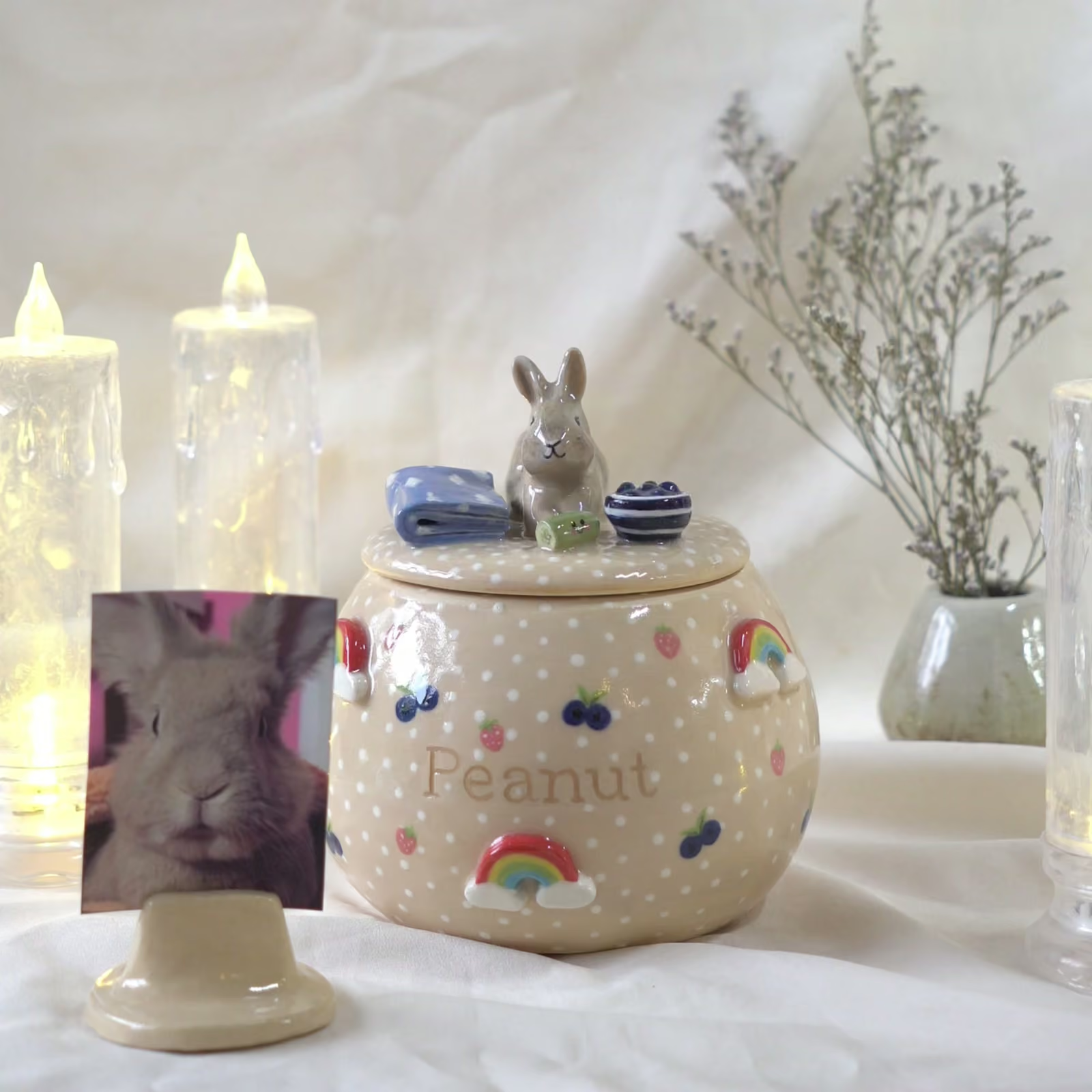
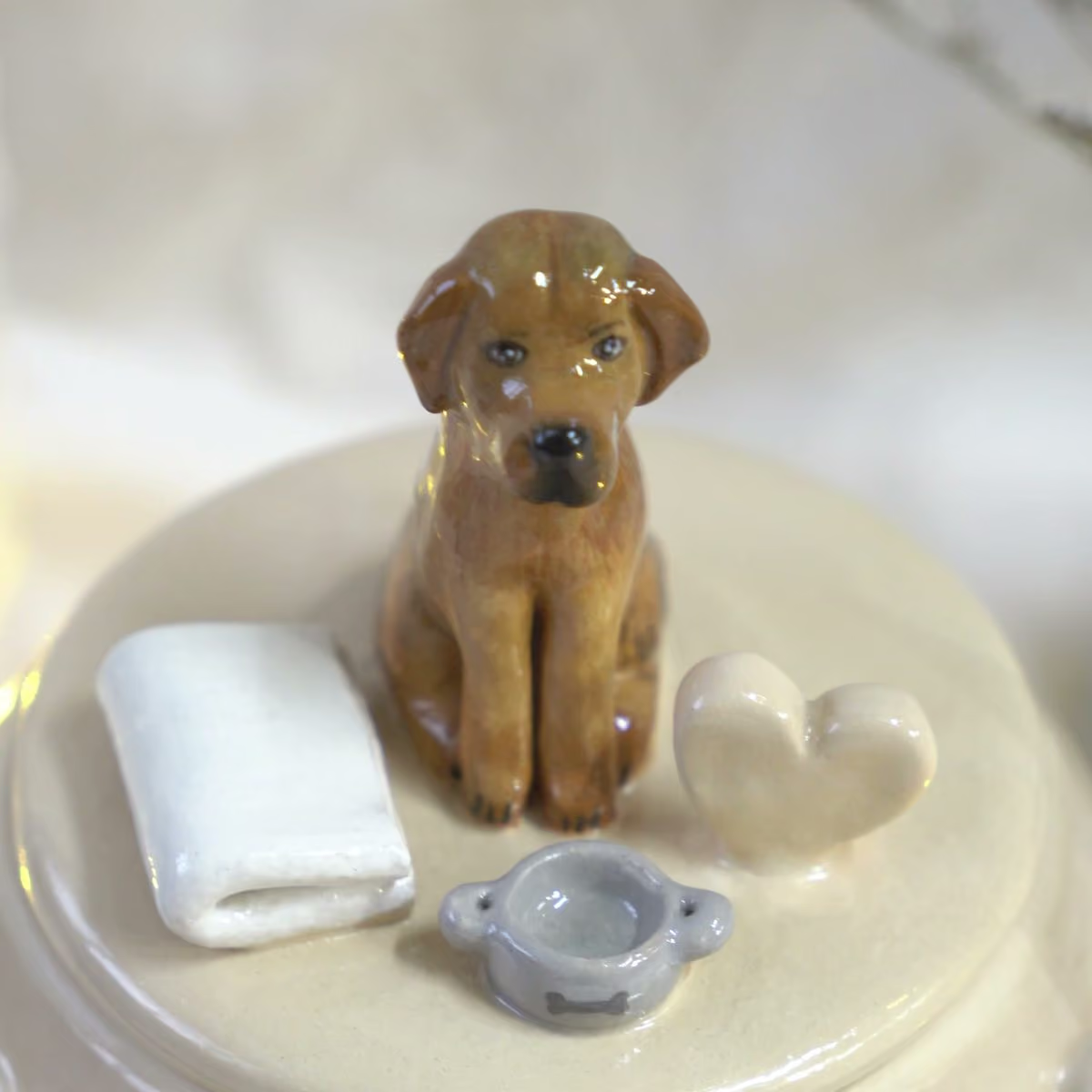
There is no hurry to choose a memorial, and you may only want one weeks or months from now. One thing worth doing early, though, is gathering your favourite photos of your dog while you know exactly where they are; old photos are fine, and the photos we need explains what makes one useful if you ever want a likeness made. When the time comes, a memorial does not have to hold ashes at all, as pet memorials without ashes shows.
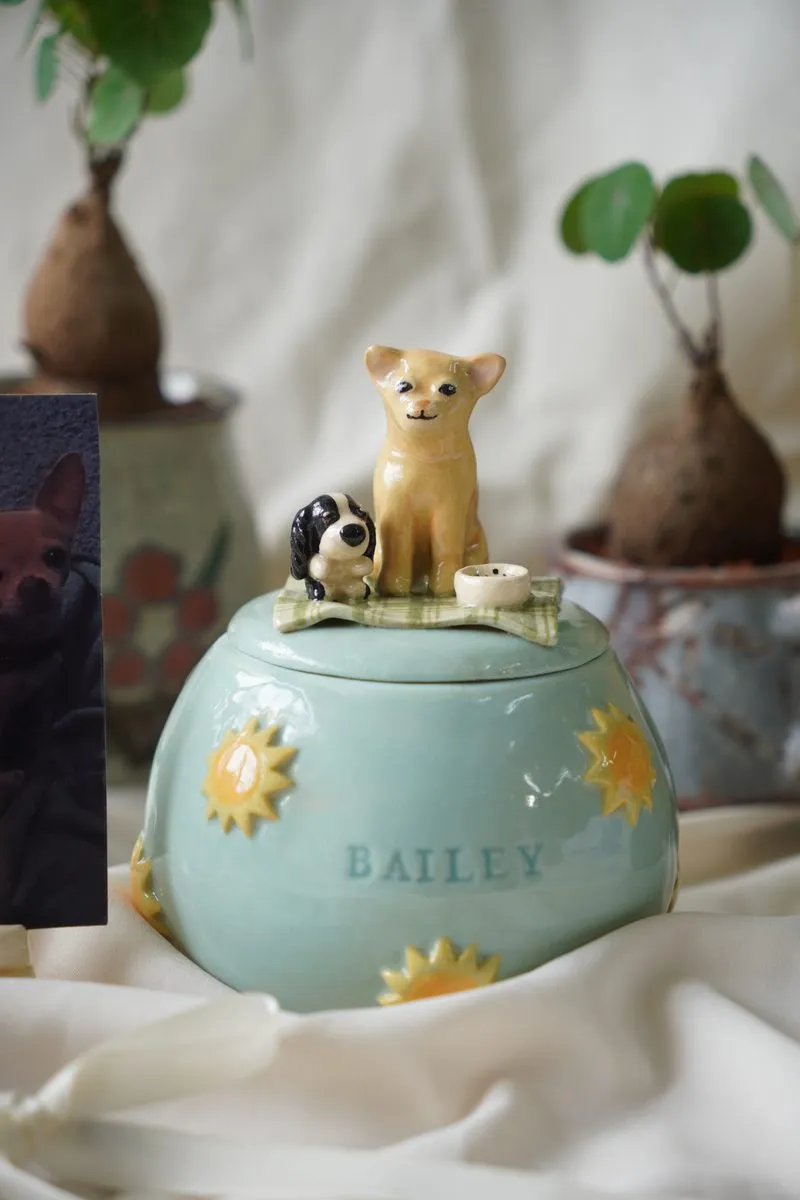
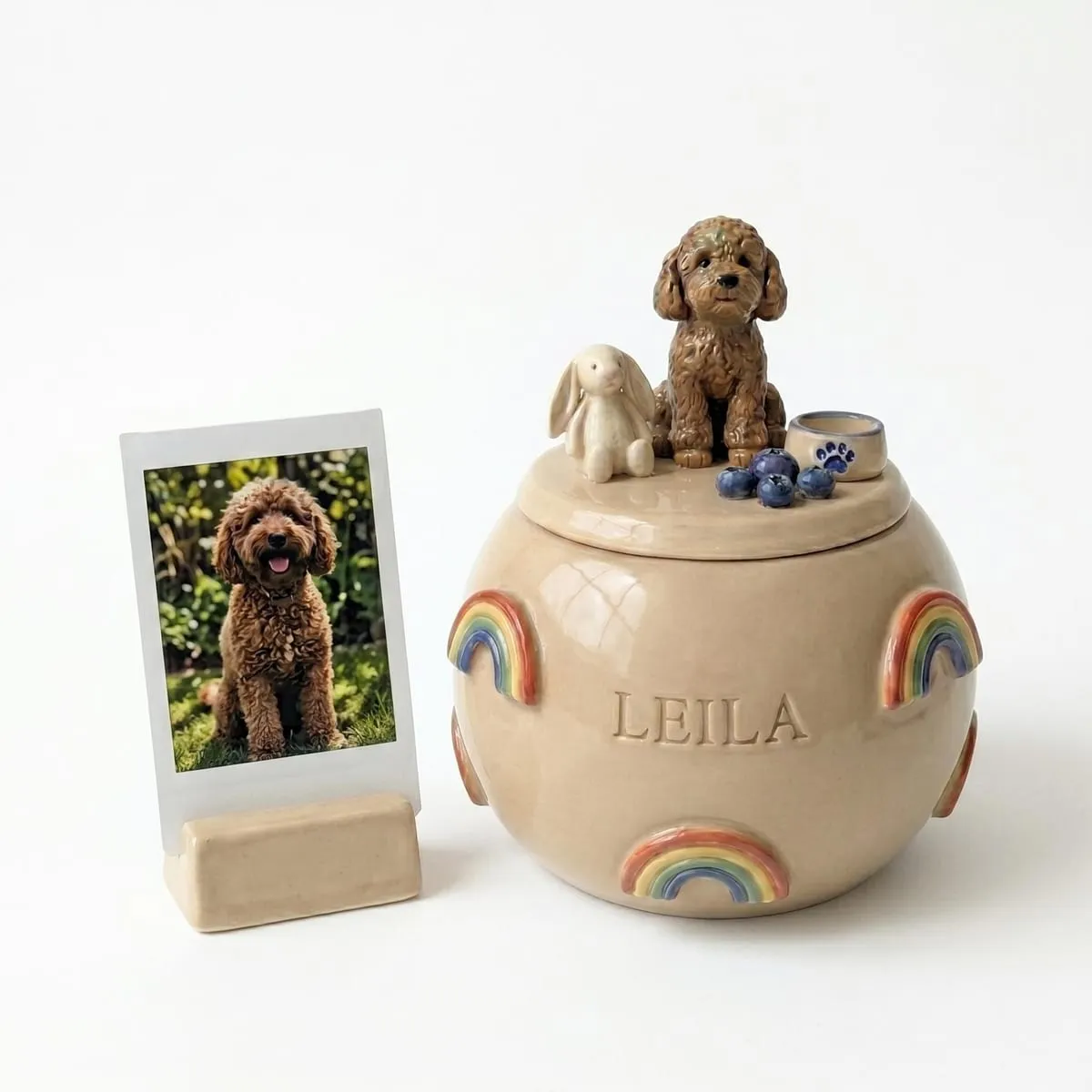
A finished urn photographed in our studio, made from photos of the dogs it shows.