How to Tell a Child Their Pet Has Died
Use the word died. Why euphemisms backfire, what to expect at different ages, and how to handle the questions children actually ask.
For many children this is the first death they encounter, and how it is handled tends to shape how they meet later ones. That is a lot of weight for a conversation you are having while also grieving yourself.
The single most consistent piece of advice from child bereavement organisations is also the hardest: use the word died.
Why euphemisms backfire
“Put to sleep”, “gone away”, “lost”, “passed on” — all of these are attempts to soften, and all of them are taken literally by young children.
- Put to sleep can produce fear of sleeping, or of anyone going to hospital for an operation.
- Gone away implies coming back, and can produce weeks of waiting at the door.
- Lost suggests something findable, and sometimes searching.
- We had to have her put down without explanation can land as my parents chose to kill her.
Say died. Then say what it means: her body stopped working, it does not hurt, and she is not coming back. Concrete and plain, however wrong that feels in the moment.
By age, roughly
Under 5. Death is understood as temporary and reversible. Expect the same question repeatedly over weeks — this is not them failing to listen, it is how understanding is built at that age. Answer the same way each time.
5 to 9. Permanence lands. This is the age most likely to look for a cause, and most likely to conclude it was their fault: they forgot to shut a gate, they were cross with the dog that morning. Say explicitly that nothing they did or thought caused it, even if they have not said the fear out loud. Many do not.
10 and up. Understanding is close to adult, but the feelings are not any smaller, and older children often hide grief to protect a visibly upset parent. Give them openings without demanding conversation.
If it is euthanasia
Older children can usually be told beforehand, and often want to be. Being presented with a completed decision can feel like exclusion, especially for a teenager.
Explain it as a choice made to prevent suffering, not as giving up. Frame it as something you did for the animal, and be honest that it was hard.
Whether a child attends is individual. If they want to be there and you can manage it, many find it easier than being sent to a relative’s house and returning to an empty bed. Do not force it either way.
The questions they actually ask
“Did it hurt?” For euthanasia, honestly: no. It is an injection, and it is quick and peaceful.
“Whose fault was it?” Nobody’s. Say it plainly and say it more than once.
“Where is he now?” Answer according to what your family believes, and it is completely acceptable to say I do not know, and different people believe different things. Children generally handle honest uncertainty better than an explanation the adult obviously does not hold. If you use the Rainbow Bridge, be clear it is a story people tell because it is comforting.
“Are you going to die?” Yes, but not for a very long time. Then move on. Do not over-elaborate.
Let them do something
Children do better with a task than with an instruction to feel better.
- Draw a picture for the memorial spot
- Choose which photograph gets framed
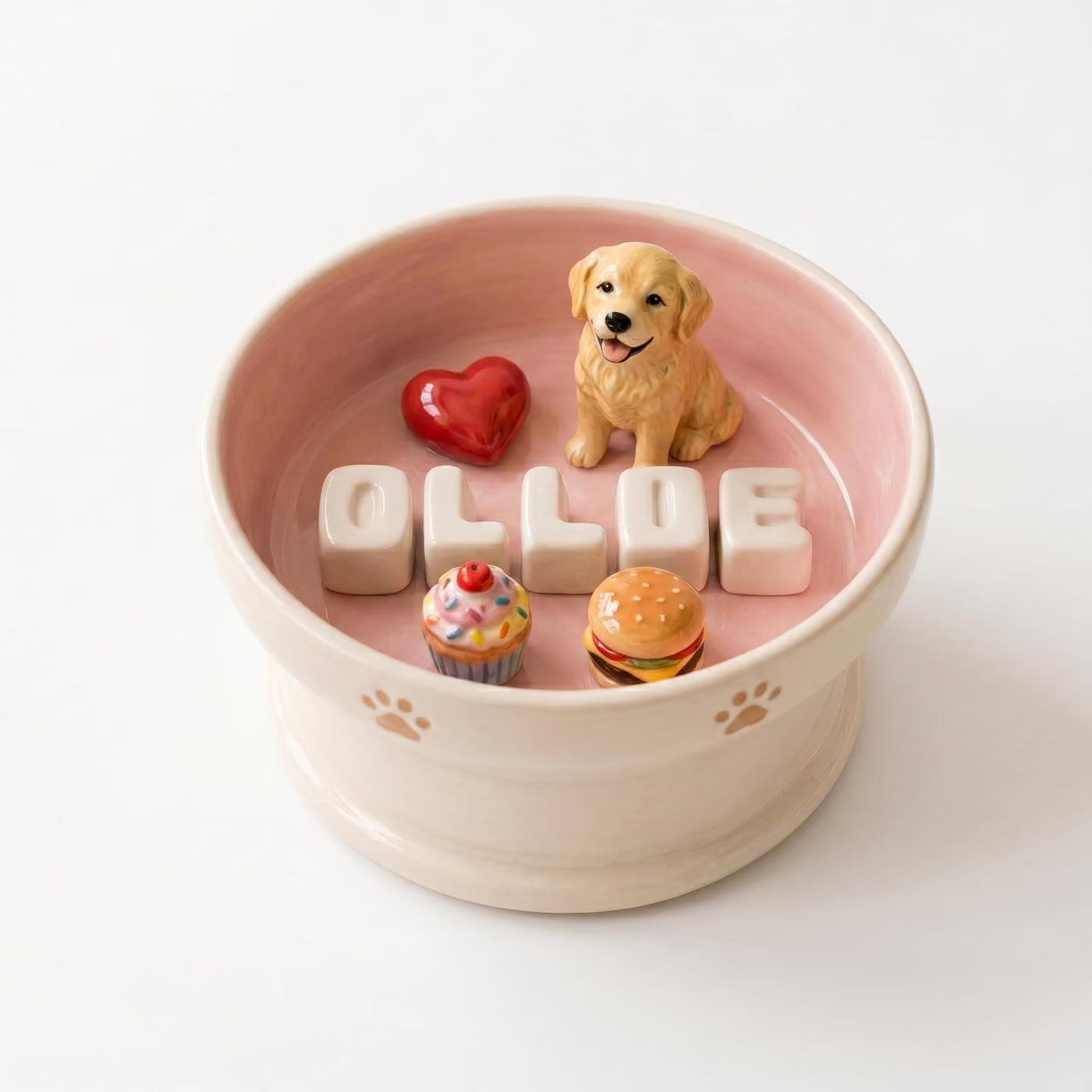
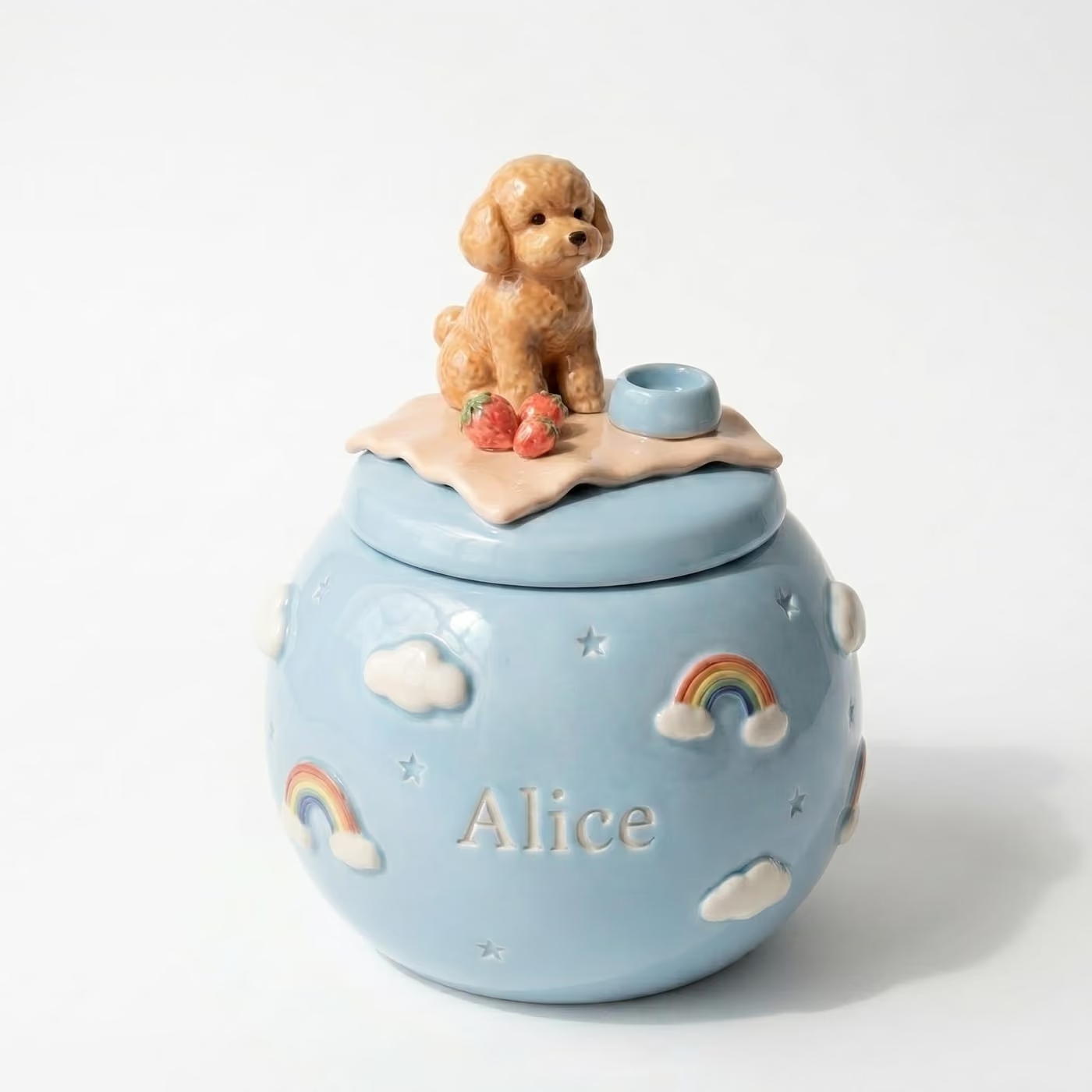
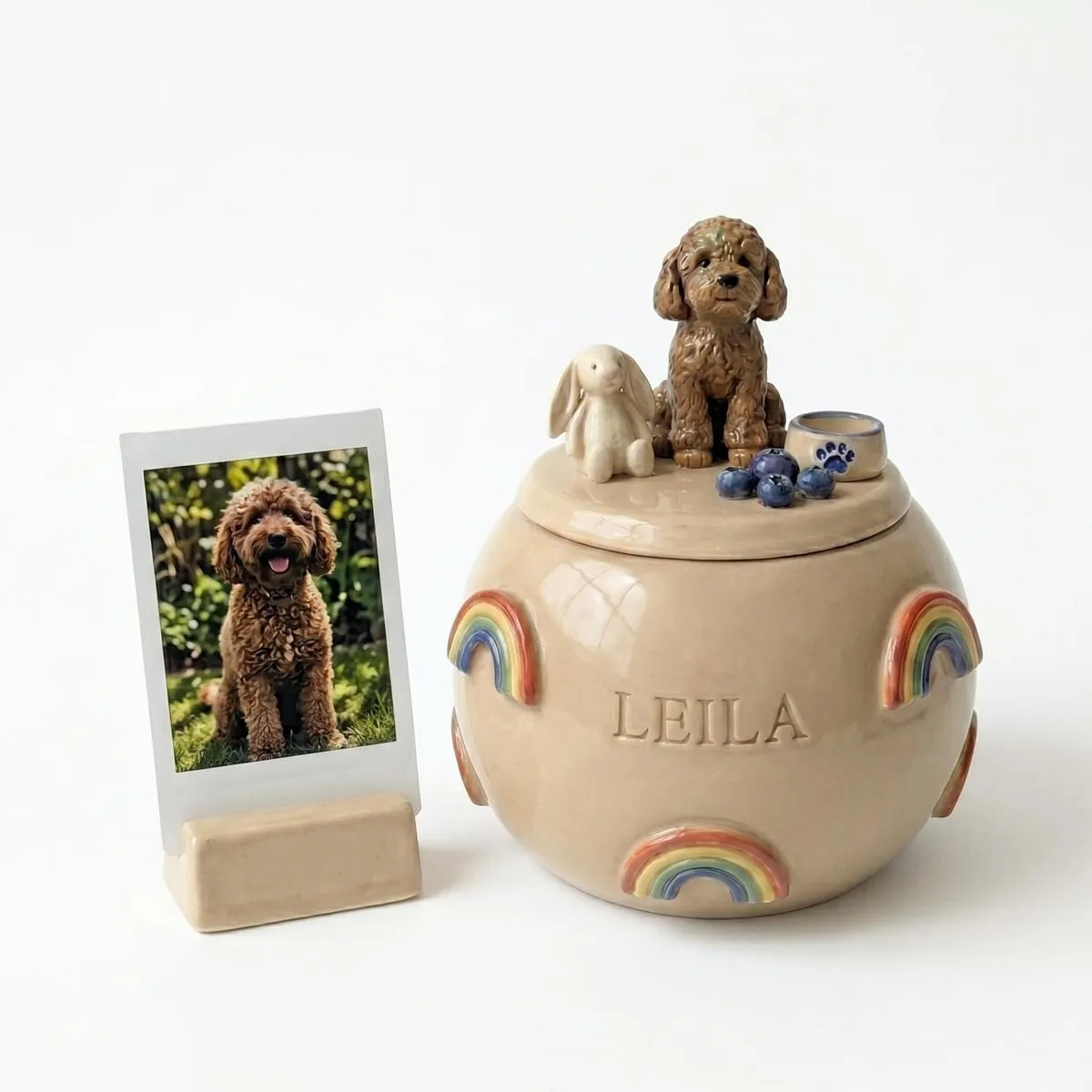
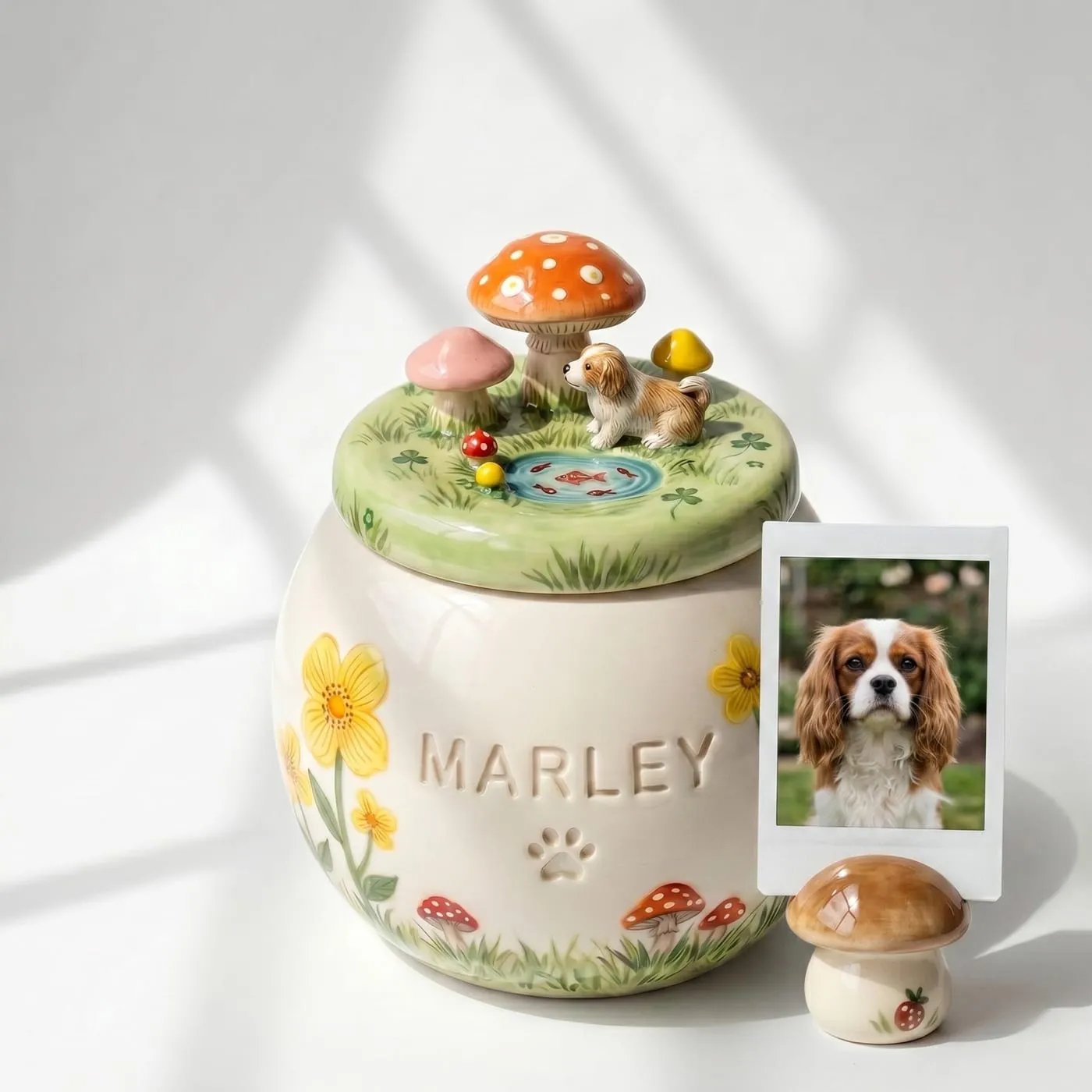
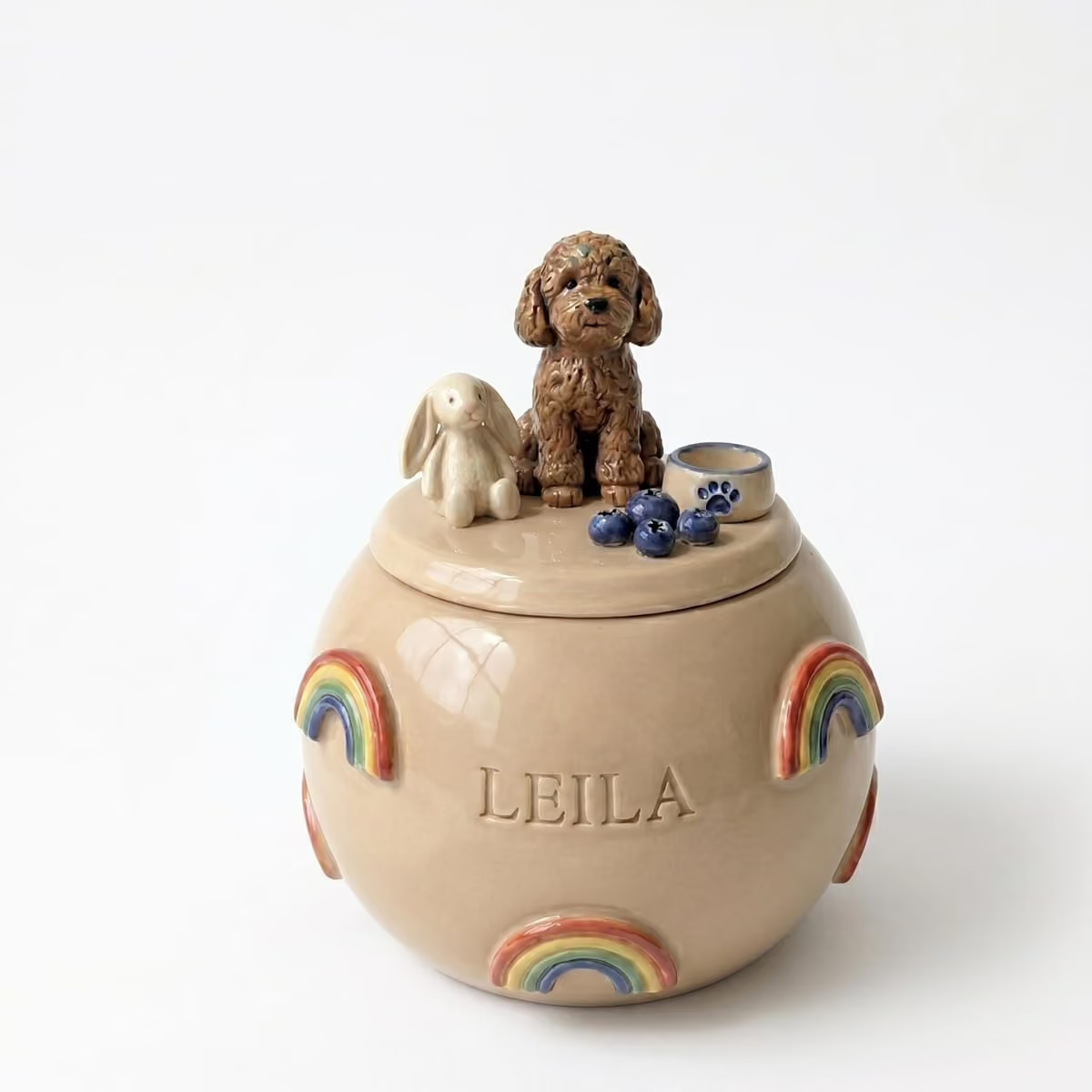
- Pick the colour or design of the urn — many families do this together
- Help scatter, if you are scattering
- Keep the collar somewhere they decide
Involving them treats the loss as real and shared, which is most of what they need.
Keep the memorial at a height they can see. A shelf above adult eye level quietly excludes them from it. More on this in our memorial corner guide.
What to expect afterwards
Grief in children is intermittent in a way adults find disconcerting. A child can sob for ten minutes and then ask what is for dinner. That is normal, not callousness — they process in short bursts because longer is unmanageable.
Regression is common: bedwetting, clinginess, sleep trouble, a dip at school for a few weeks. If it persists well beyond a month, or if the child talks about wanting to die too, speak to your GP or the school’s pastoral lead. That is a signal, not an overreaction.
Getting another pet
Not immediately, and not as a replacement. A new animal arriving quickly can teach that the dead are interchangeable, which is the opposite of the lesson available here.
Let the grief have its own space first. There will be room later.
We are a ceramic studio, not child bereavement specialists. Organisations like the Blue Cross Pet Bereavement Support Service (UK), the ASPCA (US) and many local vets offer free guidance and are worth using.
Families often choose an urn design together — the designs are here, and letting a child pick tends to help more than it sounds like it would.