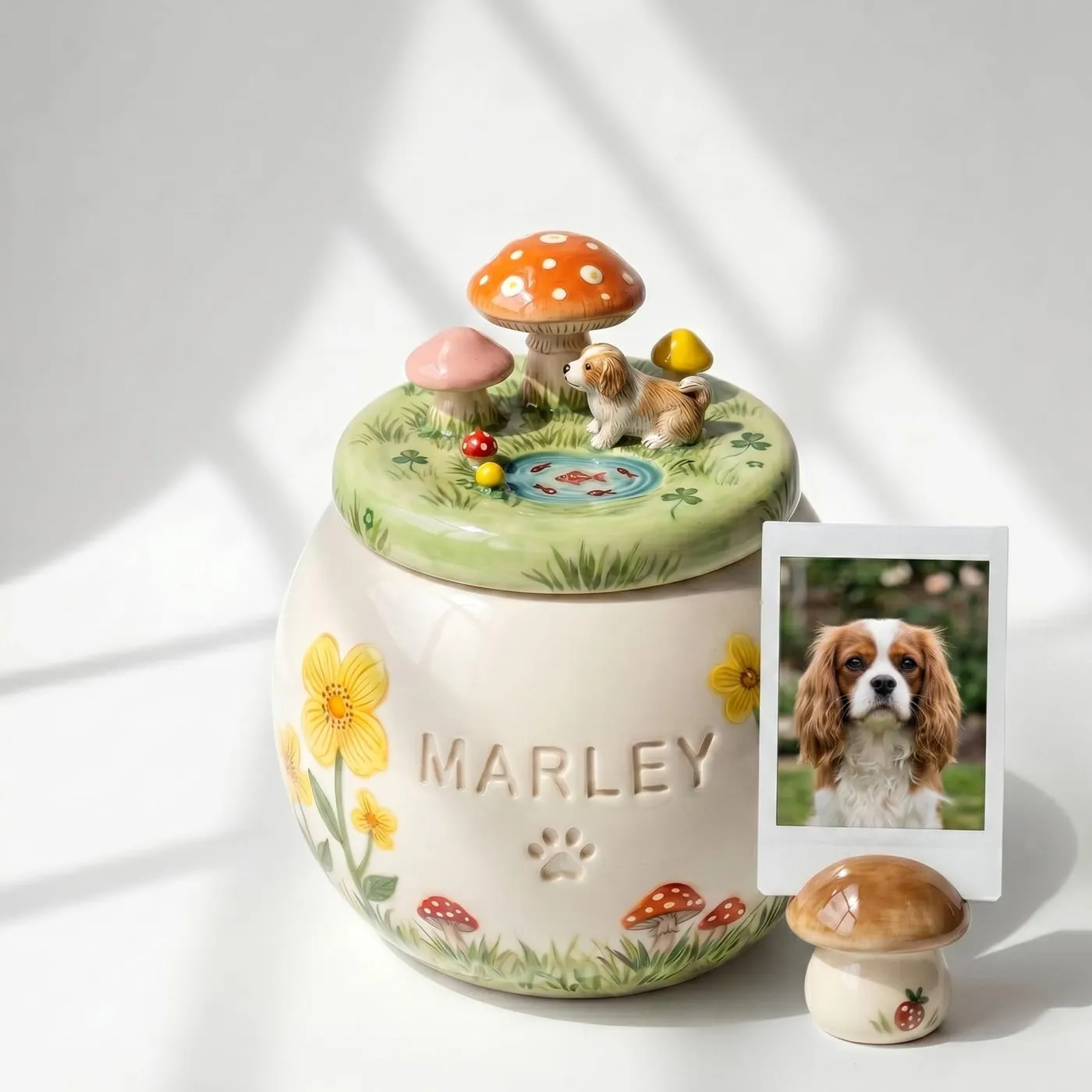
Personalized Dog Bowls: Ceramic or Stainless Steel?
Ceramic or stainless steel for a personalized dog bowl: weight, breakage, what each can carry by way of a name or likeness, and which suits which dog and owner.
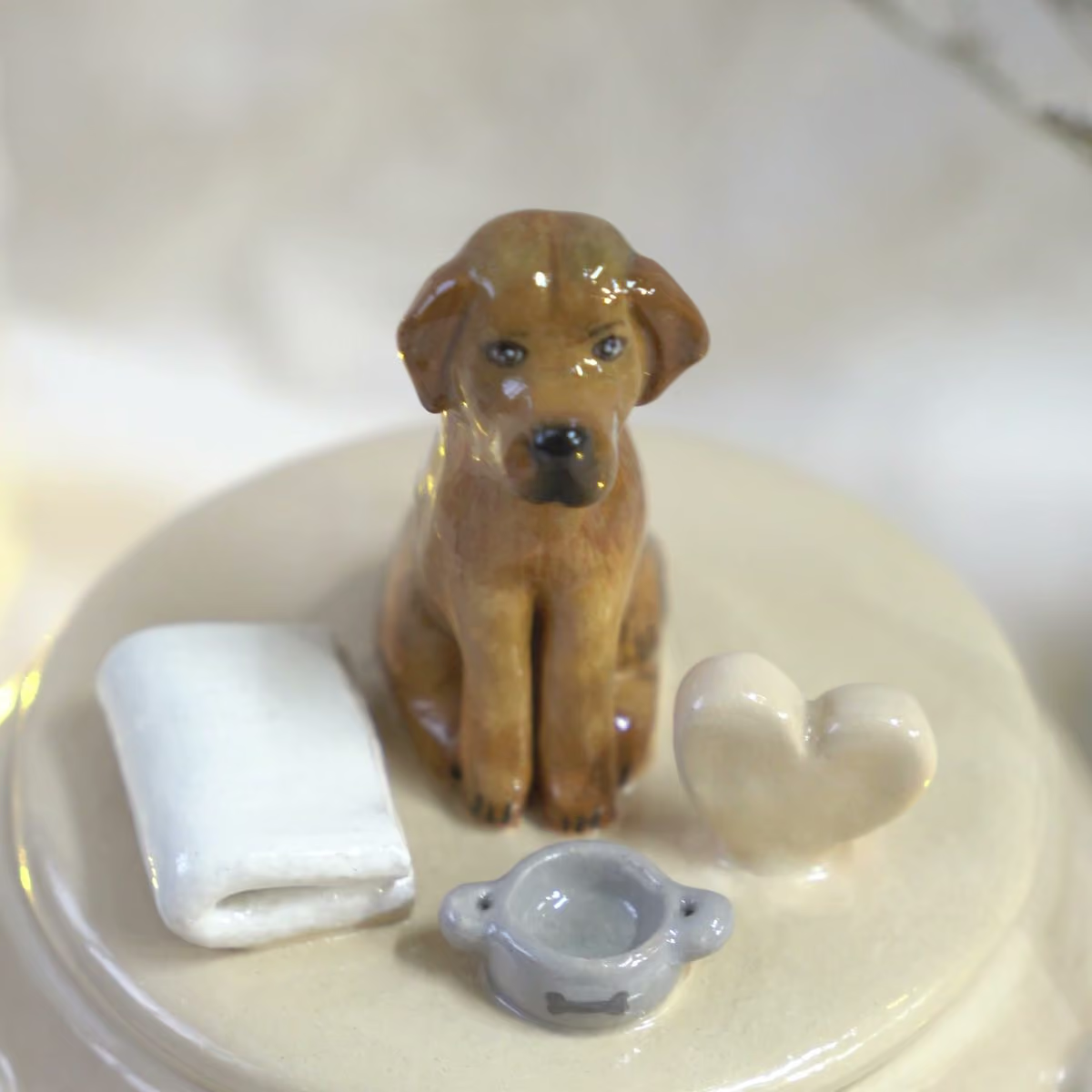
A personalised dog bowl in stainless steel is light, cheap and hard to break, and the most it can carry is an engraved name. A personalised bowl in ceramic is heavy enough to stay where it is put, breaks if it is dropped on a hard floor, and can carry far more of the animal: a name in raised letters, a painted portrait, or a figure sculpted from your photos.
Which is better depends on the dog and on what you want the bowl to be. This article compares weight, wear and looks; it does not compare the two materials on safety.
Is a ceramic or stainless steel dog bowl better?
A ceramic dog bowl is better for a dog that eats calmly indoors and for an owner who wants the bowl to look like it belongs to that animal; a stainless steel bowl is better for a dog that chews, pushes or throws its bowl, and for travel or outdoor use. Neither wins on every count, so it is worth matching the bowl to the dog rather than to the material.
| Stainless steel | High-fired ceramic | |
|---|---|---|
| Weight | Light, often slides unless it has a rubber base | Heavy, stays where it is put |
| If dropped | Dents rather than breaks | Can chip or break on a hard floor |
| Price | Usually low | Higher, especially when made to order |
| Personalising | An engraved or printed name | A name in raised letters, a painted portrait, a sculpted figure |
| Look | The same in every kitchen | Glaze colour and pattern chosen to suit the room |
| Best for | Chewers, outdoor bowls, travel | Calm eaters, small dogs and cats, a bowl kept as a keepsake |
Why does a ceramic bowl stay put?
A ceramic bowl stays put because it is heavy for its size. Fired clay is dense, so a dog nudging the bowl while eating moves it much less than it would move a light steel one. That same weight is the trade-off: a ceramic bowl knocked off a counter onto tile or stone can chip or break, where steel would dent rather than break. For a puppy who carries everything in its mouth, or a dog who flips its bowl when it is empty, steel is the kinder choice for now, and our guide to gifts for a new puppy owner explains why a keepsake of a very young dog is often better timed for later. For a settled dog, or a cat, the weight of ceramic is simply an advantage.
What does high firing change in a ceramic bowl?
High firing changes how much water the clay can take in, which decides how the bowl wears over years of daily use. Ceramic fired at around 1200°C vitrifies: the clay body closes up and absorbs very little, so the glaze is not the only thing keeping water out. Earthenware, fired lower, keeps soaking up a little moisture beneath the glaze, and over time that shows as crazing, the fine crack pattern seen on old pottery. Both of the bowls made by Pepple Studio are fired at 1200°C, the same as our urns. What that firing means for clay is set out in why we fire at 1200°C, and the difference between high-fired and low-fired ceramic in what pet urns are made of. It is a statement about how the material behaves, not a claim about food contact, which this article does not make.
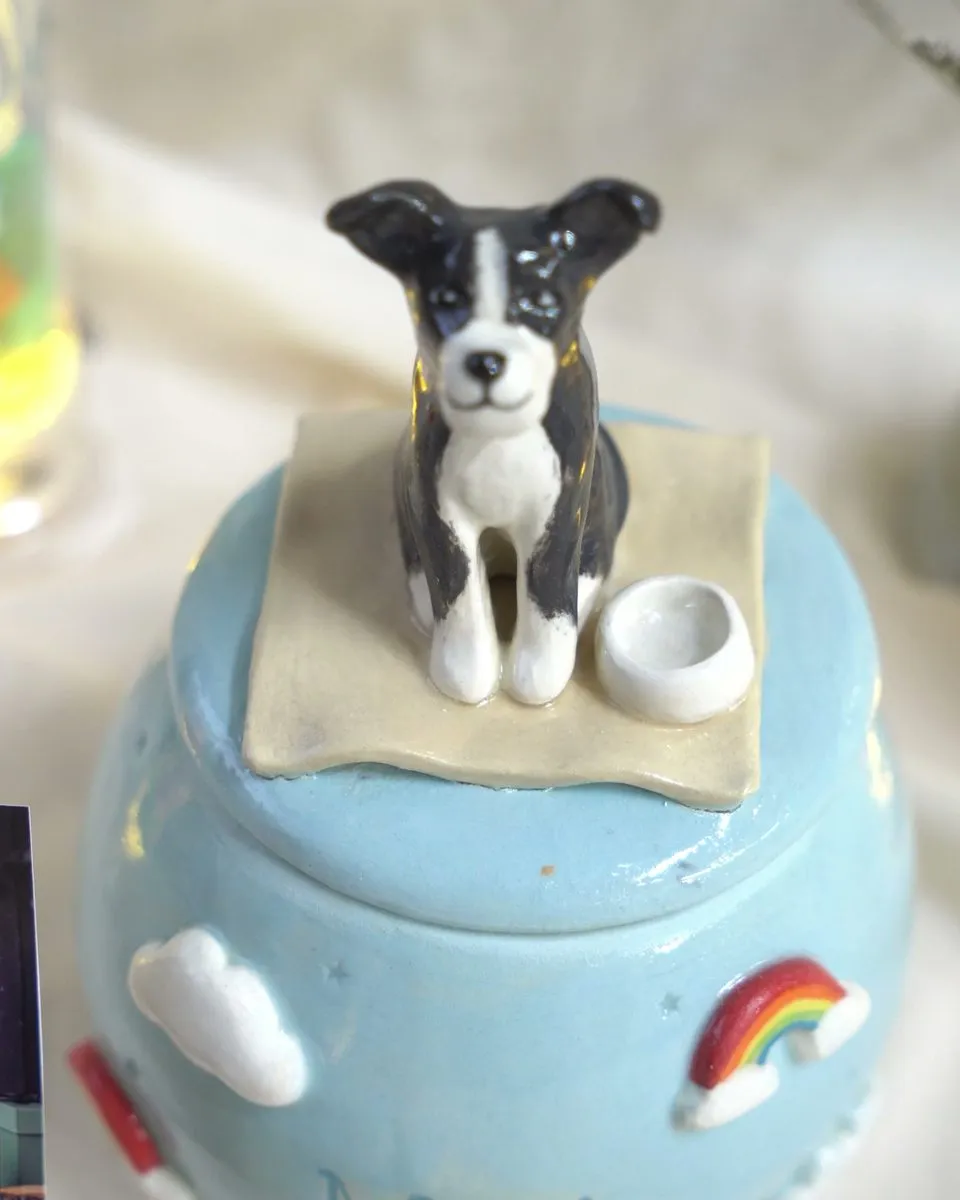
A piece after its 1200°C firing in our studio: the glaze has melted into a smooth, glossy coat over the clay, and the colours have settled into it.
What can a personalised ceramic bowl show that steel cannot?
A personalised ceramic bowl can carry the animal itself, where steel can carry only lettering. At Pepple Studio there are two kinds. One is a custom pet bowl with a small figure of your animal, modelled by hand from a photo you send, set inside it, with the name spelled out in ceramic letter blocks and up to three tiny handmade items beside it, such as a fish, a strawberry or a toy mouse; you also choose the pattern outside and one of twelve colours inside. The other has a portrait of your pet painted in watercolour style in the centre of the bowl, with the name on the front in a colour you pick, on a bowl in one of seven soft colours. Both are raised, or elevated, bowls that stand 12 cm (4.7 in) tall and 14 cm (5.5 in) across, a size the sculpted bowl’s listing describes as right for cats and small dogs.
| Bowl | What carries the likeness | Price |
|---|---|---|
| Custom 3D Pet Bowl with Figurine | A figure sculpted from your photo, with name blocks and three small items | USD 139 |
| Watercolor Pet Portrait Bowl | A portrait painted in the centre, with the name on the front | USD 179 |
Before either is fired you see photos of it in raw clay and can ask for changes, so a figure that does not look like your dog is corrected while the clay can still be changed. Each is made in two to three weeks and then takes 7 to 14 business days to arrive.
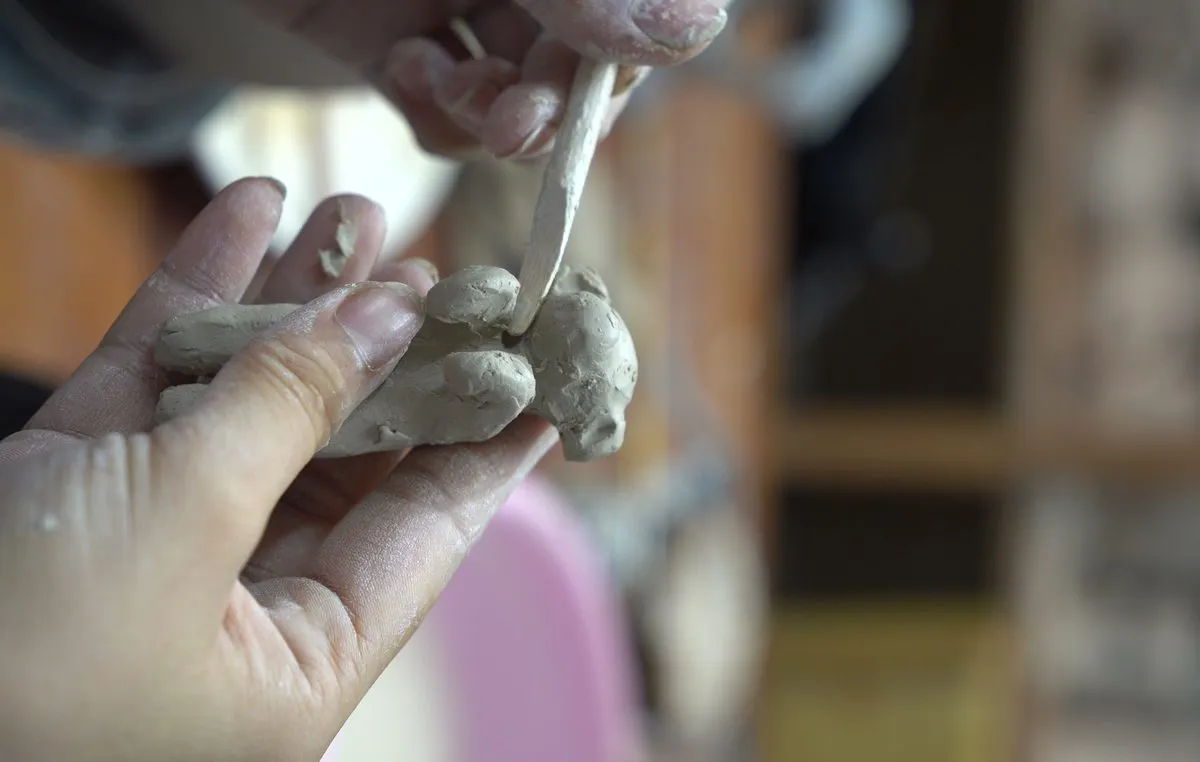
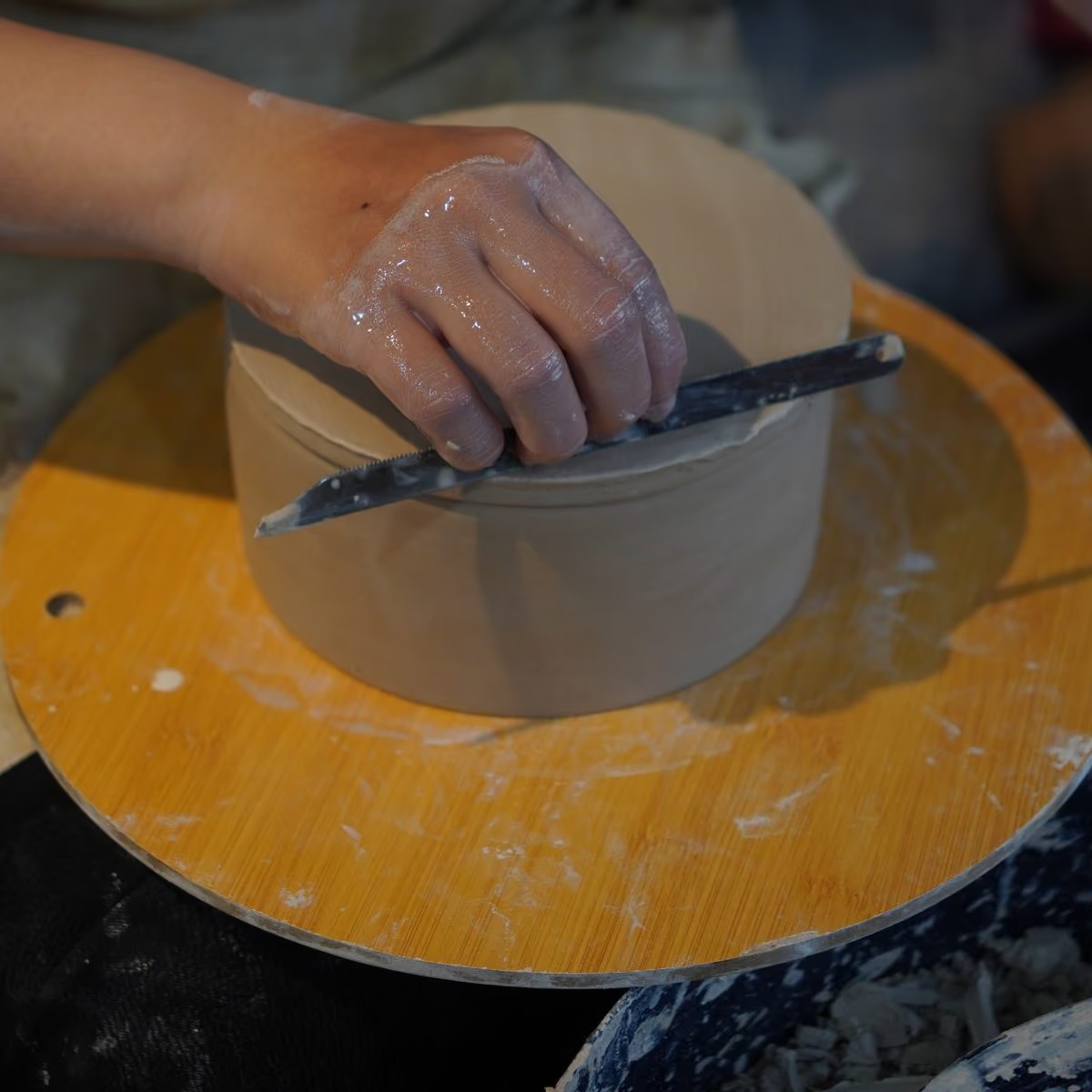
A figure in the first stage of modelling in our workshop, worked in the hand with a wooden tool. Every sculpted figure on our pieces starts like this, from the photos the owner sends.
Which bowl makes a better gift?
A ceramic bowl makes the better gift when the point is the animal rather than the meal: it is personal in a way a steel bowl cannot be, and it stays out on the floor where everyone sees it. A steel bowl is the more practical gift for a working dog, a dog that eats outside, or a family that travels with their dog a lot. If you are unsure, the dog usually decides it: watch what happens to the bowl they have now. A bowl that never moves is ready for ceramic; one that ends up across the kitchen every evening is not, yet.
Seeing the bowls
Both bowls sit with the other pieces made for living pets in our gift collection, where the product pages show the price in your own currency.