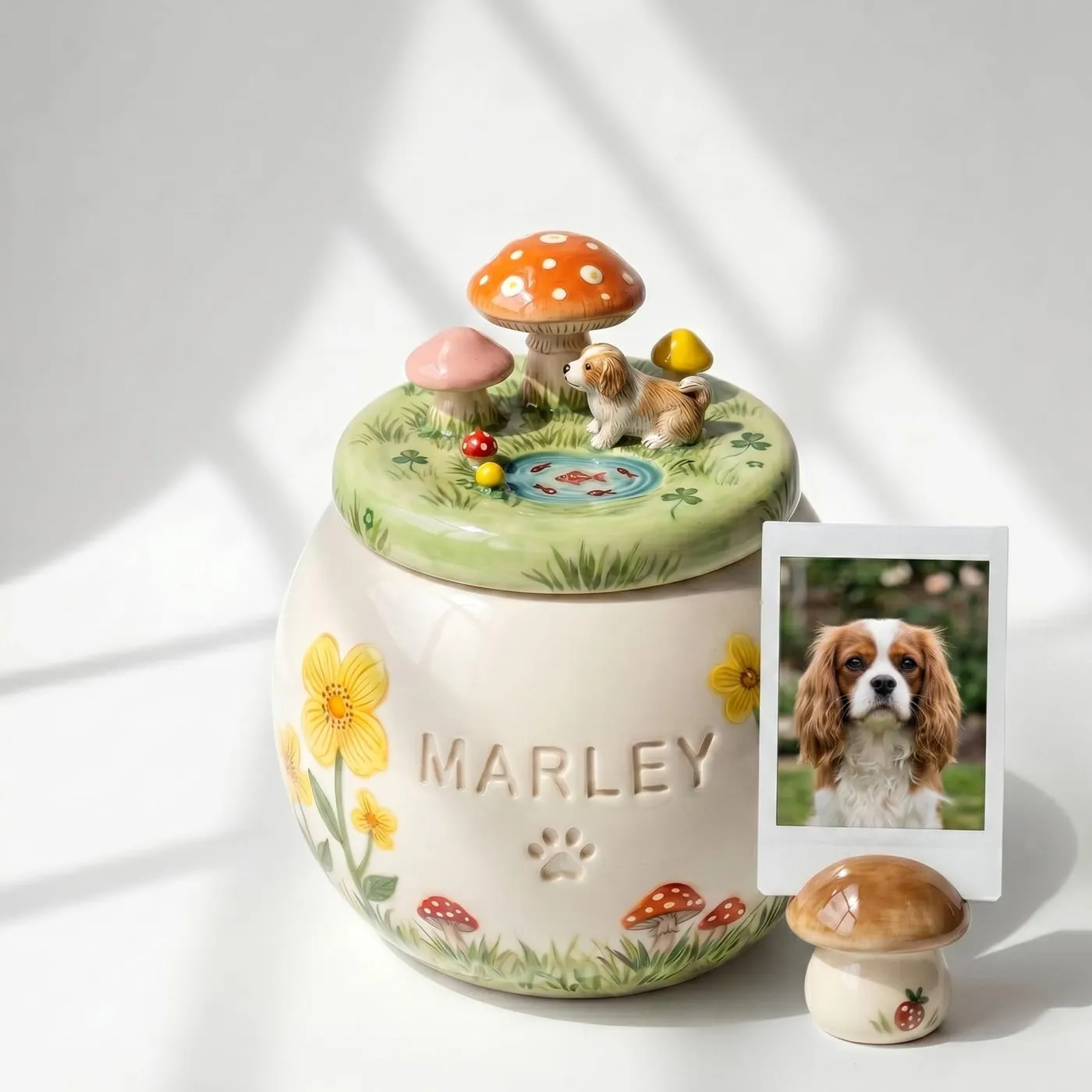
Handmade Pet Urns: How to Tell One From a Factory Piece
What makes a pet urn handmade, the signs you can see and feel that separate it from a factory piece, and the questions worth asking any maker before you order.
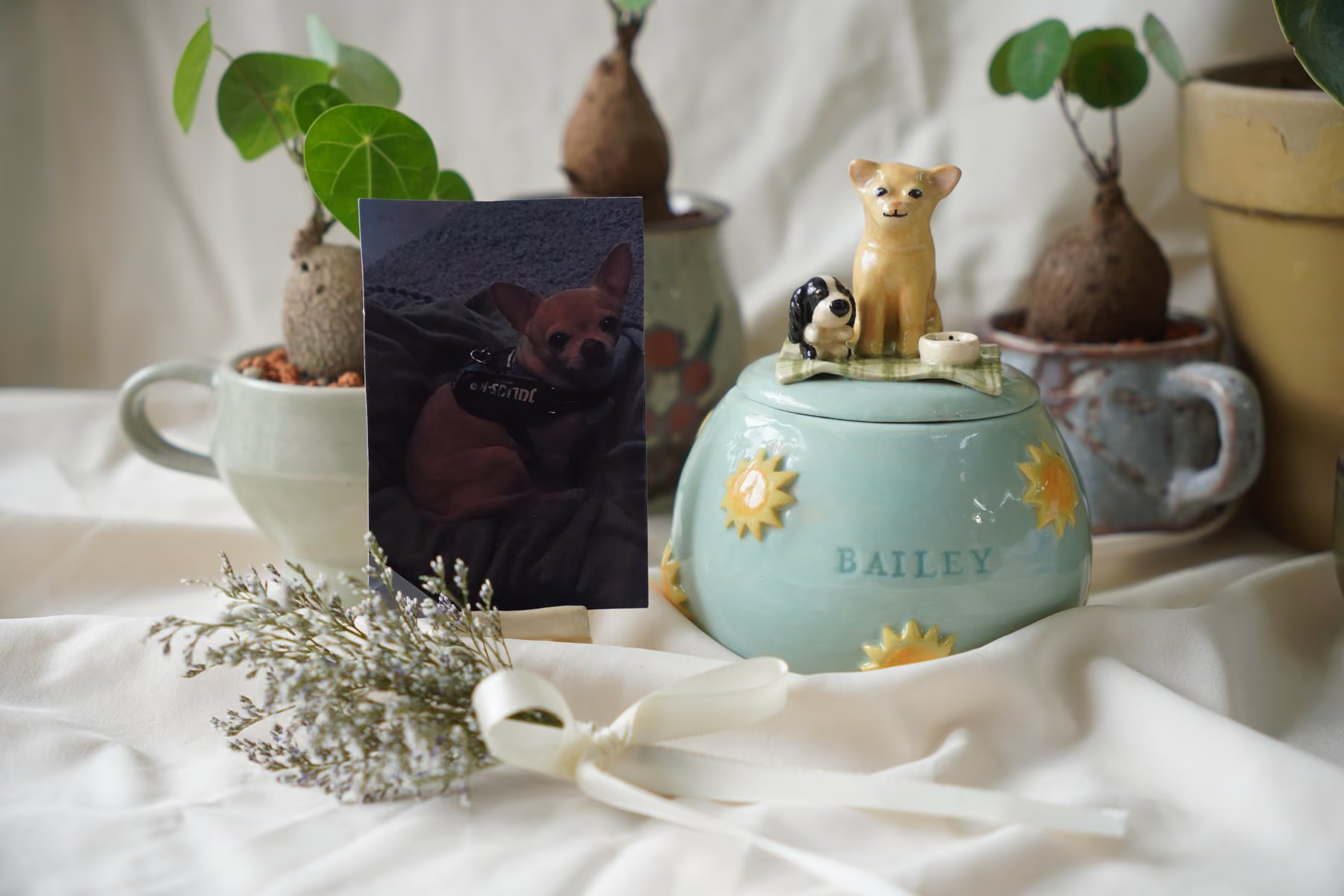
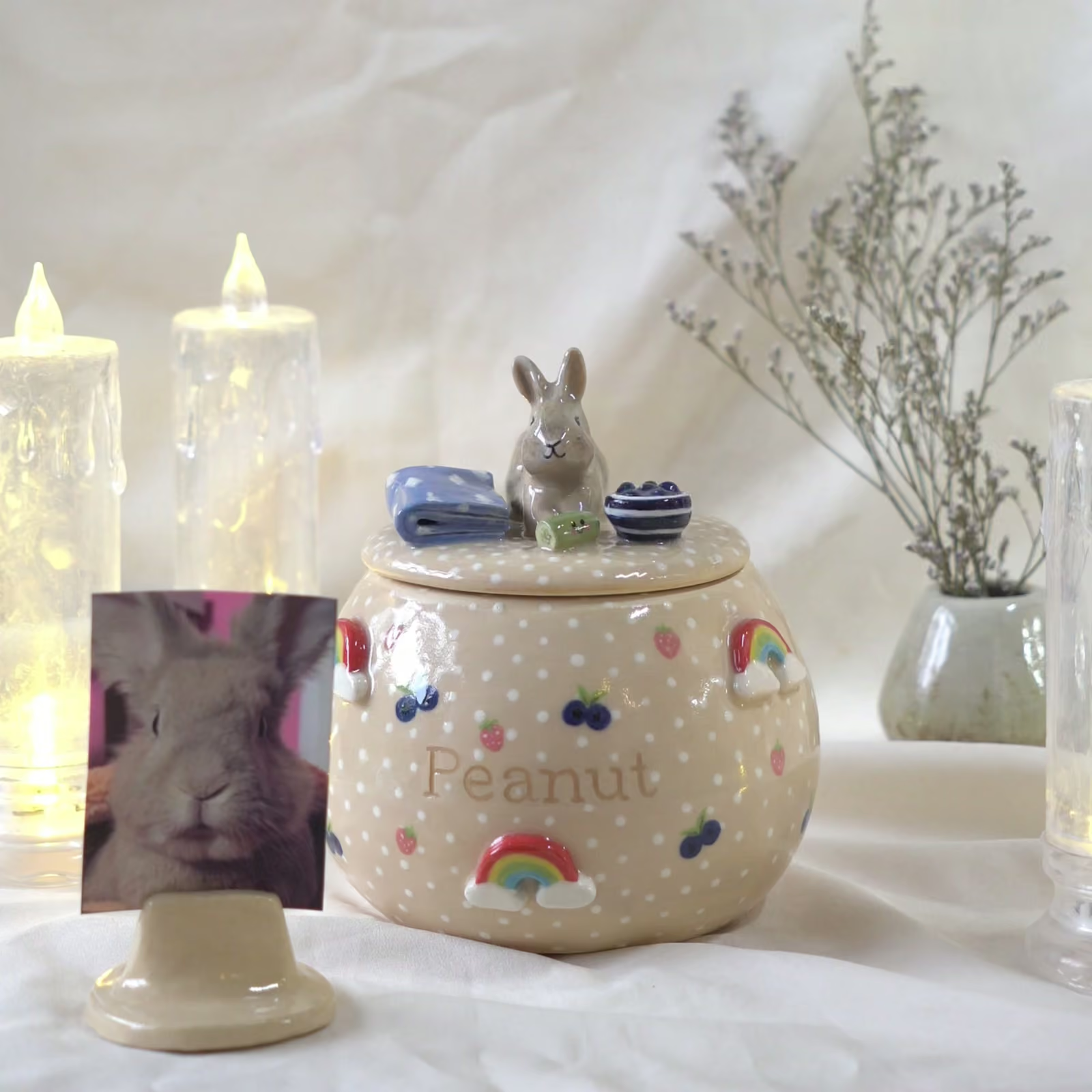
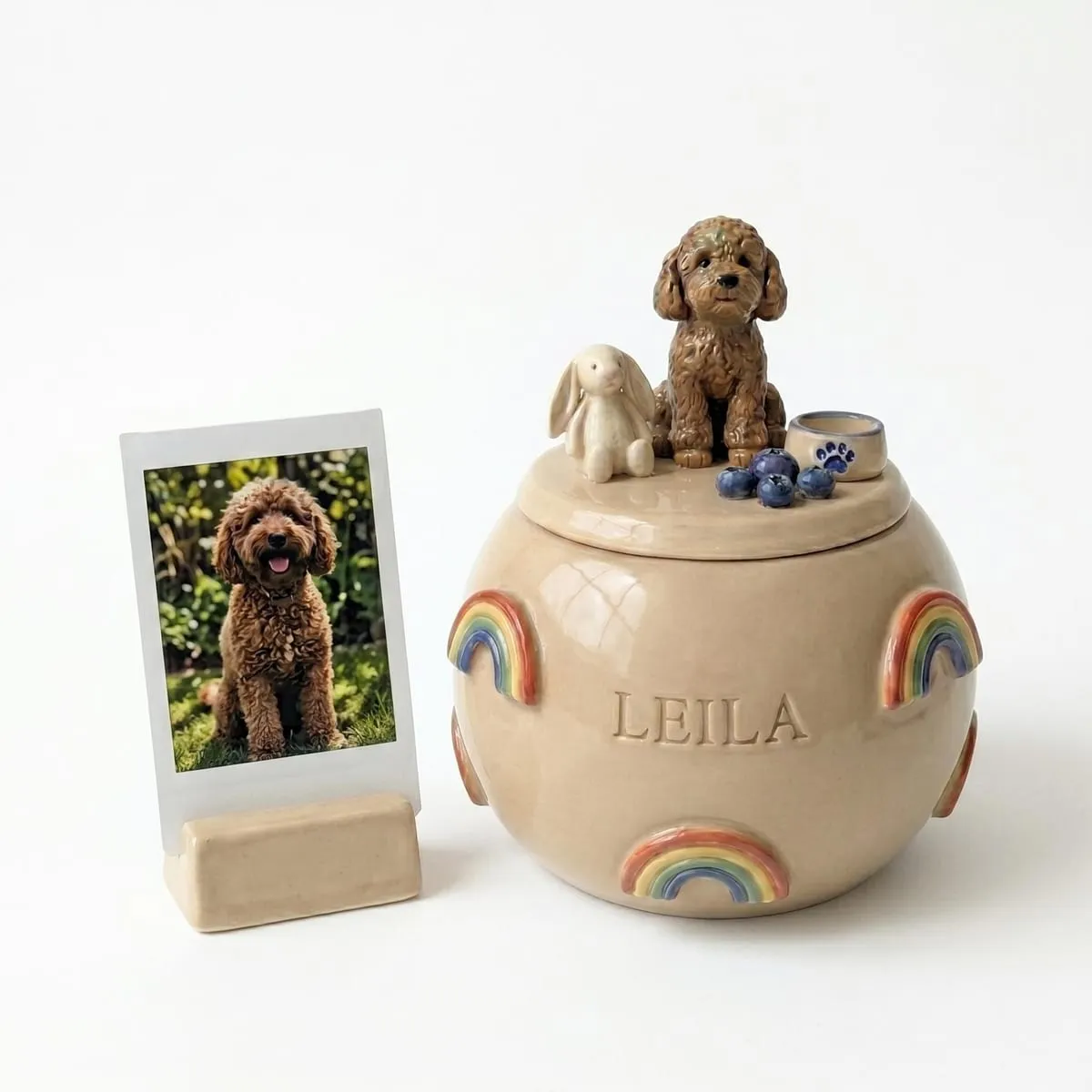
A handmade pet urn is one where a person shapes the clay, adds the detail and paints the colour, and finishes each piece, rather than a production line turning out the same piece many times over. The signs are there if you know where to look: small differences between pieces, marks left by tools and fingers, and decoration that is painted or cut rather than printed.
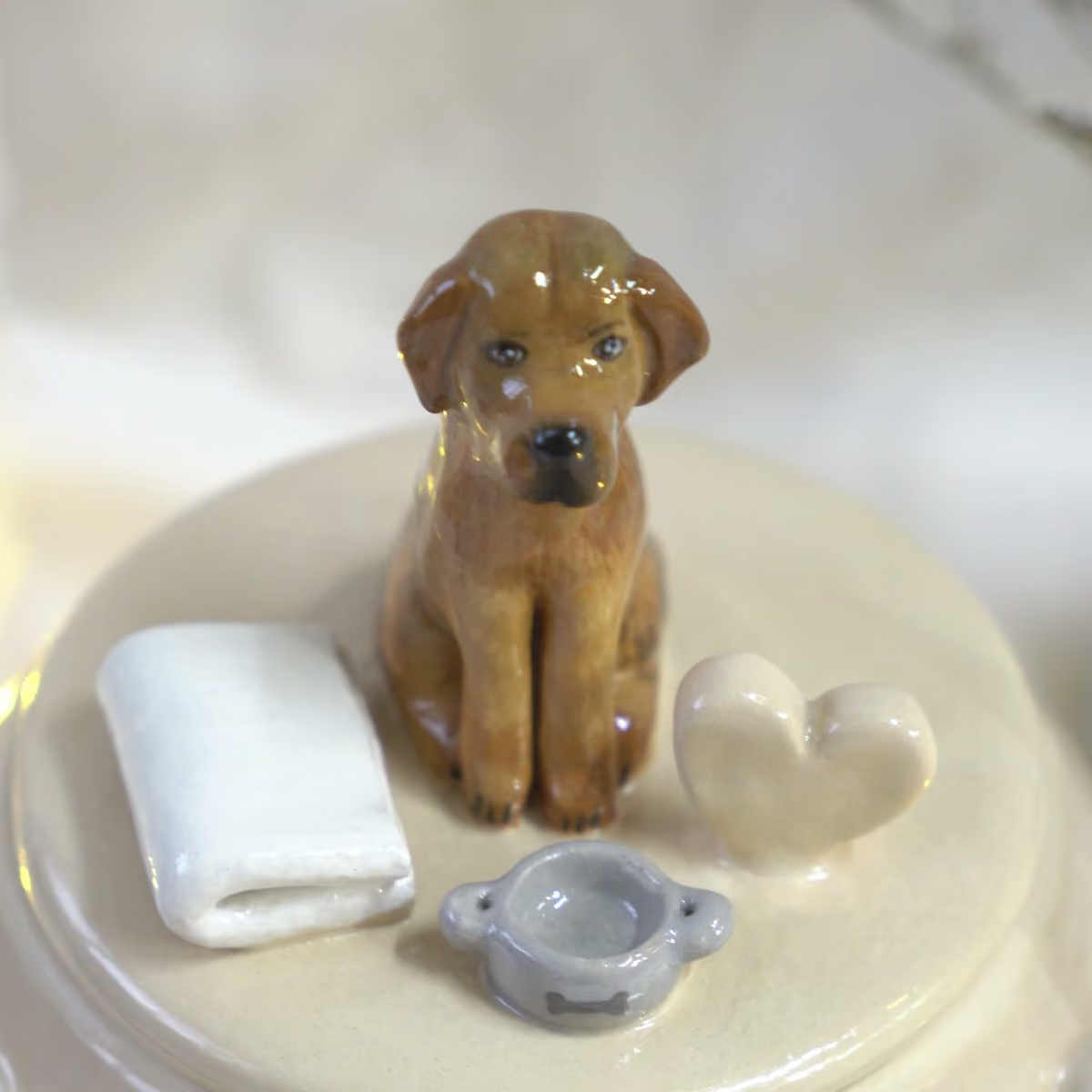
At Pepple Studio the figurine of your pet is always sculpted by hand from your photos, and you see it in raw clay before it is fired at 1200°C.
What makes a pet urn handmade?
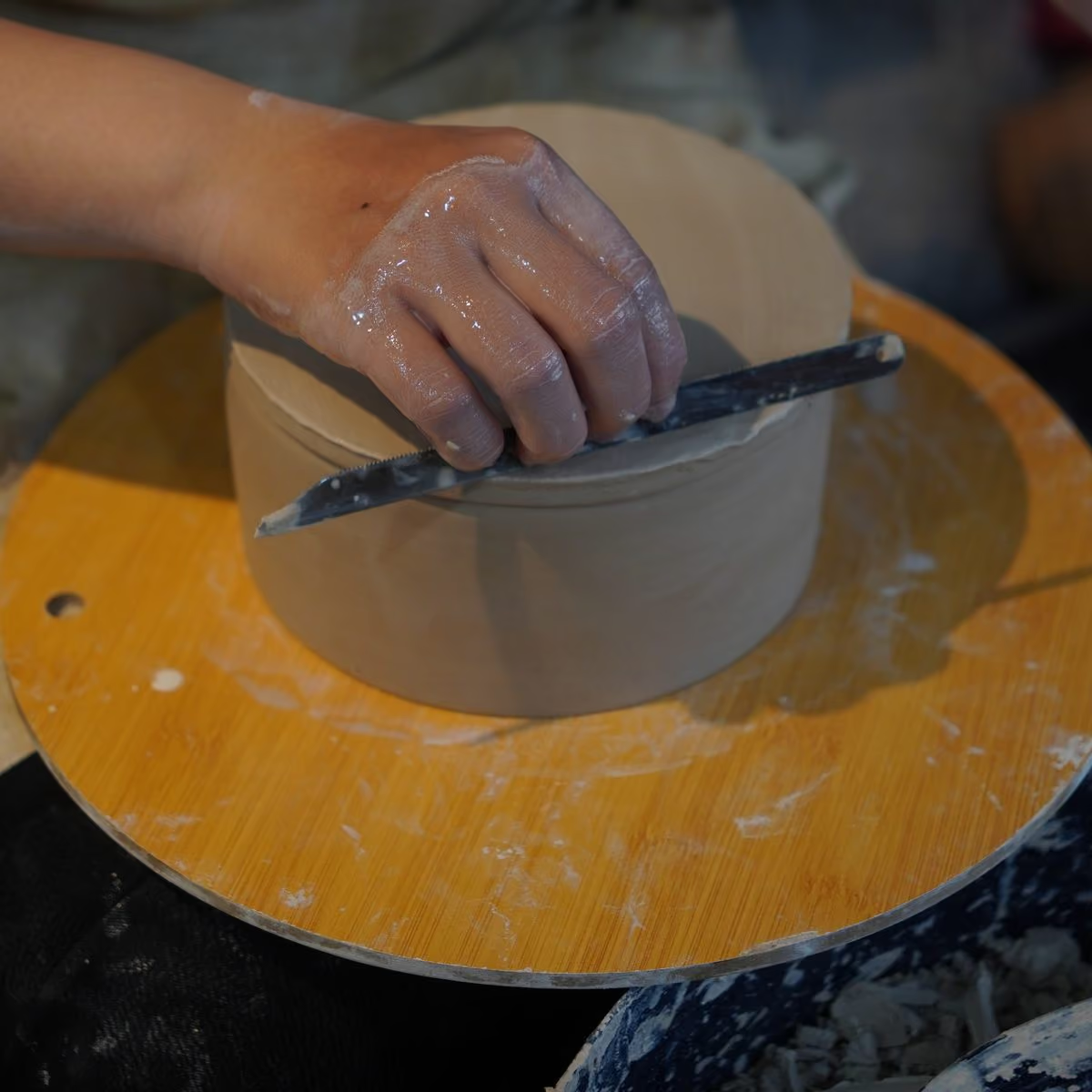
A pet urn is handmade when a person forms and finishes each piece, working the clay directly. Pottery urns for pets are shaped in several ways: on a potter’s wheel, built by hand from slabs or coils, or cast in a form in the studio and then trimmed, decorated and painted by hand. Using a form is not what makes an urn a factory piece. A factory urn comes off a line identical to the last hundred, often with a resin figure, and nobody works on it individually. The difference matters most for the part that carries the likeness. A Pepple Studio figurine is never cast or printed: it is built up in clay, by hand, from the pictures you send us. Our jars are worked by hand too: the first two photographs on this page show pieces being worked on the wheel, and on some designs the jar is cast in our studio and finished by hand, which the design page says.
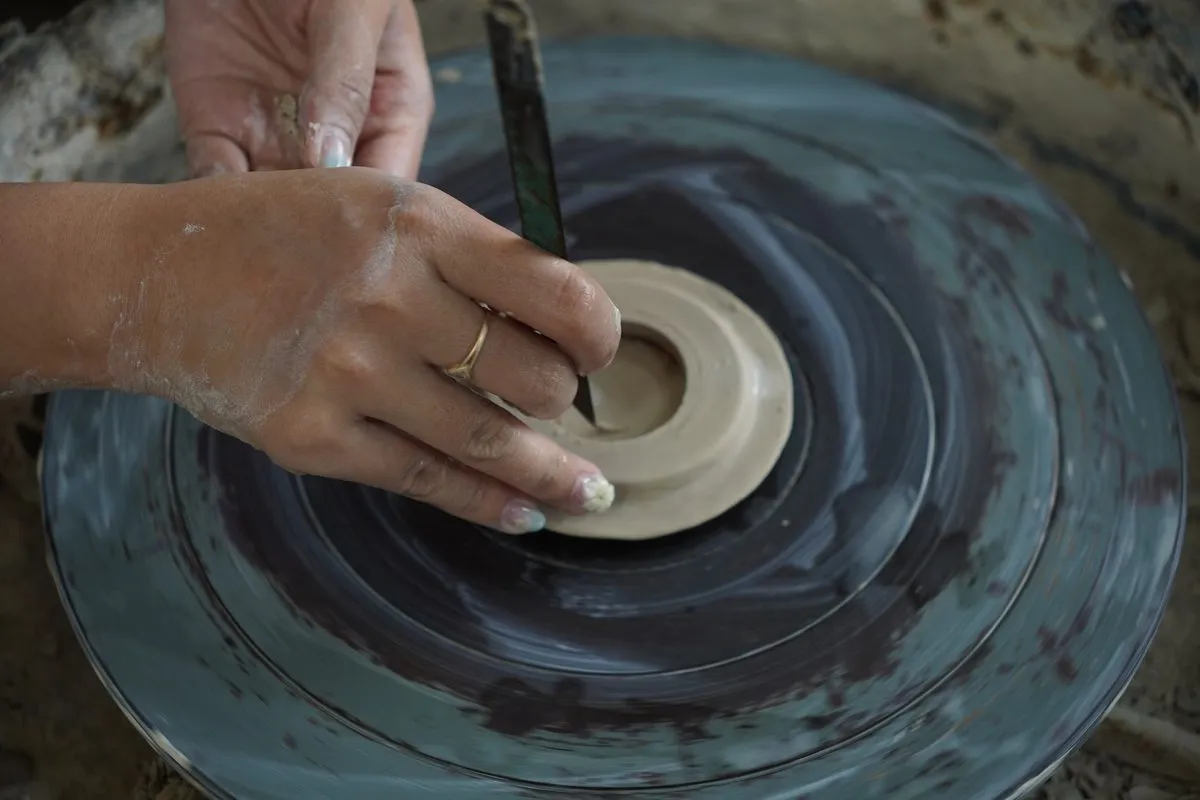
A piece turning on the wheel in our workshop. The spiral marks on the wheel head come from the clay being worked as it spins.
How can you tell a handmade urn from a factory one?
You can tell a handmade urn from a factory one by looking at the surface closely, comparing it with other pieces of the same design, and checking how the decoration was applied. No single sign is proof on its own, but several together usually are.
| What to check | Handmade | Factory-made |
|---|---|---|
| Shape and finish across pieces | Close, but no two finished quite the same | Identical, down to the decoration |
| Surface | Faint rings, tool marks or fingerprints where the clay was worked and finished | Uniform, with nothing done by hand after it leaves the line |
| Painted decoration | Visible brushstrokes, colour that thickens and thins | Flat, sharp-edged and perfectly even, often a printed transfer |
| Lettering | Your pet’s name, cut, stamped, painted or printed for that one piece | Often none, or a stock phrase that is the same on every piece |
| The figure | Made for your animal from your photos | Chosen from a range, the same pose for every buyer |
The table works best as a set of questions to put to a photograph. If every listing image shows the same face on a dozen different urns, the figure was not made for anyone in particular.
Are small irregularities a sign of a handmade urn?
Yes. Small irregularities on a handmade urn are the record of the hands that made it, not a fault. A line of glaze that pools slightly deeper on one side, a star cut a little off true: these come from one person working one piece. Our product pages say the same thing plainly: because every piece is made by hand, slight variations in colour, shape and brushwork are natural, and yours will not match a photograph to the millimetre. What should not vary is the likeness itself, which is why the figurine is the one stage you approve before anything is permanent.
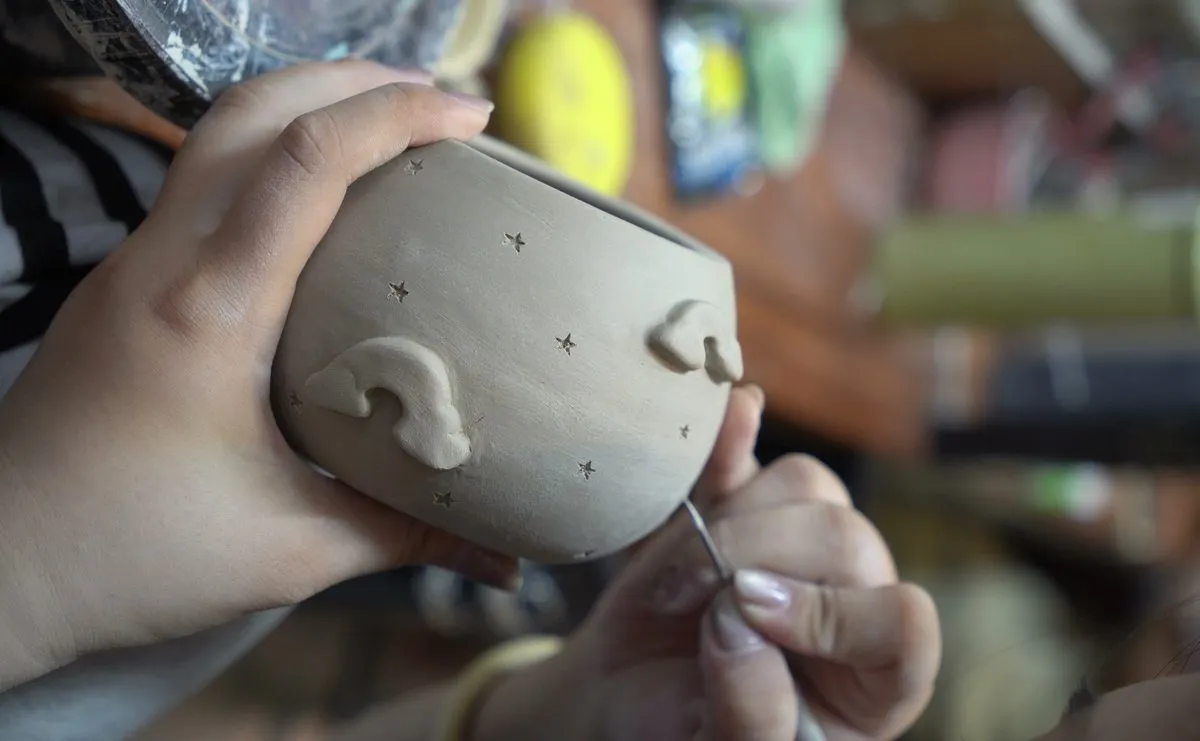
Detail added by hand to an unfired piece: raised shapes joined to the surface, and each star cut in separately with a needle tool, so no two sit at quite the same angle.
Can an urn be called handmade if parts are made by machine?
An urn can be sold as handmade even when only part of it was made by hand, because the word is used loosely. A factory jar with a printed photo and a hand-tied ribbon is handmade only in the ribbon, while a jar cast in a studio and then trimmed, decorated and painted by a person has had hands on every part you can see. Neither label is dishonest in itself, but they describe very different pieces. The useful question is not whether something is handmade but which parts are, and who worked on them. At Pepple Studio the part that changes with the design is the jar; the part that never changes is the figurine, which is always sculpted by hand from your photos and which you approve in raw clay before it is fired. For the likeness in particular, where the choice is between painting, sculpting and printing, sculpted or printed sets out what each method can and cannot capture.
What should you ask before buying a handmade pet urn?
Before buying a handmade pet urn, ask the maker five plain questions, and expect plain answers. Here they are, with how Pepple Studio answers each one:
- Is the figure made for my pet, or chosen from a range? Ours is sculpted by hand from the photos you send; how we sculpt your pet shows the stages.
- Will I see it before it is fired? Yes. You get a photo of the raw clay, and changes at that point are free.
- Is the decoration painted or printed? Our decoration is painted, raised or cut by hand; on a few designs the name is printed, and each design page says which.
- What temperature is it fired at? 1200°C, high enough to close the clay, which why we fire at 1200°C explains.
- How long will it take? Making takes two to three weeks, and delivery a further 7 to 14 business days; why a custom urn takes weeks breaks that down.
A maker who cannot answer these clearly is telling you something too.
Seeing our handmade urns
Every design we make, with the figure sculpted by hand and the price in your own currency, is in our collection of handmade ceramic pet urns.