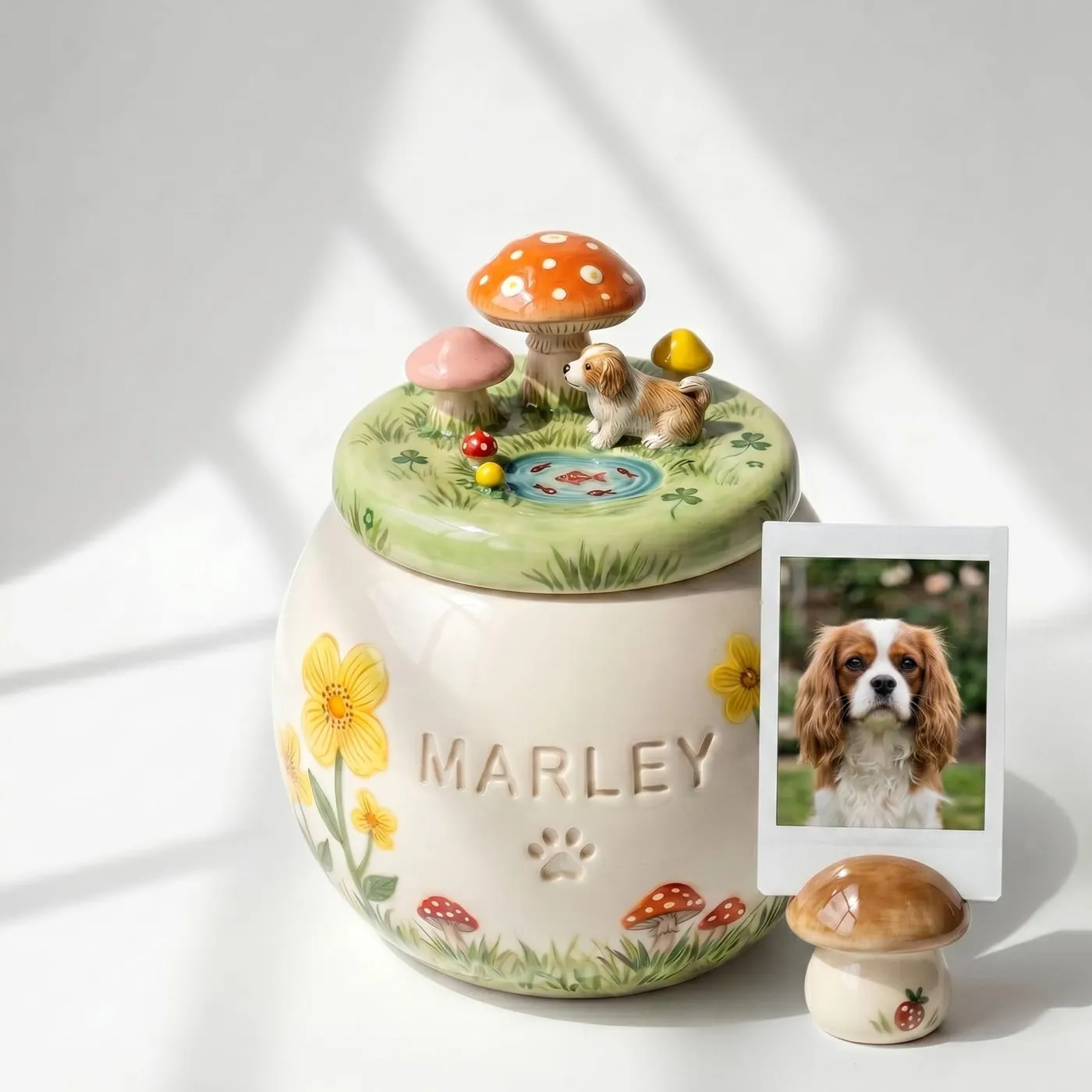
Ceramic vs Wood Pet Urn: Which Material Suits You?
Ceramic or wood for a pet urn: how each copes with damp and time, what each can show of your pet, how they open, and the cases where a wooden urn is the better choice.
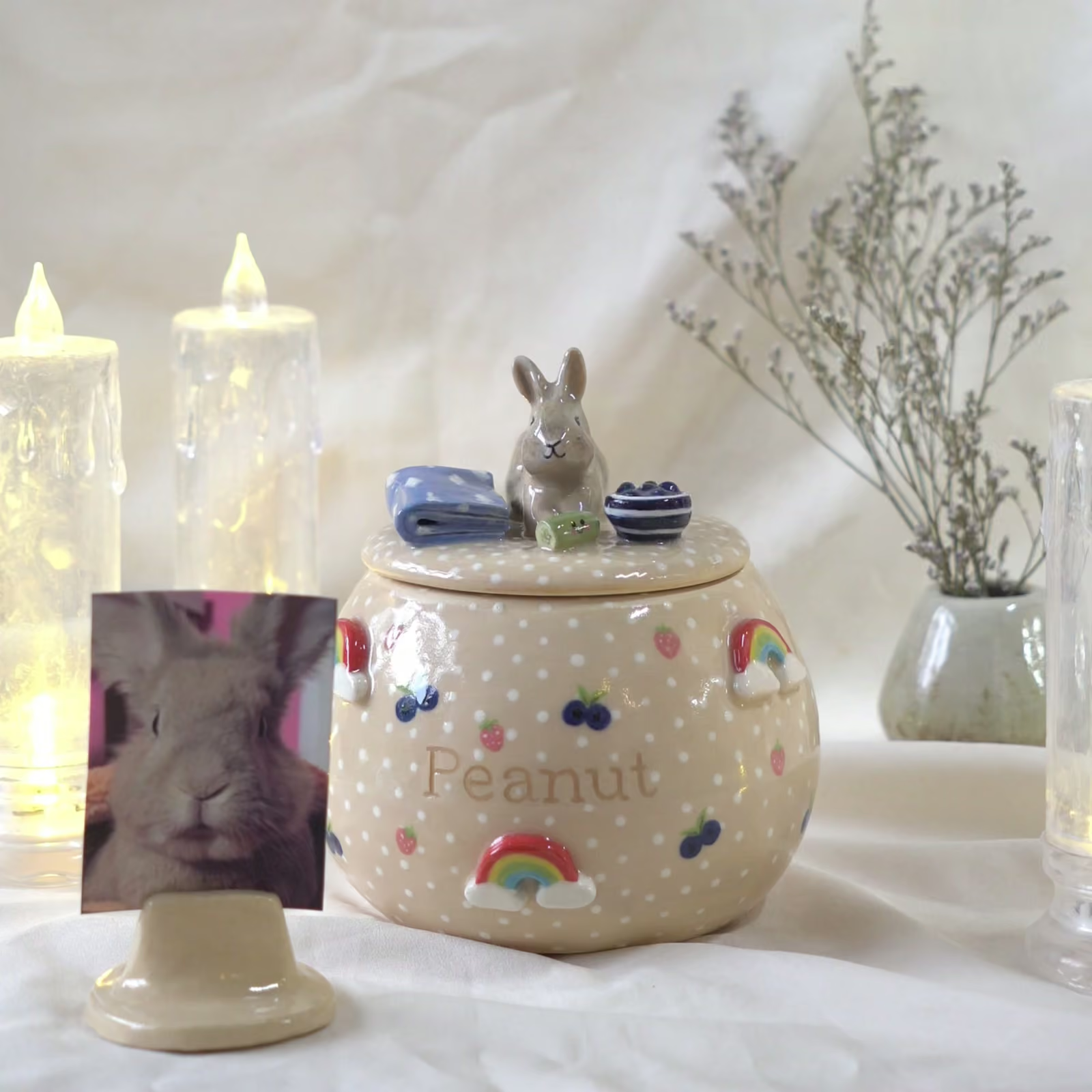
A ceramic pet urn and a wooden one both keep ashes safely indoors for as long as you want. The difference is in the material: wood is light, warm to the touch and easy to engrave, but it takes on and gives off moisture with the air around it; ceramic fired at 1200°C is dense and glass-like, heavier, and can carry a sculpted or painted likeness of your pet.
For a shelf in a dry room, either works. For a damp room, a garden or a likeness, ceramic has the edge. For travel, or if you love the look of grain, wood can be the better choice.
Is a ceramic or wooden pet urn better?
A ceramic or wooden pet urn is better depending on where it will stand and what you want it to show. Both are sound containers for a home, because cremated remains are dry and usually stay in the sealed bag the crematorium returns them in, inside whichever urn you choose. On a shelf in a dry room with a steady temperature, either material keeps the ashes as well as the other, and the choice comes down to look, weight and feel. Ceramic is the stronger choice for a damp room, for an urn that may one day go into the ground, or for one that should look like your pet. Wood is the stronger choice when the urn has to travel, or when it should sit among wooden furniture and match it. So the ceramic vs wood pet urn question is settled by the room and the purpose more than by the material itself.
| Wood | High-fired ceramic | |
|---|---|---|
| Weight | Light | Heavy for its size |
| Reaction to damp | Takes on and loses moisture with the air, so it swells and shrinks a little | Fired dense; absorbs very little water |
| Indoors, for years | Lasts well if kept dry | Lasts well |
| In wet ground | Can decay unless the wood is naturally durable or treated | Does not decay |
| What it shows | An engraved name, often a photo frame | A sculpted figure, painted or raised decoration, a cut or stamped name |
| How it usually opens | A panel on the base, held by screws | A lid on top, left removable; can be sealed with clear silicone or epoxy if you prefer |
| Feel | Warm, with visible grain | Cool and smooth under the glaze |
Does a wooden urn crack or warp?
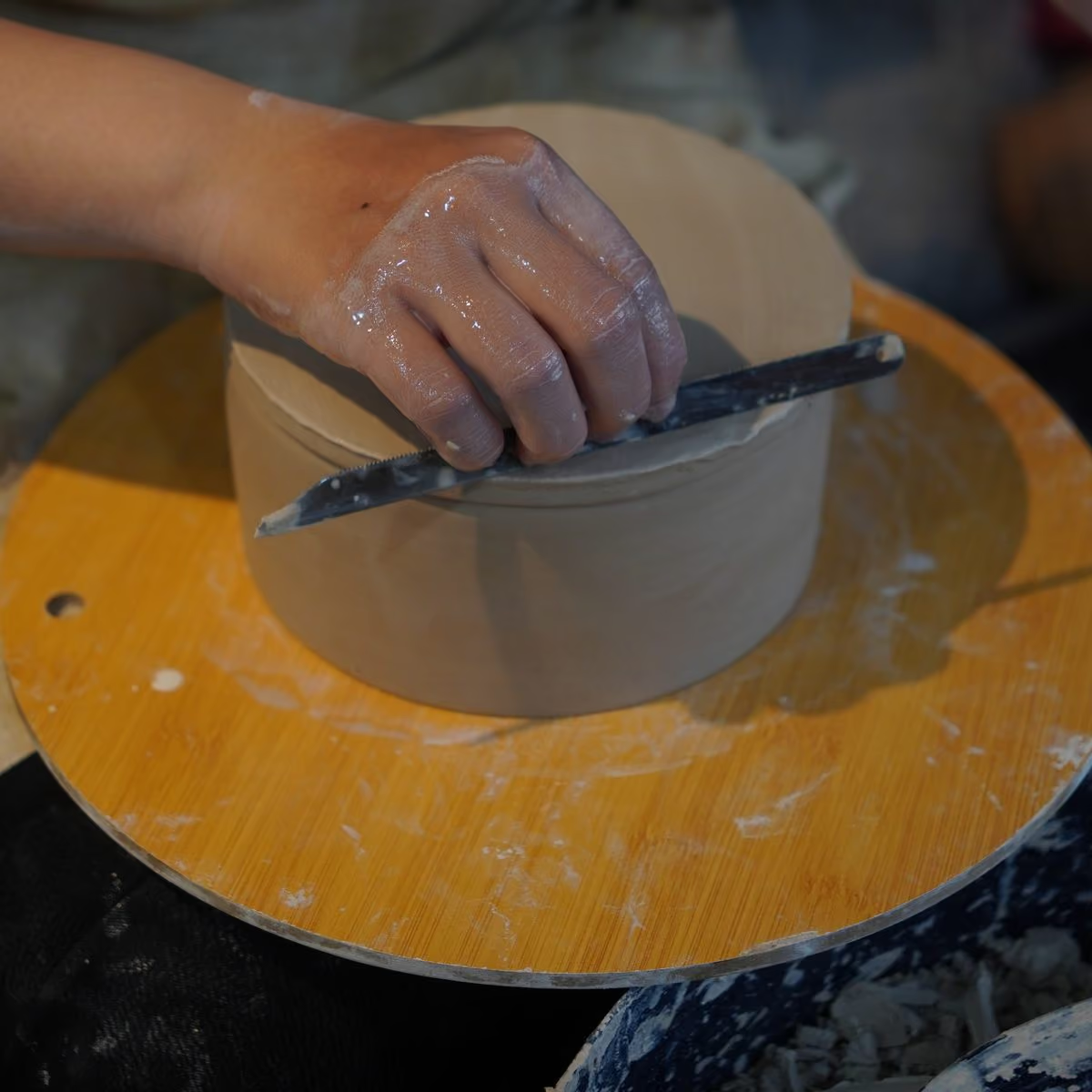
A wooden urn can move slightly with the seasons, because wood is hygroscopic: it takes on moisture from the air when the room is humid and gives it back when the air is dry, swelling and shrinking a little as it does. The Wood Handbook, the reference published by the US Forest Products Laboratory, explains that coatings such as varnish, lacquer or paint can slow these changes but not prevent them, and that short-term swings tend to reach only the surface, so in a home kept at a steady temperature the movement is small. It matters more on a sunny windowsill, near a radiator or in a bathroom, and it shows first where parts fit together: a lid, a base panel, a joint. A ceramic urn fired at 1200°C barely responds to humidity, because the clay is vitrified in the kiln and takes in very little water afterwards. Why we fire at 1200°C explains what that firing does to clay.
Will a wooden urn rot?
A wooden urn will not rot on a shelf indoors. According to the same Wood Handbook, serious decay only happens when wood is far wetter than ordinary room air can make it, and it needs liquid water from rain, condensation or wet ground to get there; humid air alone may allow mould, but wood kept dry does not decay. The risk is outdoors. A wooden urn buried in damp soil is in exactly the conditions that let decay start, unless it is made from a naturally durable species or treated for ground contact. Fired ceramic gives fungi nothing to feed on, so decay is not a risk for it in the ground. If you are weighing up where the ashes should stay, our article on keeping pet ashes at home covers the indoor side.
What can each material show of your pet?
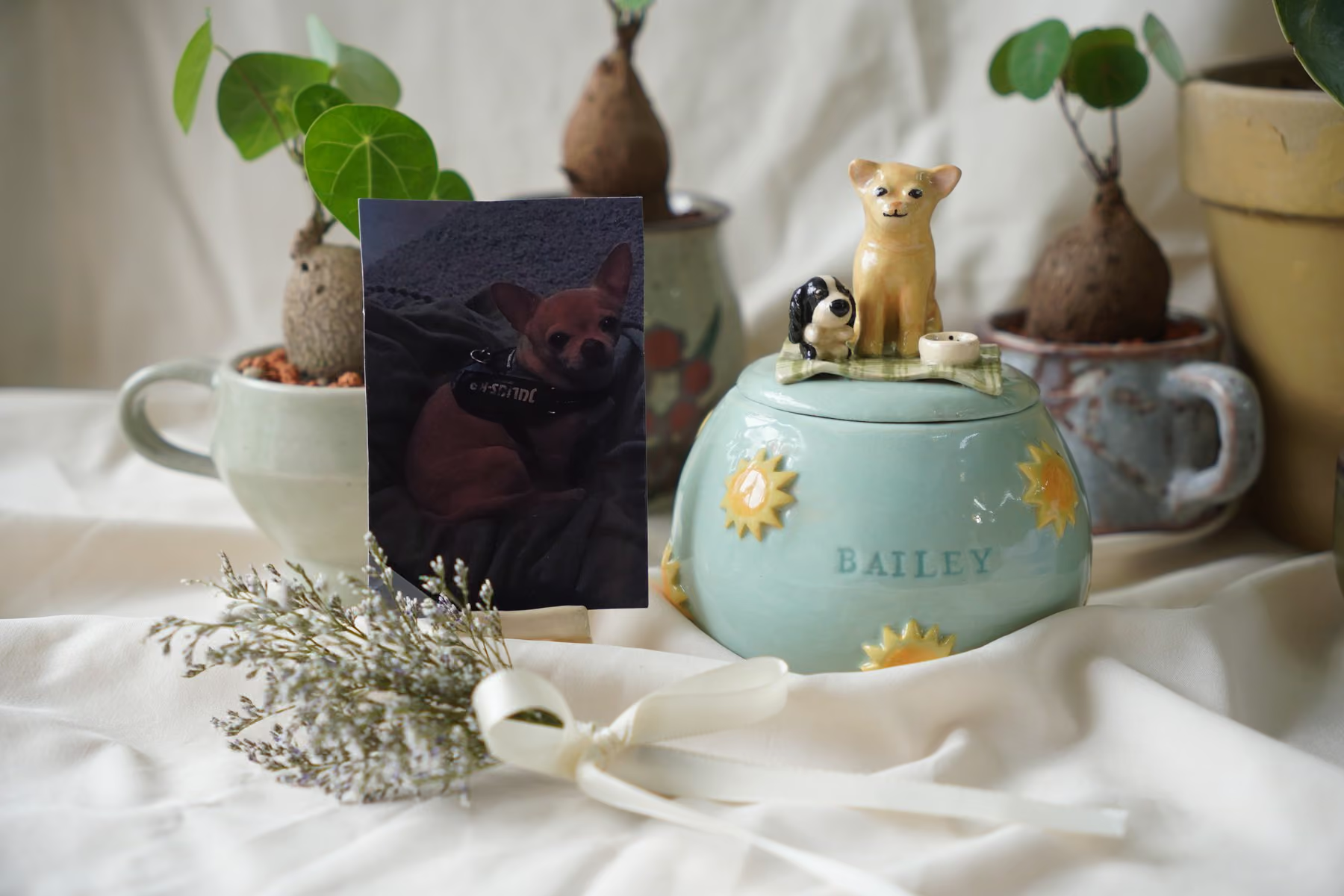
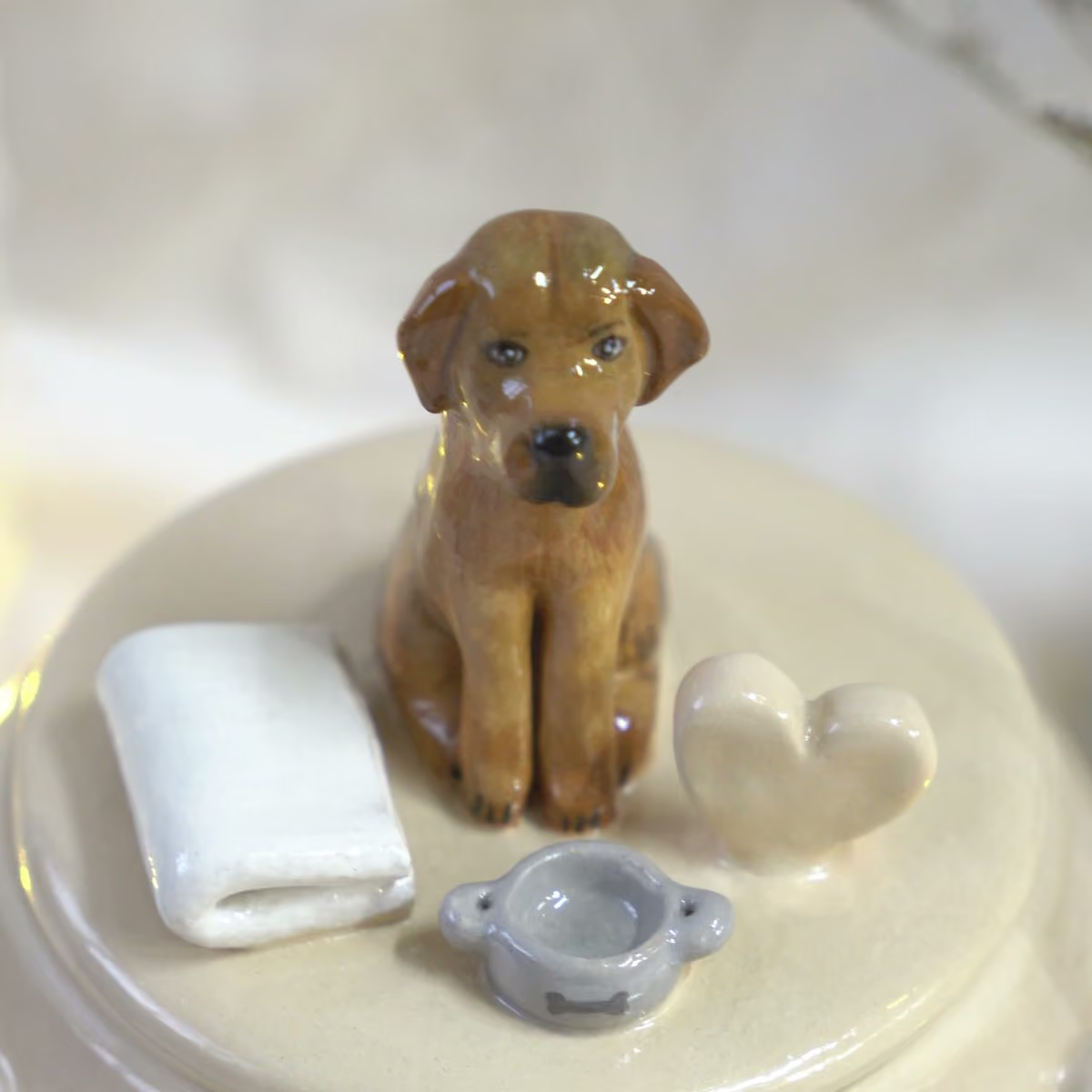
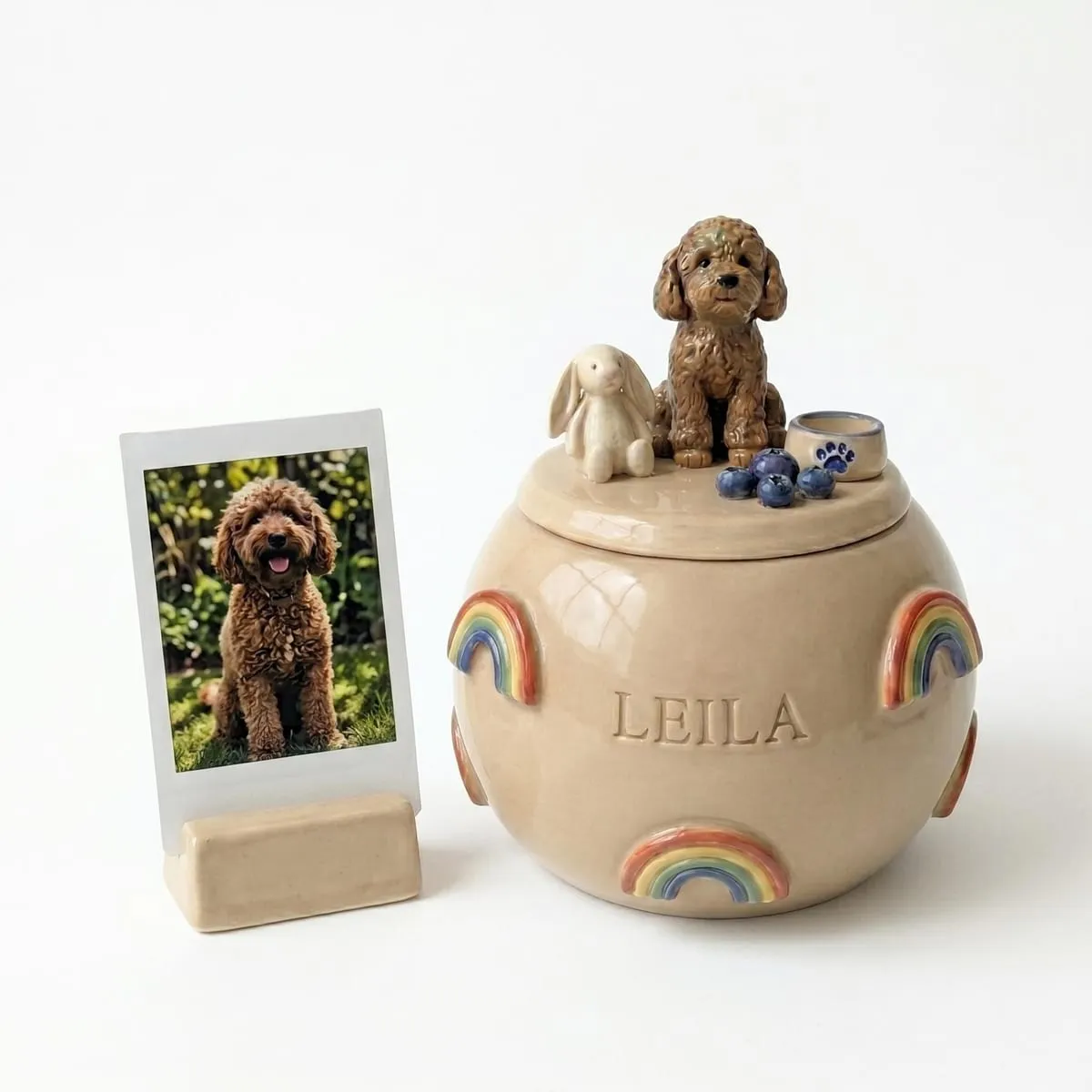
Wood shows your pet mostly through words and pictures: a name and dates engraved into the lid, and often a small frame on the front for a photograph. Ceramic can carry the animal itself. At Pepple Studio a figure of your pet is modelled by hand in clay, working from your photos, and goes through the kiln already joined to the lid; the jar can be painted or carry raised flowers, clouds or stars, and the name is cut, stamped or painted on before firing, so it cannot wear off. If you want a photograph as well, most of our urns can be ordered with a small photo stand that holds a print beside the figure, so you are not choosing between a likeness and a picture. Pet portrait urns compares the ways a likeness can go onto an urn.
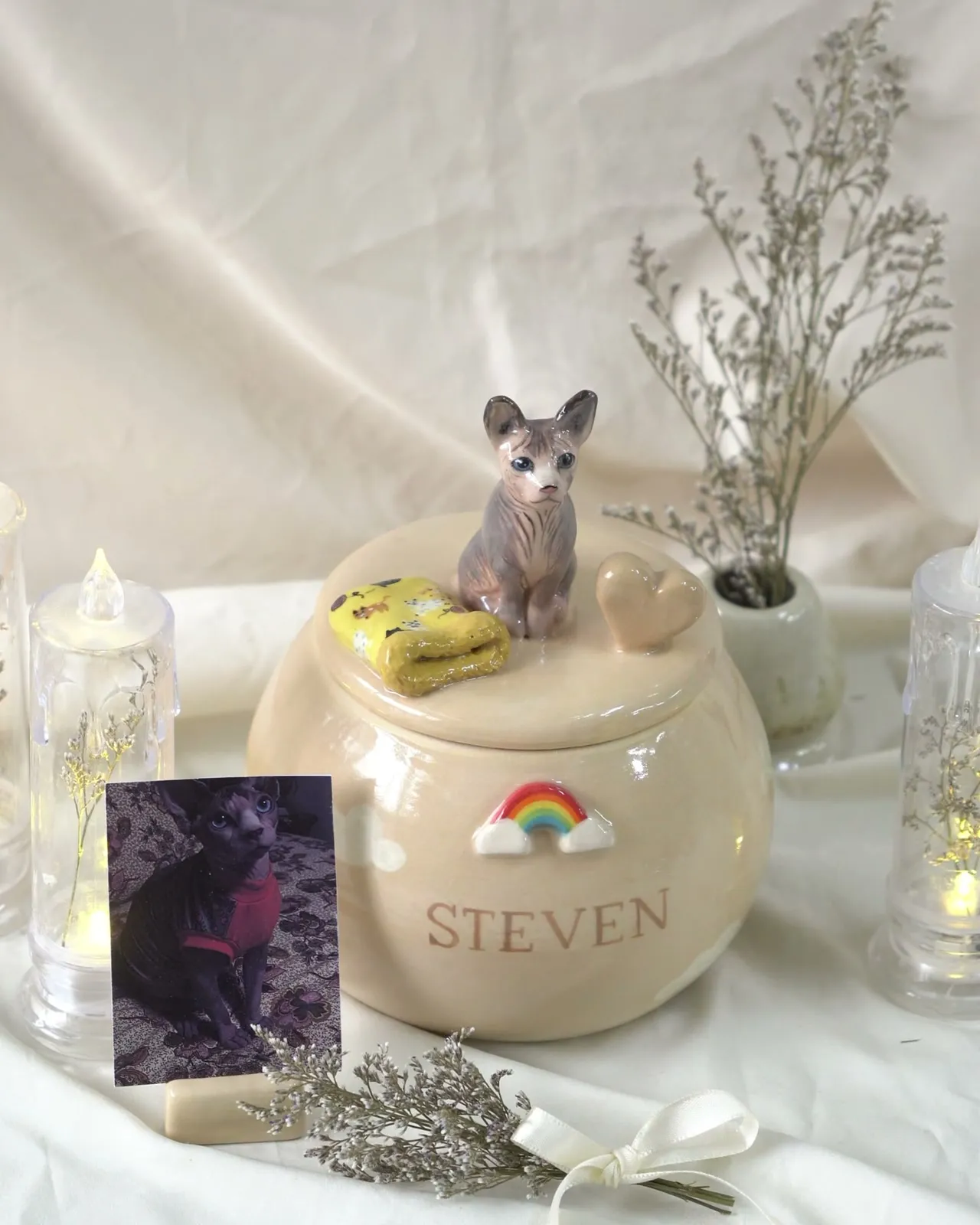
A finished urn photographed in our studio. The cat, the blanket and the heart are sculpted and fired with the lid, under the same glaze as the jar.
When is a wooden urn the better choice?
A wooden urn is the better choice when weight matters more than anything else, or when the look of wood is the point. If you need to fly with the ashes, a light container is simply easier to carry, and what pet urns are made of sets out what airport security in the US expects. If your home is full of oak or walnut and you want the urn to sit among it, a wooden box will match in a way glaze cannot. And if a simple engraved name and a photograph are all you want, wood does that well. Ceramic is the better choice when the urn will live somewhere damp or outdoors, when you want it to look like your pet rather than like a box, or when you want something that will look the same in twenty years as it does the day it arrives. Whichever you choose, check the capacity against your pet’s weight first, using our size guide.
Seeing our ceramic urns
Every Pepple Studio urn is high-fired ceramic made by hand, most with a figure of your pet sculpted on the lid, and you can browse the whole range, priced for your country, among our ceramic pet urns.