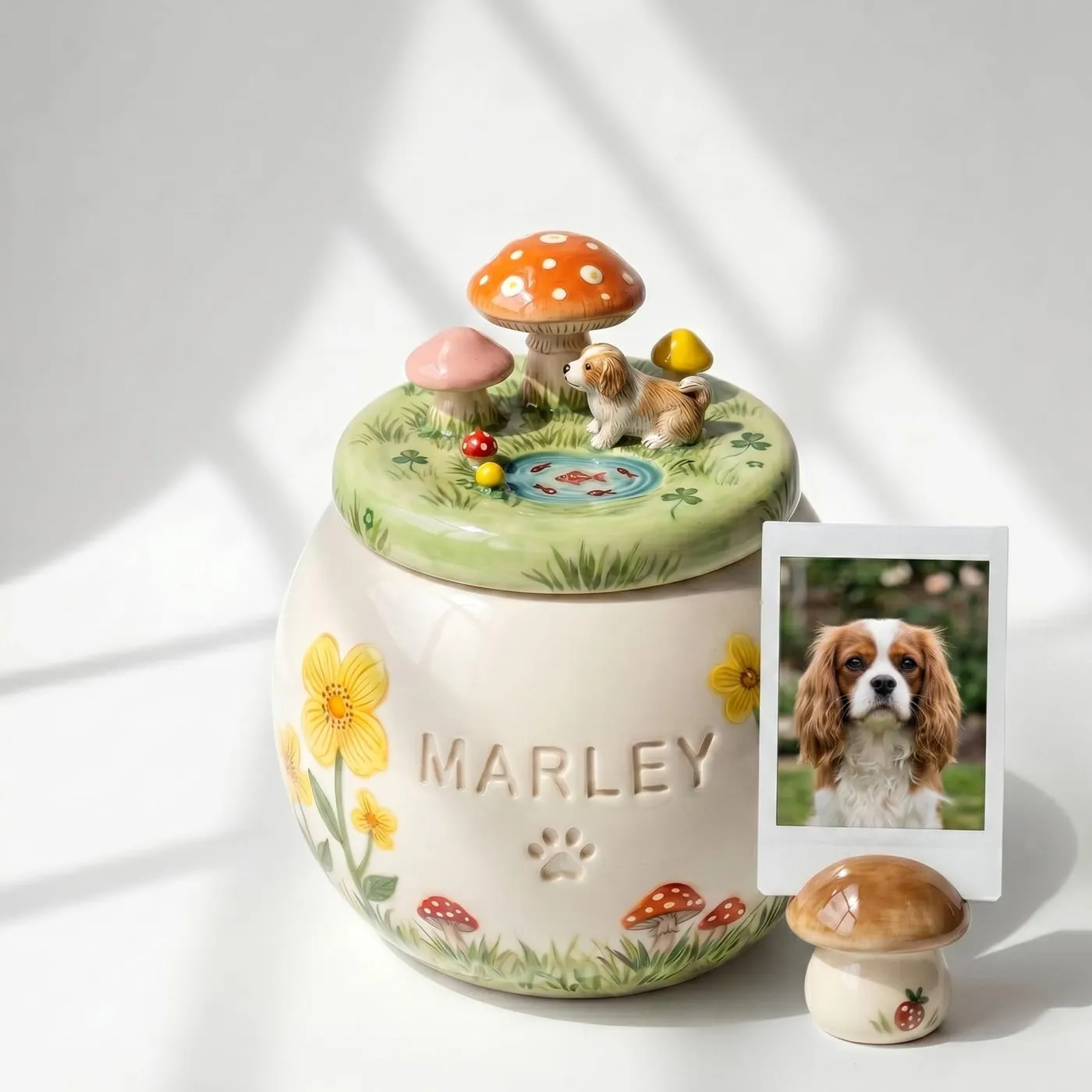
Pet Portrait Urns: Painted, Drawn, Relief or Figurine
A pet portrait urn can carry a painted or drawn portrait, a face sculpted in relief or a figurine on the lid. How each is made, which photos it needs, and how to choose.
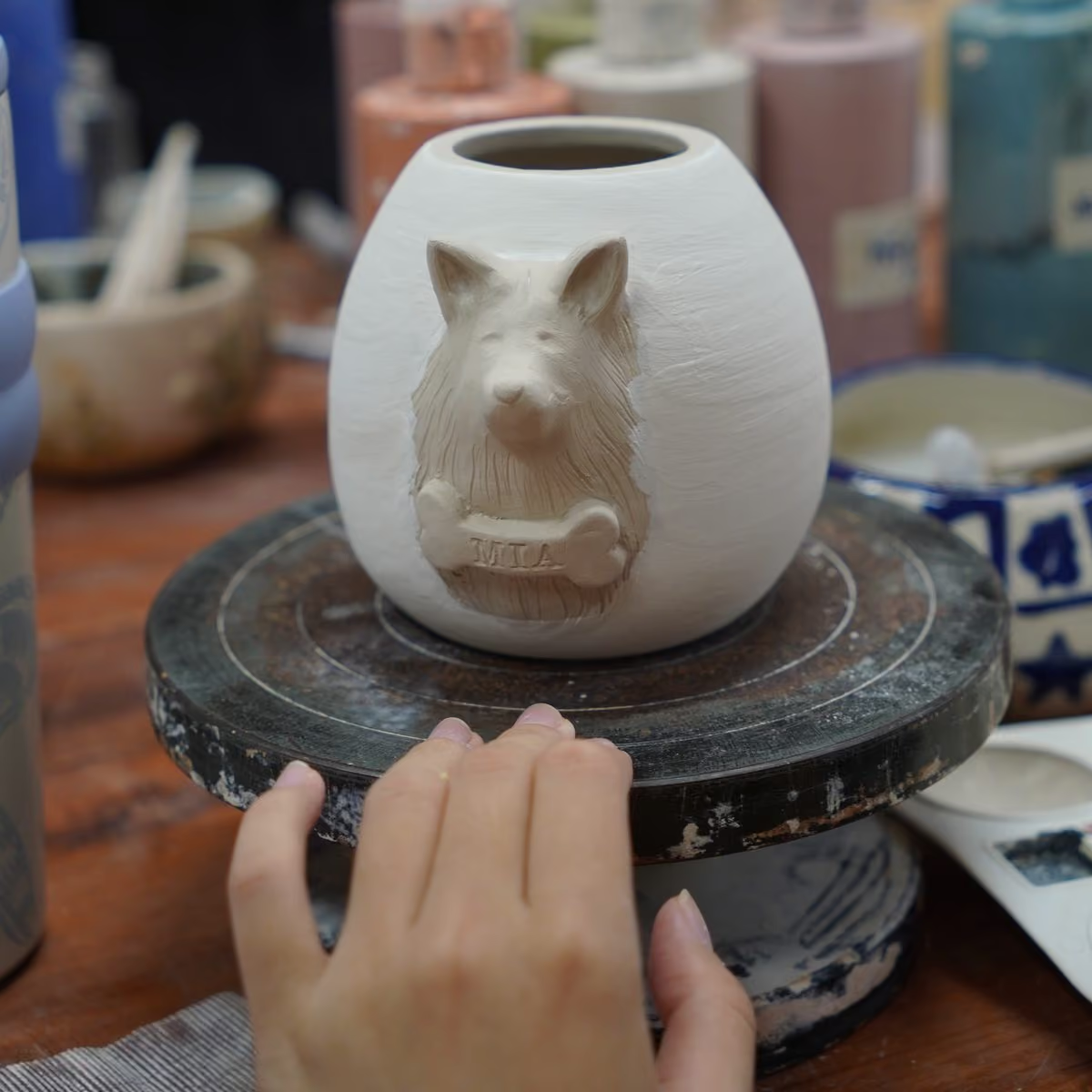
A pet portrait urn is an urn made to show one animal in particular, and at Pepple Studio that likeness takes four forms: a portrait painted on the jar, a portrait drawn on it, a face sculpted in relief on the side, or a figurine of your pet on the lid. Each is made by hand from your photos.
The form decides which photos you need, how the likeness looks from across a room, and whether you can feel it under your hand.
What is a pet portrait urn?
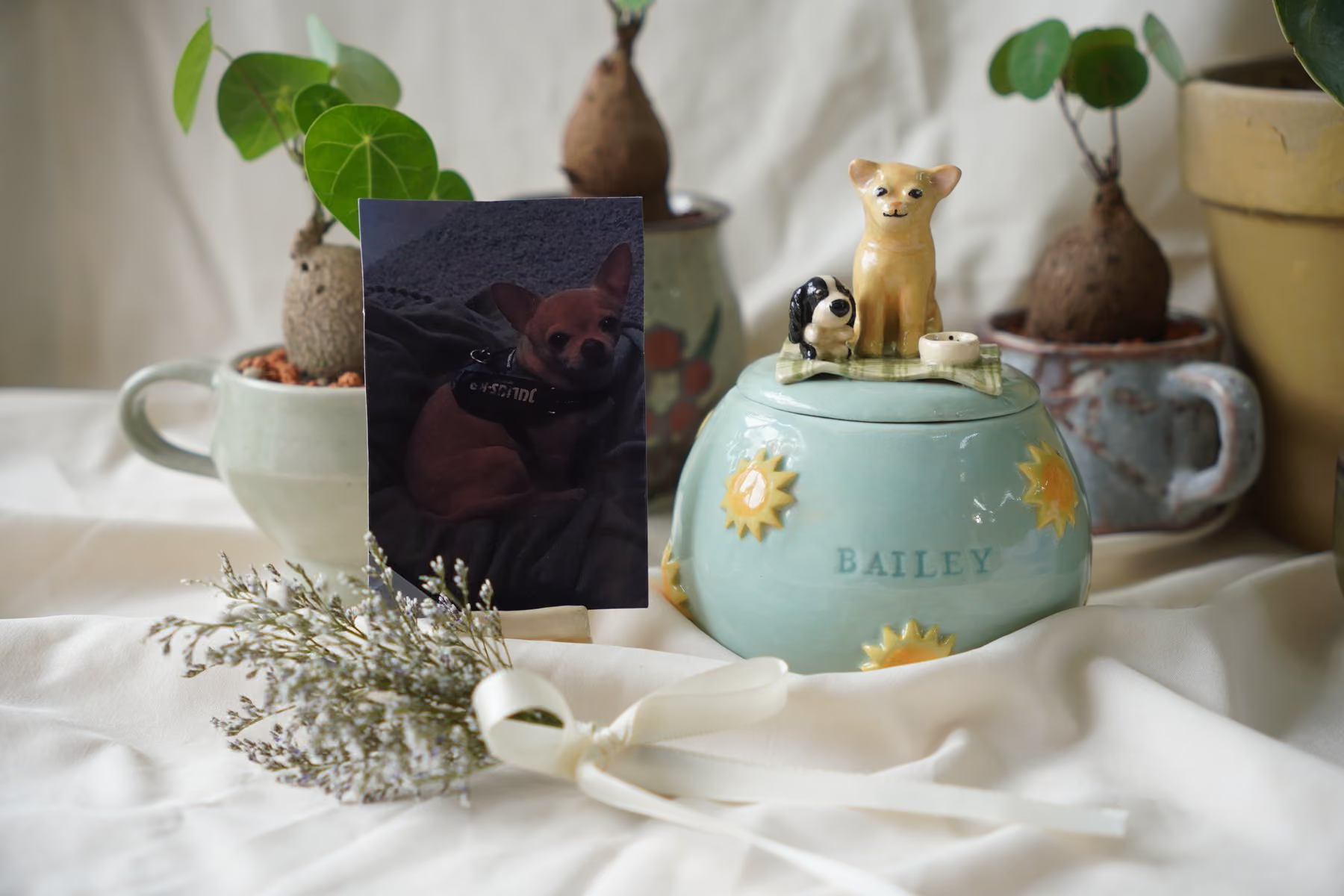
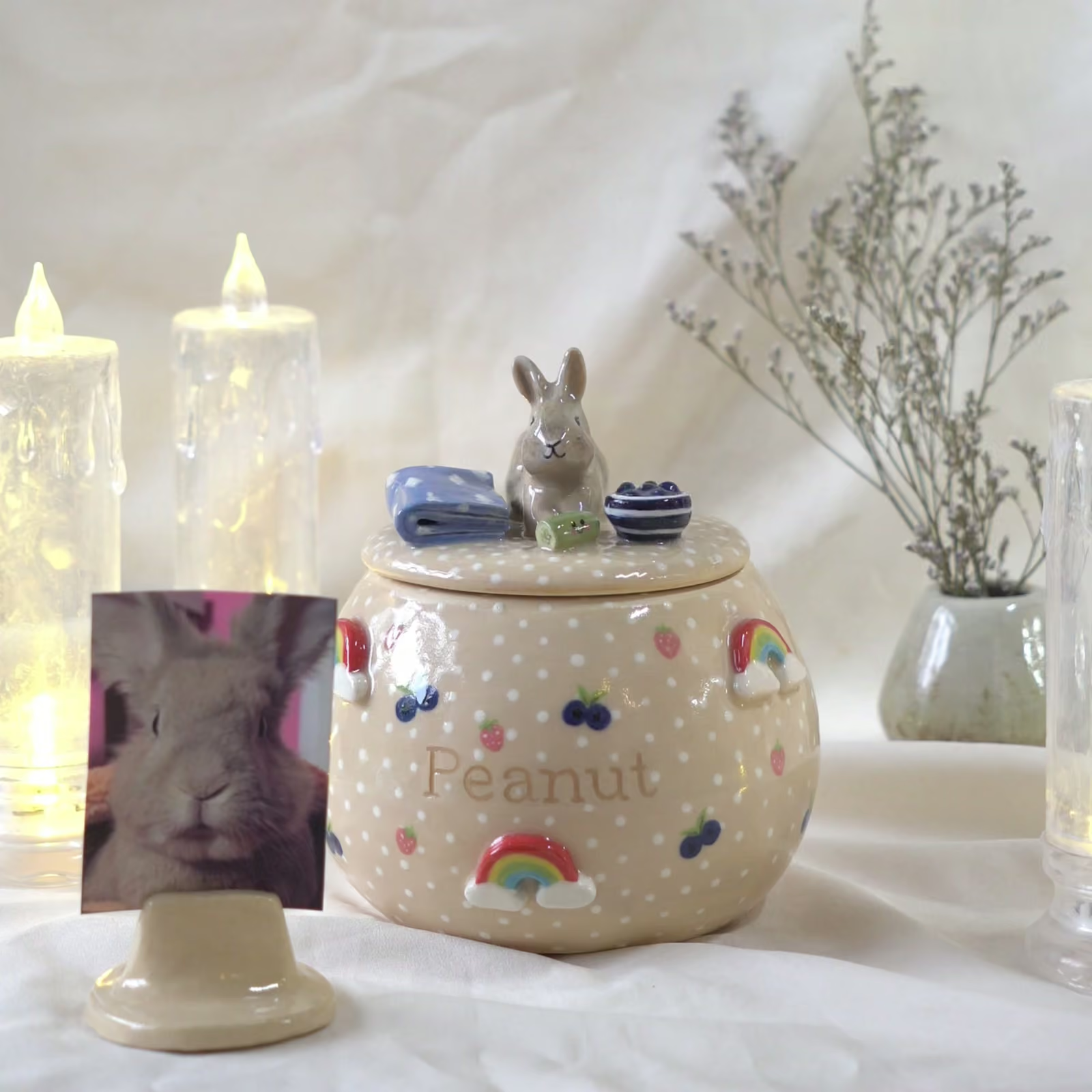
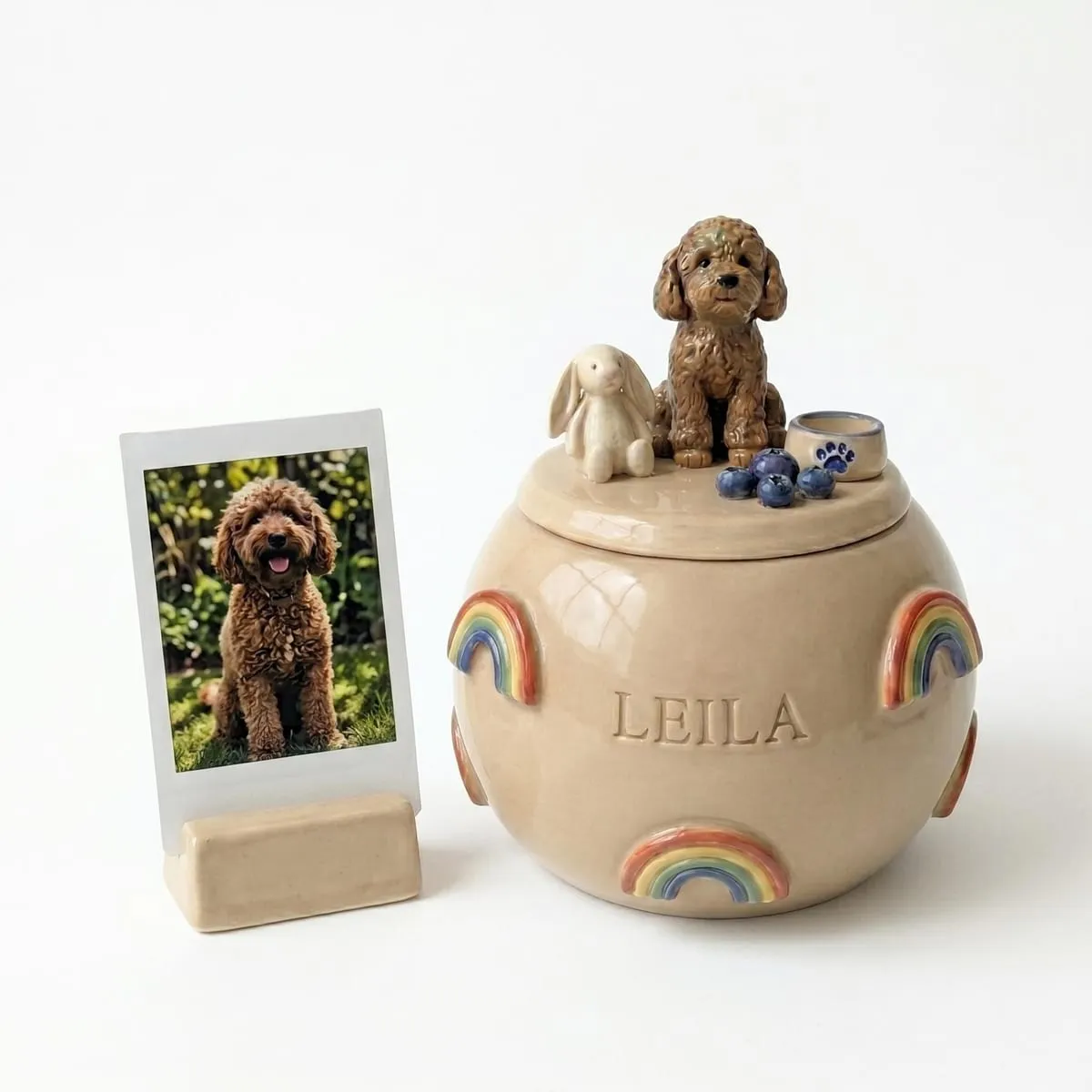
A pet portrait urn is a container for ashes that shows the animal itself rather than a generic paw print or a name alone. Pepple Studio makes four kinds, and they differ in whether the likeness is flat or three-dimensional and where on the urn it sits. All of them can be ordered with or without a small photo stand, which turns the urn into a photo display as well: a printed photo stands beside whichever likeness you choose. On the last design in the table, the slot for the photo is built in behind the figurine.
| Form | Example | Where the likeness sits | Photos it is made from |
|---|---|---|---|
| Painted portrait | Hand-Painted Portrait Pet Urn | Painted on the body, with the name on a banner | Your photos of the pet |
| Drawn portrait | Hand-Drawn Portrait Urn | On a glossy white jar, over a pastel splash, with name and years | One clear photo taken face-on |
| Face in relief | Sculpted Face Relief Pet Urn | The face sculpted on the side, with a bone-shaped name plaque | Your photos of the face and coat |
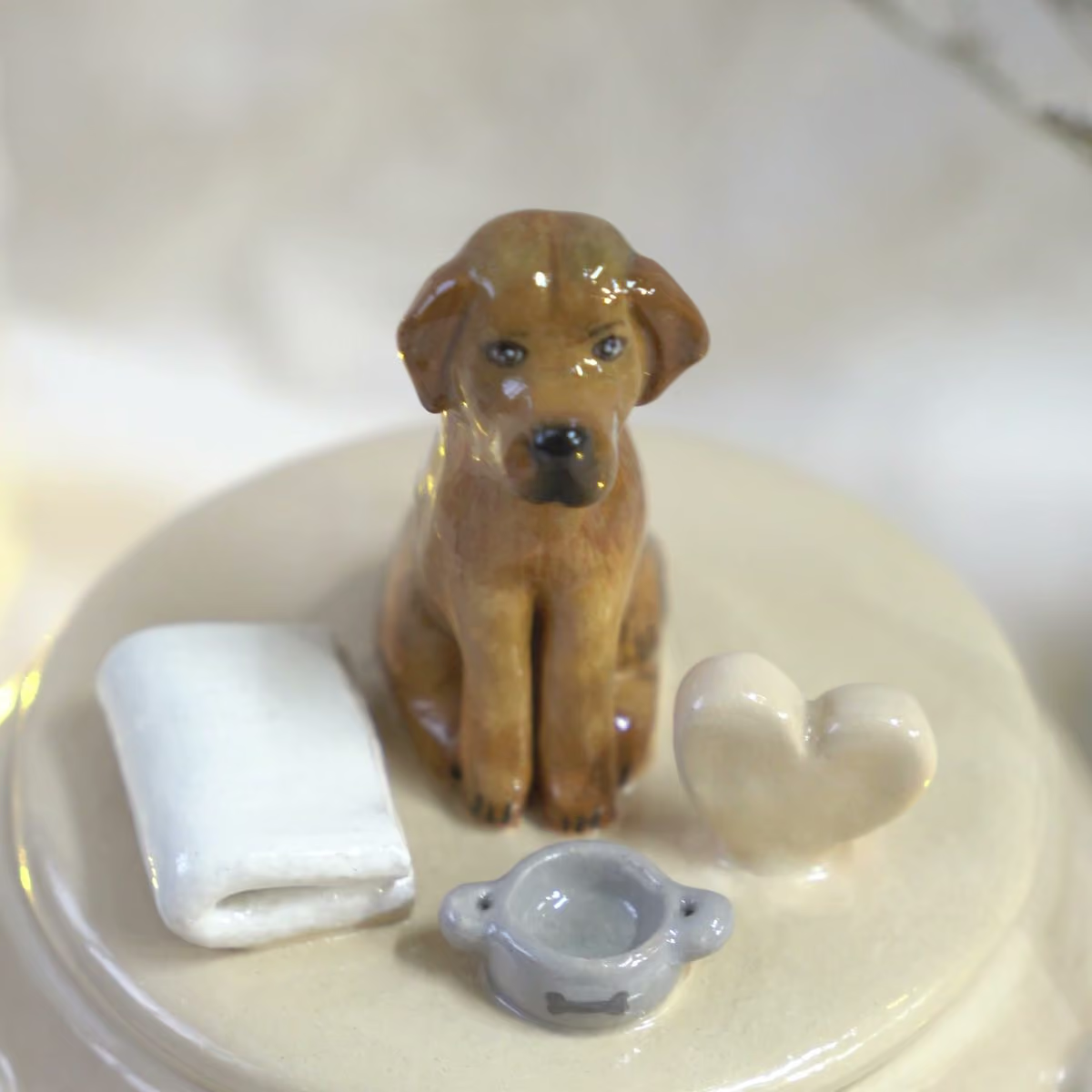
| Figurine | Urn with a hand-sculpted figurine | The whole animal, sculpted on the lid | Several photos from different angles |
| Figurine and photo | Urn with a photo stand | A figurine on the lid, with a slot behind it for a small photo | Several photos, plus the print you want to show |
What photos does a pet portrait urn need?
The photos a pet portrait urn needs depend on whether the likeness is flat or sculpted. A painted or drawn portrait shows the animal from one side only, so it is made from a single good view: the drawn portrait at Pepple Studio asks for one clear photo taken face-on. A face in relief is sculpted from your photos of the face and coat, so clear pictures of both matter most. A figurine is the most demanding, because it can be seen from every side, and it is modelled from several photos taken from different angles. If you have one excellent photo of their face and little else, a painted or drawn portrait will make the most of it. If you have a phone full of them from every direction, every form is open to you. What makes a photo useful, and what to do with old ones, is covered in the photos we need.
What is the difference between a painted and a sculpted portrait?
The difference between a painted and a sculpted pet portrait on a Pepple Studio urn is that one is carried by colour and the other by shape. A painted or drawn portrait is flat: it reads best from the front, it can hold fine detail in the eyes and the markings, and it can show a scene around the animal as well as the animal itself. A face in relief or a figurine has real depth, so it catches light and shadow and changes as you walk past it, and you can feel the ears and the fur under your fingers. On the face relief the texture of the fur is sculpted into the clay along with the face. Neither is more accurate by nature. A sculpted likeness has limits set by its size, which how accurate a pet figurine can be explains, and a painted one is limited by the photo it is painted from.
Can you combine a portrait with a figurine or a photo?
You can combine a portrait with a figurine or a photo on a Pepple Studio urn, and the urn pictured below does exactly that. It has a scene painted round the body, a person on a beach with a small black dog beside them, and the same dog sculpted as a figurine on the lid. The photo stand is the other way to combine them: it puts a real photograph next to the hand-made likeness, so the urn shows both the animal as you saw it and as the artist made it.
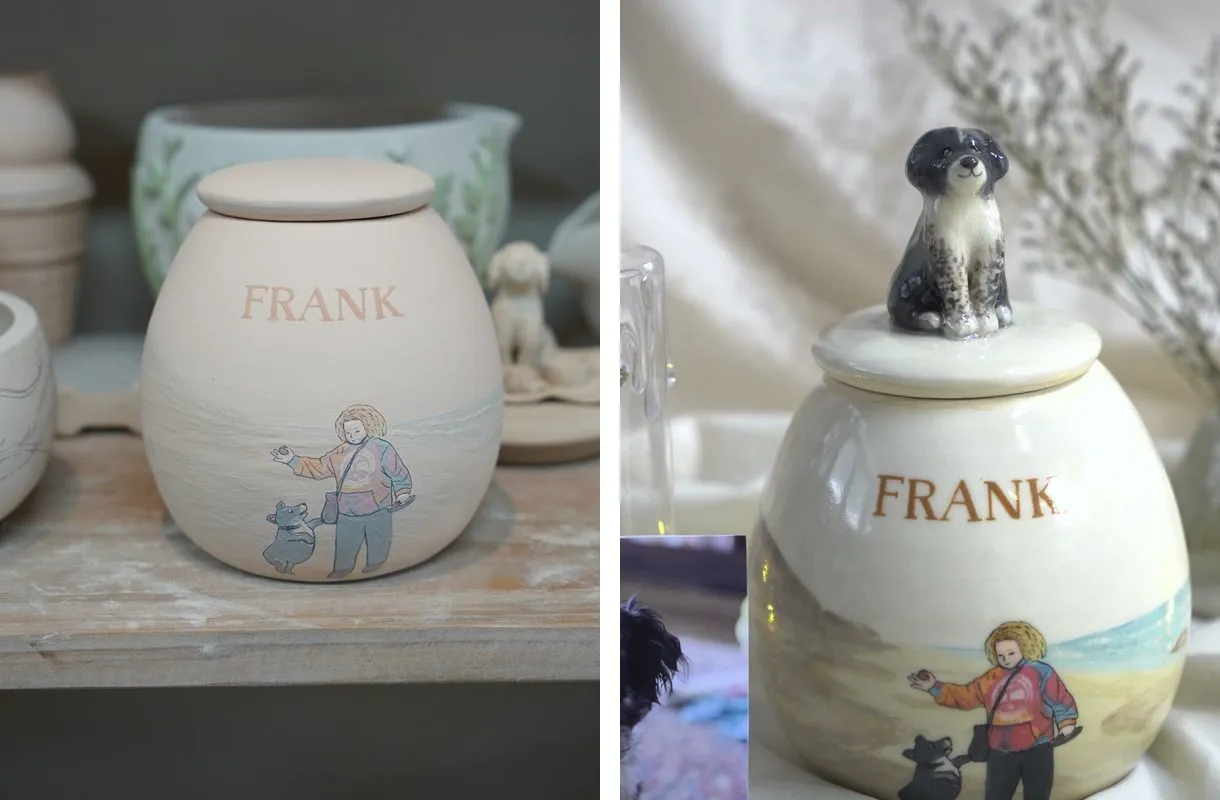
The same urn before firing, with the painting done and the lid still bare, and finished, with the figurine of the dog in place. The colours deepen and turn glossy in the kiln.
Which pet portrait urn should you choose?
Choosing a pet portrait urn comes down to what you most want to see when you look at it. Use this as a starting point:
- Their face, looking back at you → a painted portrait, or a face sculpted in relief if you want to be able to touch it
- The whole animal, in a pose you remember → a pet figurine urn, with the figure on the lid, where the small scene around it can add a toy or a blanket
- A moment or a place, not just the pet → a painted portrait, which can carry a scene
- Only one good photo to work from → a drawn or painted portrait
- A real photograph as well → any of them with the photo stand
The name goes on in a different way on each, from a banner on the painted portrait to a stamped bone on the relief, and how a name goes on an urn lists the character limit for each design.
Seeing every portrait urn
Every design, painted, drawn, in relief or with a figurine, is in our collection of ceramic urns, with the price shown in your own currency.