How Accurate Is a Hand-Sculpted Pet Figurine?
A hand-sculpted pet figurine holds build, posture, coat colour and markings. What clay carries at 8 to 13cm, what it cannot, and when you can still change it.
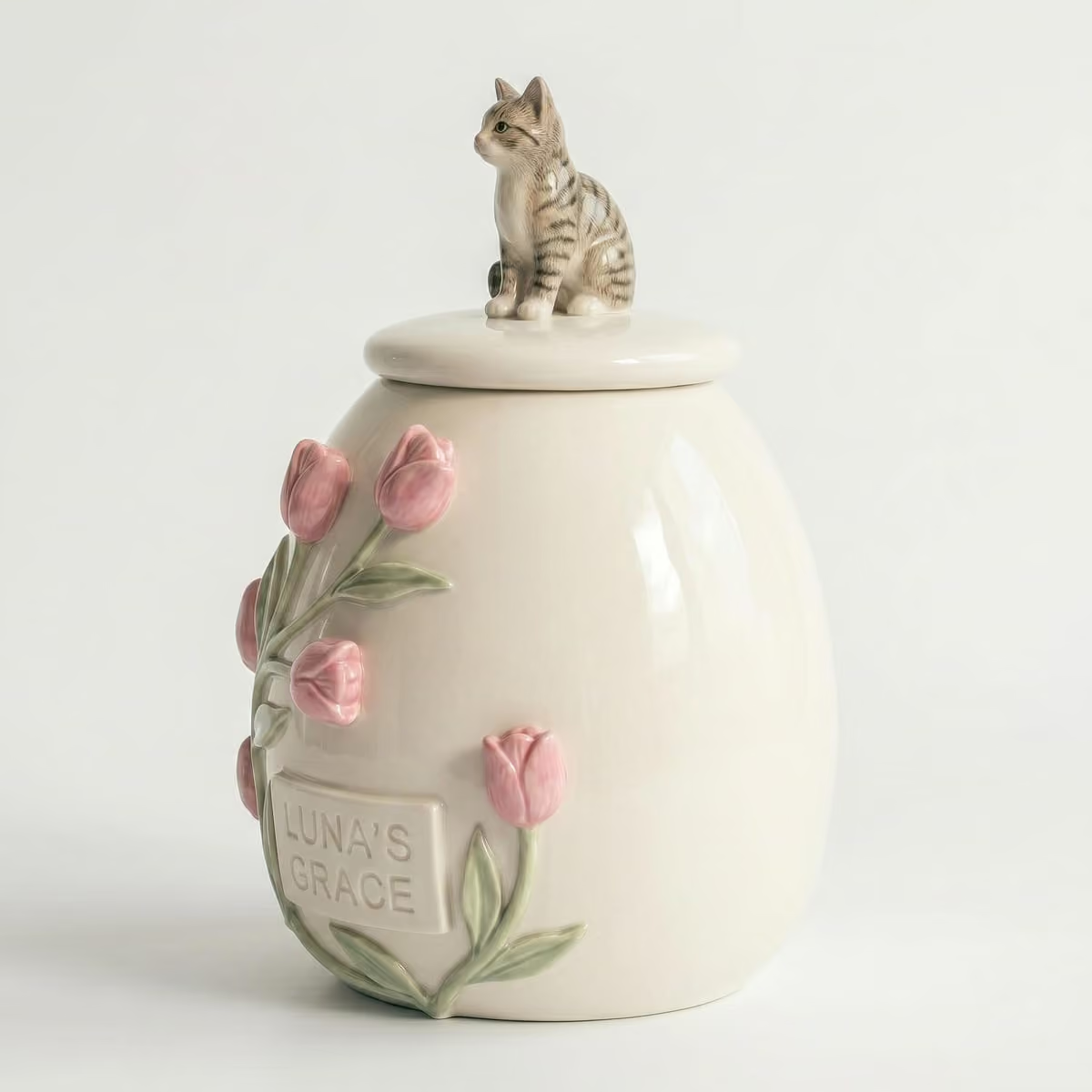
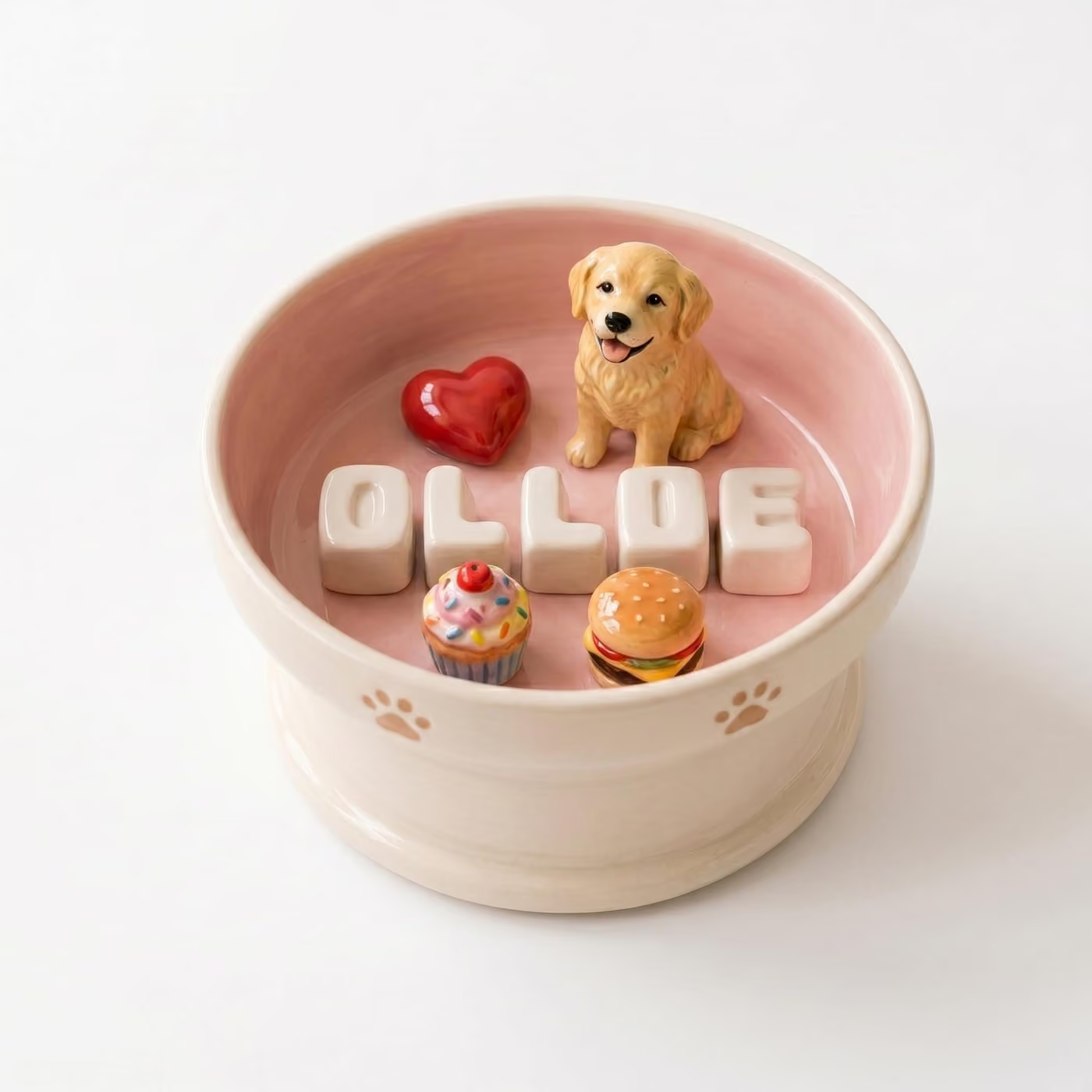
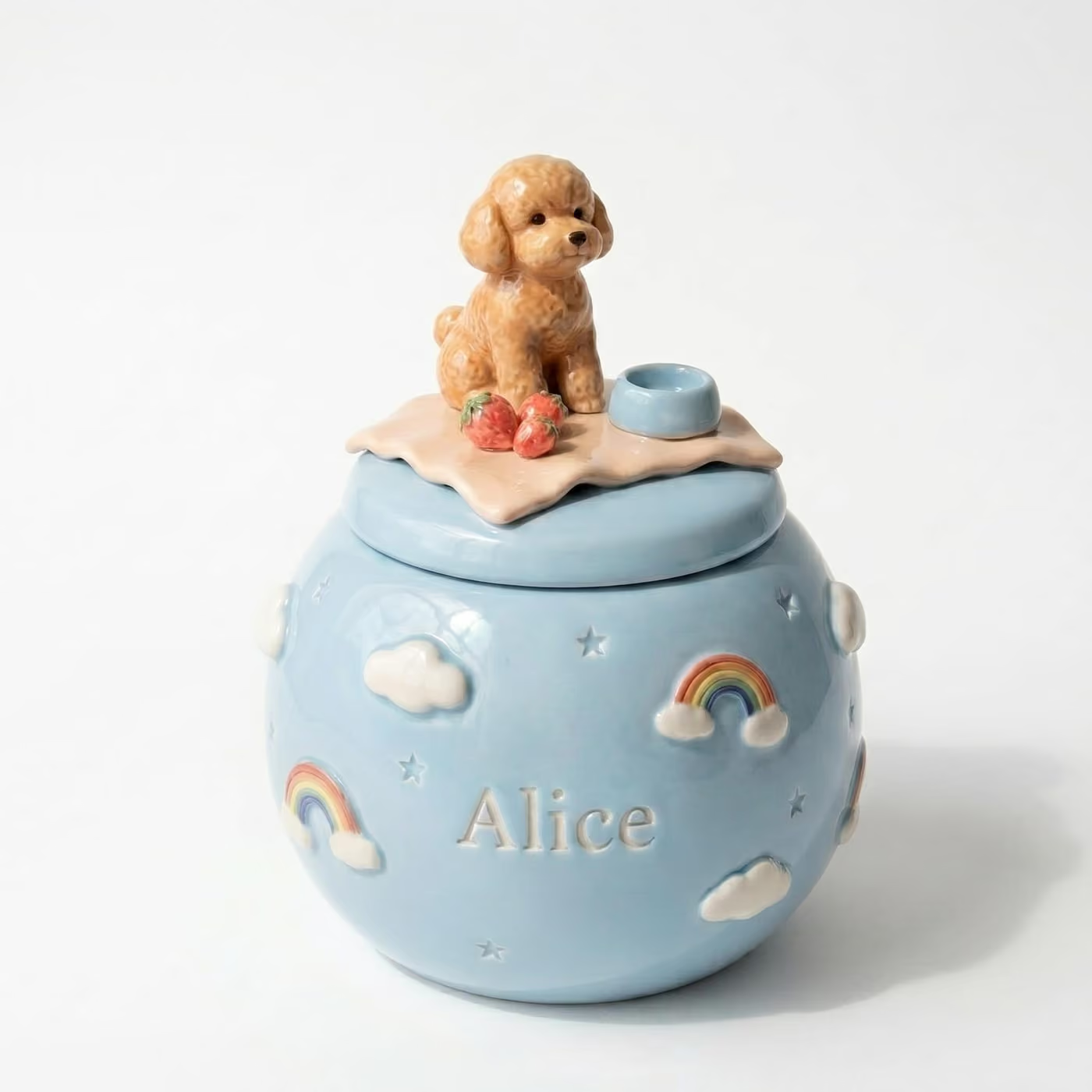
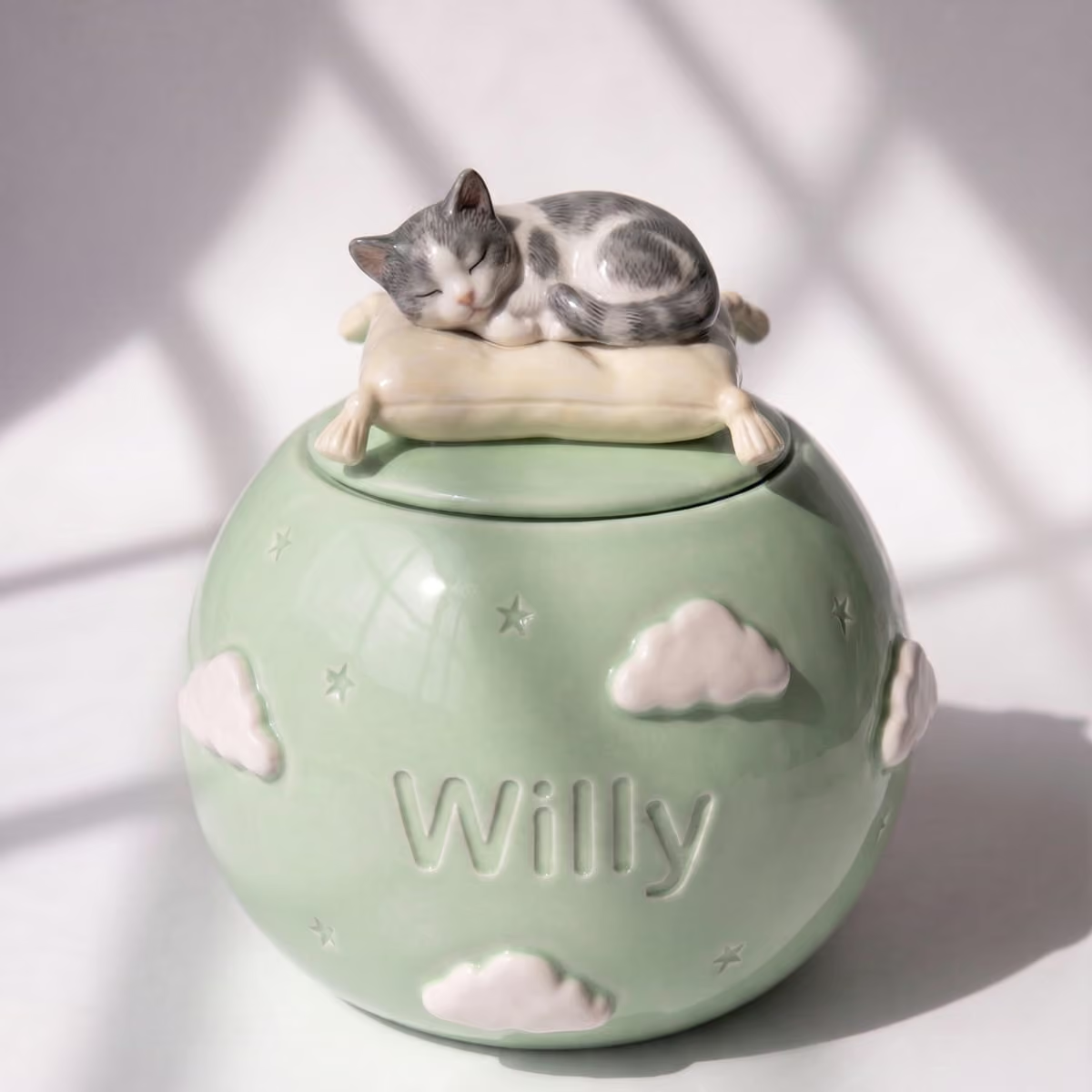
A custom pet figurine from Pepple Studio is hand-sculpted to be recognisable at a glance: the build, the posture, the shape of the ears and muzzle, the coat colour, and the markings that make your pet look like themselves. The accuracy sits in proportion rather than in an exact colour match, because the finished piece stands only 8 to 13cm (3.1 to 5.1in) tall and glaze changes in the kiln.
You approve a photograph of the raw clay figurine before it is fired, so nothing reaches the kiln until you have seen it.
How accurate is a custom pet figurine?
A custom pet figurine from Pepple Studio is accurate in build, posture, ear and muzzle shape, coat colour and the placement of markings. It is not accurate the way a photograph is accurate, and we would rather say so before you order than after. A complete urn stands 8 to 13cm (3.1 to 5.1in) depending on the size you choose, and the sculpted animal on the lid is only part of that height, so the artist is modelling a whole face across a few millimetres of clay. At that scale, recognition comes from the large signals: how deep the chest is, how the ears fold, whether the muzzle is short or long, where a white patch falls. The aim is a piece you recognise from across a room, and read as a sculpture once you pick it up. That is the honest ceiling of hand modelling at this size.
| What the clay carries at this size | What it cannot carry |
|---|---|
| Overall build and the weight of the body | An exact glaze colour, because glaze is a chemical reaction rather than paint |
| Ear set, fold and length | Anything that only reads while a pet is moving |
| Muzzle length and width of the head | Detail finer than a tool can cut into leather-hard clay |
| Coat colour, markings, and the direction the coat falls | Any change at all once the piece has been fired |
Which details make a pet recognisable?
Recognition in a sculpted pet figurine comes from proportion long before it comes from detail, which is why at Pepple Studio the animal is built from the core body mass outwards: mass first, then limbs, then head, then the details that separate your pet from every other dog of its breed. Sculpt the face first and you get a good face on a body belonging to someone else. A tabby cat is recognised by cheek width and body length well before a single stripe is cut. A corgi is recognised by chest depth and leg length. This is also why the photographs you send us matter more for angle than for resolution. A sharp picture taken from directly above tells the artist less than a slightly soft one taken at your pet’s eye level.
- Head and ears. Ear set and fold do a large share of the work, and ears that are big relative to the skull, as a corgi’s are, change how the whole head reads.
- Colour and markings. Large blocks of colour and the two or three markings people would name if asked to describe the pet.
- Posture. A dog that always sat with one leg out is more recognisable sitting that way than standing to attention.
- Proportion between features. A short muzzle on a wide head is a different animal from a short muzzle on a narrow one, and this is the part some breeds make harder than others.
What can hand sculpting not capture?
Hand sculpting at this scale cannot capture an exact glaze colour, anything that only reads while a pet is moving, or any change at all once a piece has left the kiln. Glaze is a chemical reaction rather than paint, so a colour mixed to match an amber eye leaves the kiln close to amber rather than on it. Coat texture is a different matter: at Pepple Studio it is not painted on but cut into the clay with a fine tool while the piece is leather-hard, stroke by stroke, running in the direction the coat actually falls, which is why a long-coated dog takes far longer at this stage than a short-coated one. What that produces is a surface reading as a real coat at arm’s length and as tool marks under a lamp. A studio promising more than that at 8 to 13cm (3.1 to 5.1in) would be describing a printed object rather than a sculpted one.
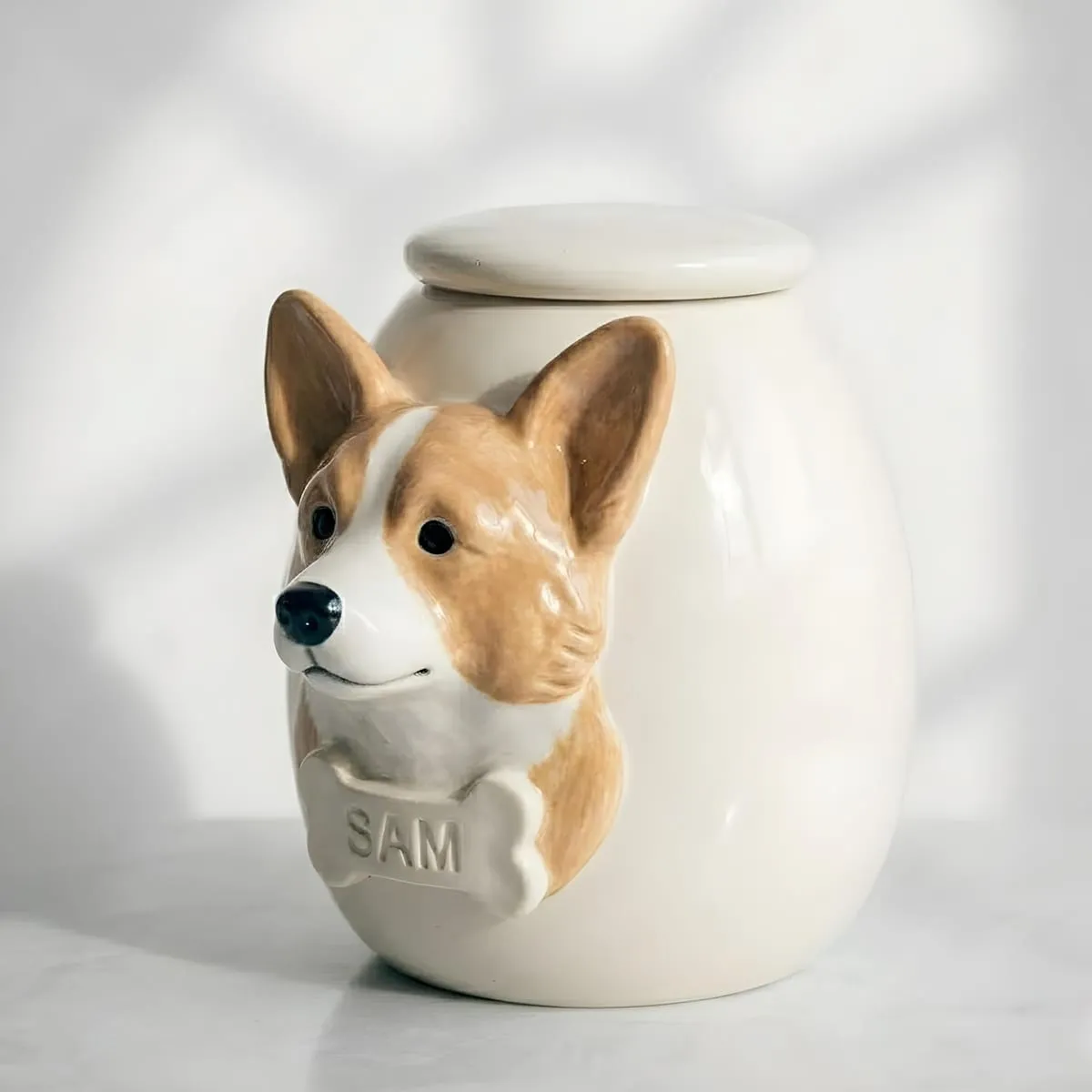
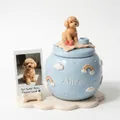
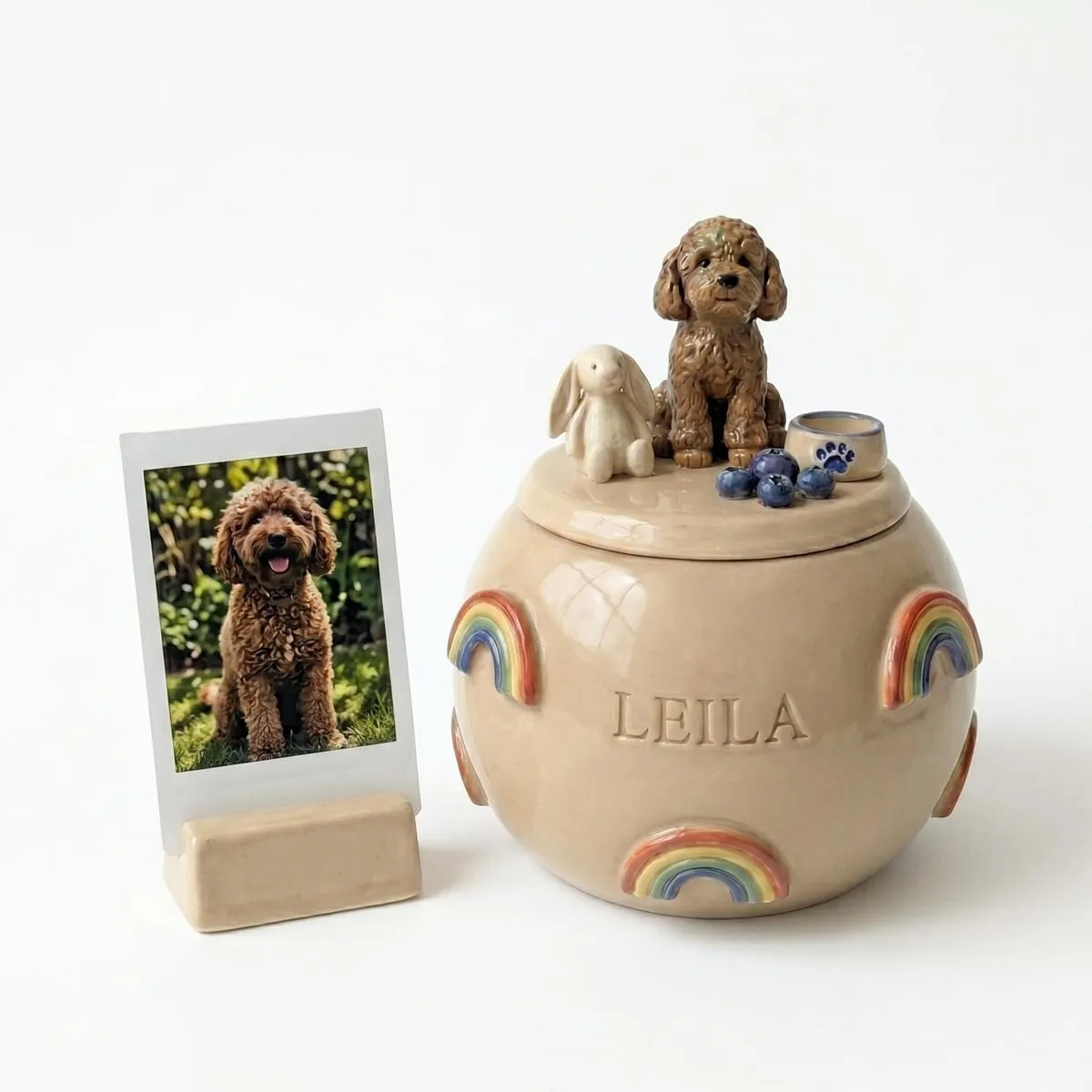
An example of this design. At this size the ear set, the blaze running down the muzzle and the direction of the coat do the work of recognition, and the coat is cut into the clay rather than painted onto it. The piece shown is a digital visualisation.
What if the figurine does not look right?
Pepple Studio sends you a photograph of the raw clay figurine before it is fired and waits for your reply. At that stage the clay is still soft enough to change: ears can be reset, a muzzle shortened or lengthened, a marking moved, a posture adjusted. Once a piece has been fired at 1200°C, none of that is possible, which is the reason the approval step sits where it does in the ordering process. Personalised pieces cannot be returned for a refund, so this photograph is the point at which the likeness is settled rather than a formality. A piece that arrives broken in transit is remade free of charge, but a likeness you were unsure about and approved anyway is not a breakage, so it is worth saying what is wrong while the clay is still wet.
Why two sculptures of the same breed differ
Every figurine is modelled by hand from your own photographs, without a mould and without any printed or scanned stage, so two corgis sculpted a month apart are not the same object twice. Breed sets the starting proportions and the individual animal moves them, which is why the corgi pieces shown on the site are examples of a design rather than a specification. A likeness cannot be promised as a fixed set of measurements. What can be promised is the order the work happens in, and the point at which you get to intervene.
Choosing a piece for your pet
Every urn in the collection can be finished with a hand-sculpted figurine of your pet on the lid, in the three sizes that match a pet’s living weight. If you are still deciding, the urn collection is the place to see how different builds and coat colours have been handled, and the sculpting process explains what happens between your photograph and the finished lid.