Is It Safe to Keep Pet Ashes at Home? Yes, and Here's Why
Yes. What cremated remains actually are, why they carry no health risk, what containers suit them, and the one situation where care is genuinely needed.
Yes, it is safe. Cremated remains are sterile, carry no disease risk, and are inert. There is no health reason not to keep them in your home, including in a bedroom, including around children, including around other pets.
People ask this a lot and are often slightly embarrassed to. It is a reasonable question and the answer deserves more than one word.
What ashes actually are
Cremation happens at roughly 760–980°C. Nothing organic survives that. What comes back is not ash in the everyday sense — it is bone mineral, mostly calcium phosphate, mechanically processed after cremation into a uniform grain.
That means:
- No bacteria, viruses or parasites. Heat at that level sterilises completely. This holds even if your pet died of an infectious illness.
- No decomposition. There is no organic material left to break down, so nothing will smell, attract insects, or change over time.
- No expiry. Kept dry, cremated remains are stable indefinitely. Archaeologists recover them intact after thousands of years.
Do they need a special container?
Not for safety. Any sealed container works.
For longevity, the material matters more than most people realise. The risk is not to you, it is to the remains: moisture. Cremated bone mineral is hygroscopic — it draws in humidity from the air, and over years that can cause caking and, in porous containers, staining or seepage.
This is why container porosity matters:
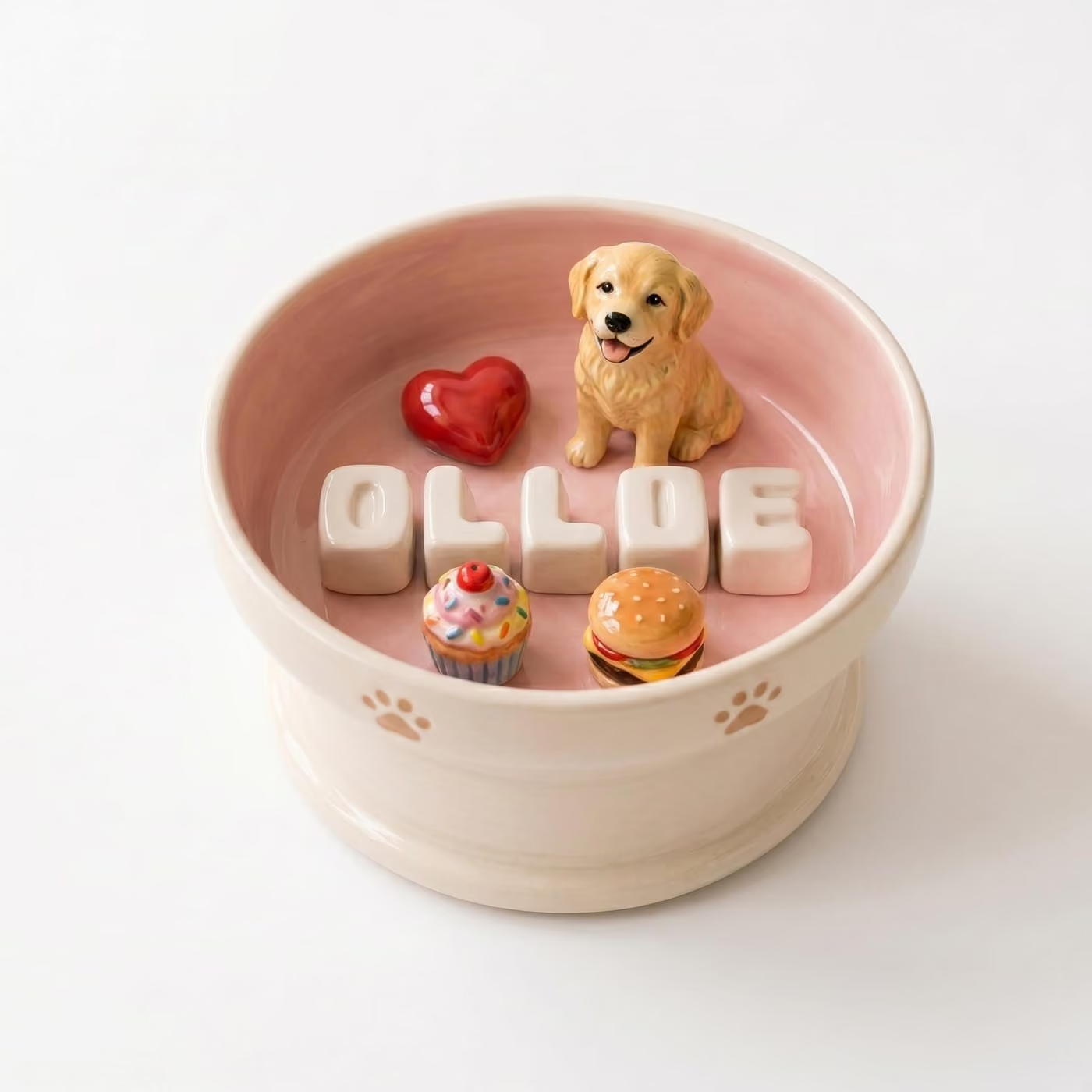
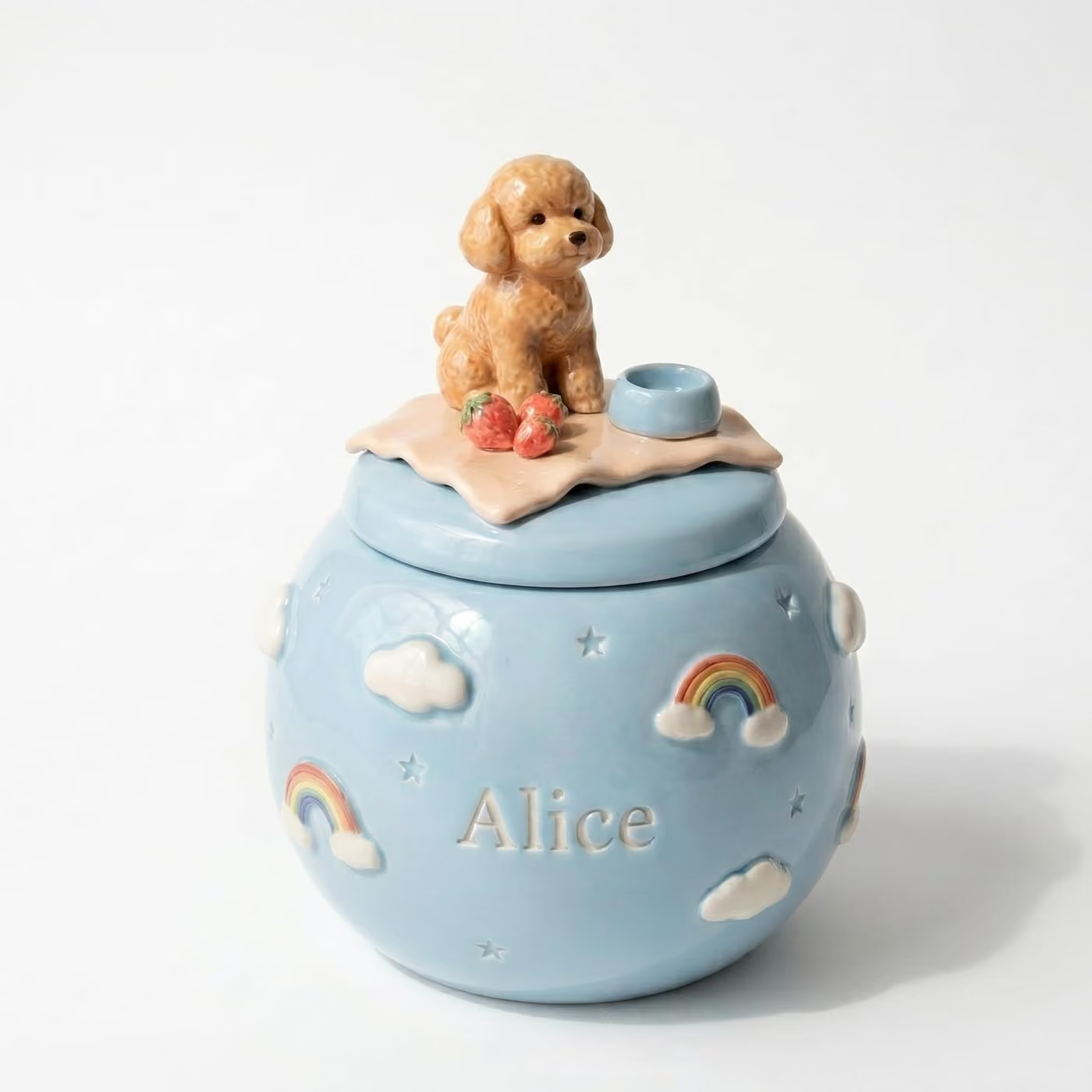
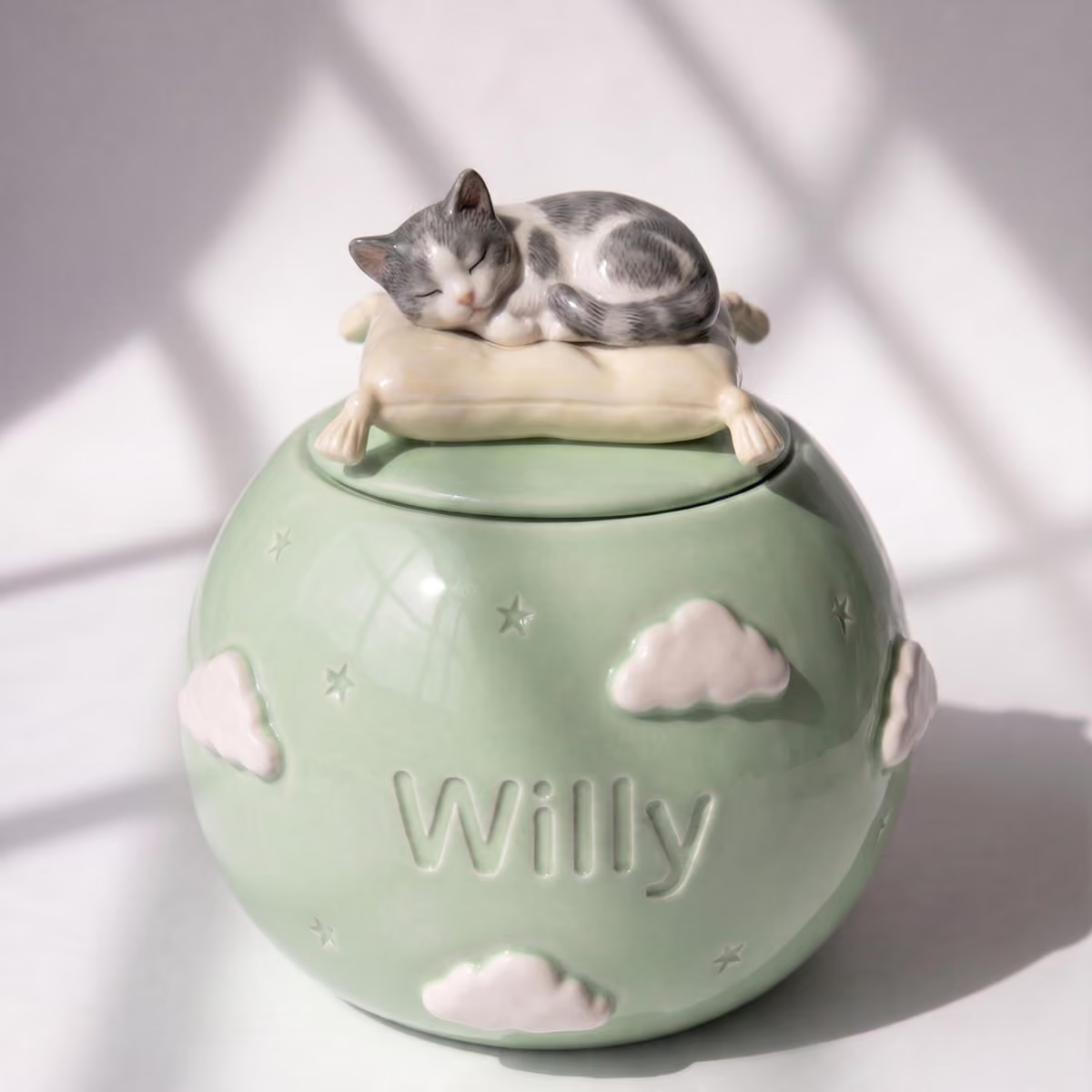
- High-fired ceramic (stoneware, ~1200°C+) — matured and largely vitrified. Trade standards cap stoneware at 3% water absorption, so very little moisture moves in or out.
- Low-fired earthenware — stays porous under its glaze. Fine as decoration, less good as a long-term vessel. More on the difference.
- Metal, glass, hardwood — all effectively non-porous.
- Unsealed wood, unglazed pottery, cardboard — the container the crematorium supplies is usually one of these, and is intended as temporary.
In practice most remains stay in the sealed plastic bag from the crematorium, which sits inside whatever urn you choose. That bag is doing the real work; the urn is protecting it and giving it a form you can live with.
Where to keep them
Anywhere you would keep anything else fragile. Practical considerations only:
- Away from impact. Somewhere it cannot be knocked off by a passing cat or a door.
- Not directly above a radiator. Repeated heating and cooling cycles stress any material.
- Sunlight is fine for high-fired ceramic — fired glaze does not fade. Photographs beside it will.
- Bathrooms and kitchens are fine if the container is non-porous.
Our guide to setting up a memorial corner goes further into placement, including the part nobody writes about: what to do when people in the same household feel differently about having it visible.
The one situation that needs care
Scattering, or opening the container in an enclosed space.
Cremated remains are a fine mineral dust. Inhaling any fine particulate irritates the lungs — this is true of flour, sawdust and cement too, and it is not a pathogen risk. If you are dividing ashes between keepsakes, do it outdoors or in a well-ventilated room, work slowly, and use a funnel.
The same applies to scattering: choose a still day and stand upwind. That is practical advice, not a safety warning.
What about other pets and children?
No risk. Dogs occasionally show interest in an urn, which owners find upsetting, but there is nothing there that can harm them.
For children, a memorial they can see and touch is usually helpful rather than harmful. It gives somewhere concrete to direct a feeling they do not have words for. Keep it at a height they can reach.
Is it strange to keep them?
Not remotely. It is the most common choice by a wide margin, and it is the only one you can reverse — an urn on a shelf can be scattered or buried later, but scattering cannot be undone.
If it helps to hear: nobody who has asked us this has been the first person to ask it that week.
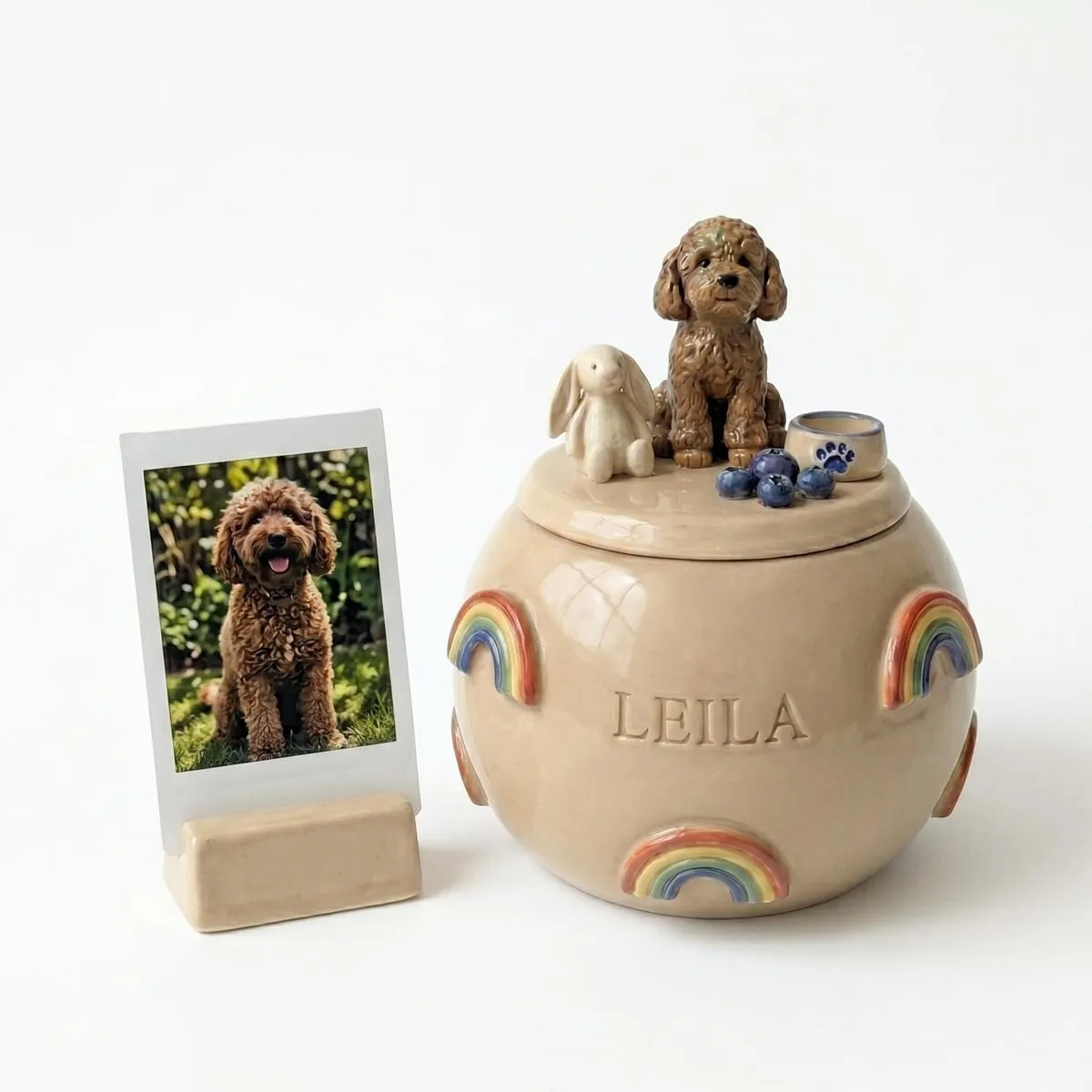
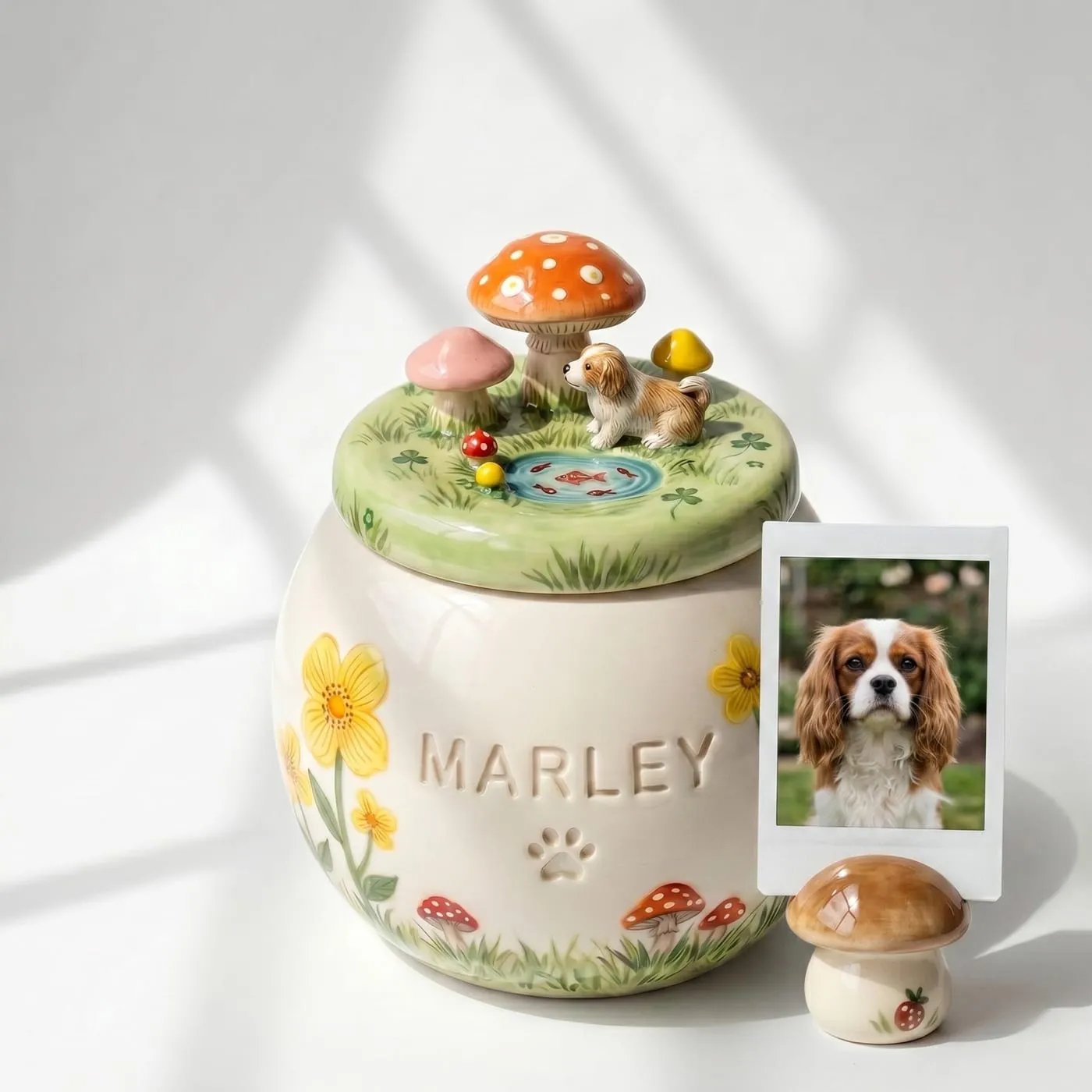
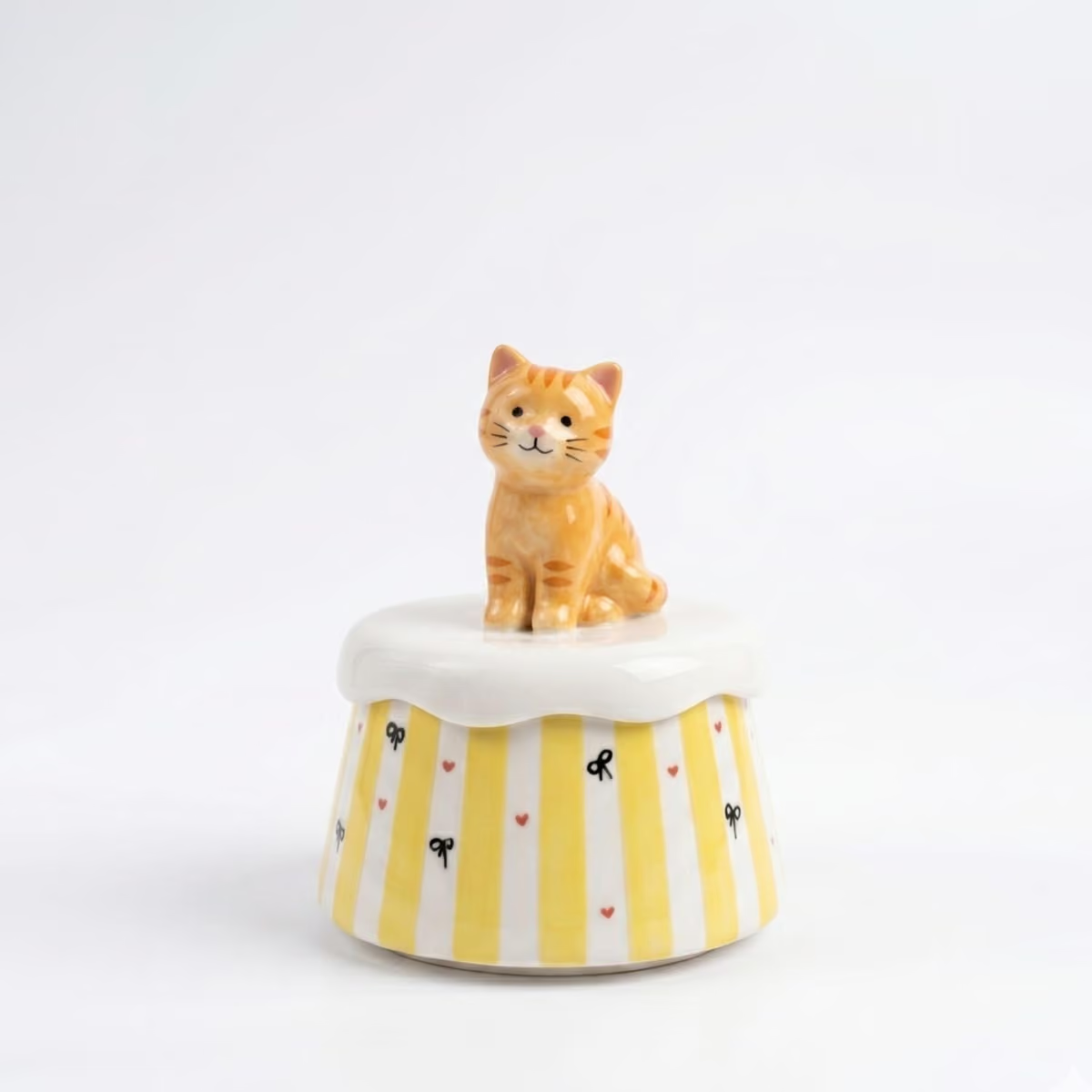
We make ceramic pet urns fired at 1200°C, with a figurine sculpted by hand from your own photographs. If you have a question that is not answered here, send it to us.