Can You Divide Pet Ashes Between Family? Yes, Here's How
Yes, and it is more common than people think. How to do it safely, how much each keepsake holds, and how to handle the family conversation.
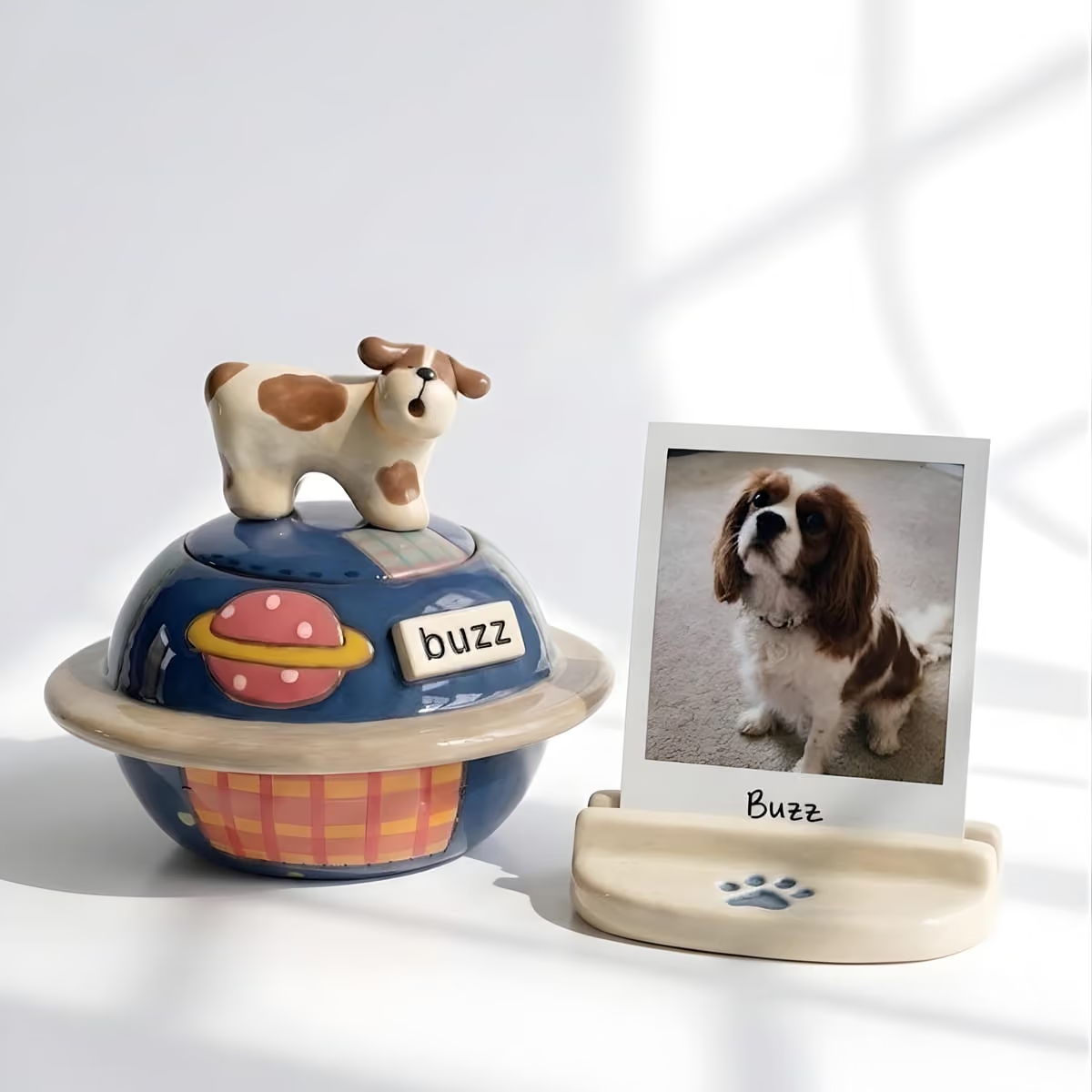
Yes. There is no legal restriction on dividing pet ashes, no practical difficulty, and no tradition against it. It is one of the more useful options available and one of the least discussed.
It comes up whenever an animal belonged to a household that has since spread out: grown-up children in different cities, a separated couple who shared a dog, a friend who looked after them for years.
How much does each person need?
Less than people expect.
A typical division is one main portion and several small keepsakes. Cremated remains run roughly 1 lb per 500 ml of volume, and small keepsakes hold a token amount — a teaspoon or two — rather than a meaningful fraction.
| Typical capacity | |
|---|---|
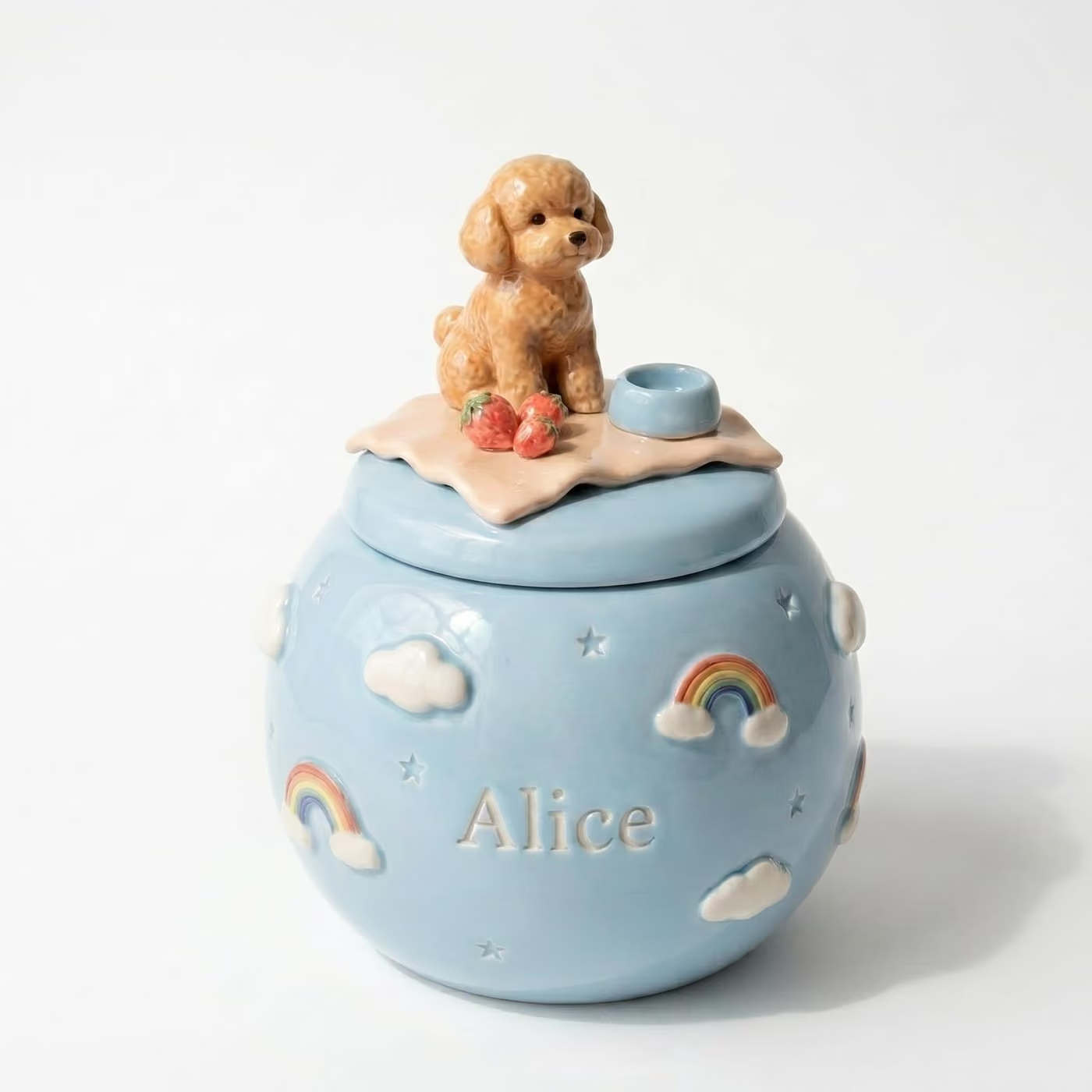
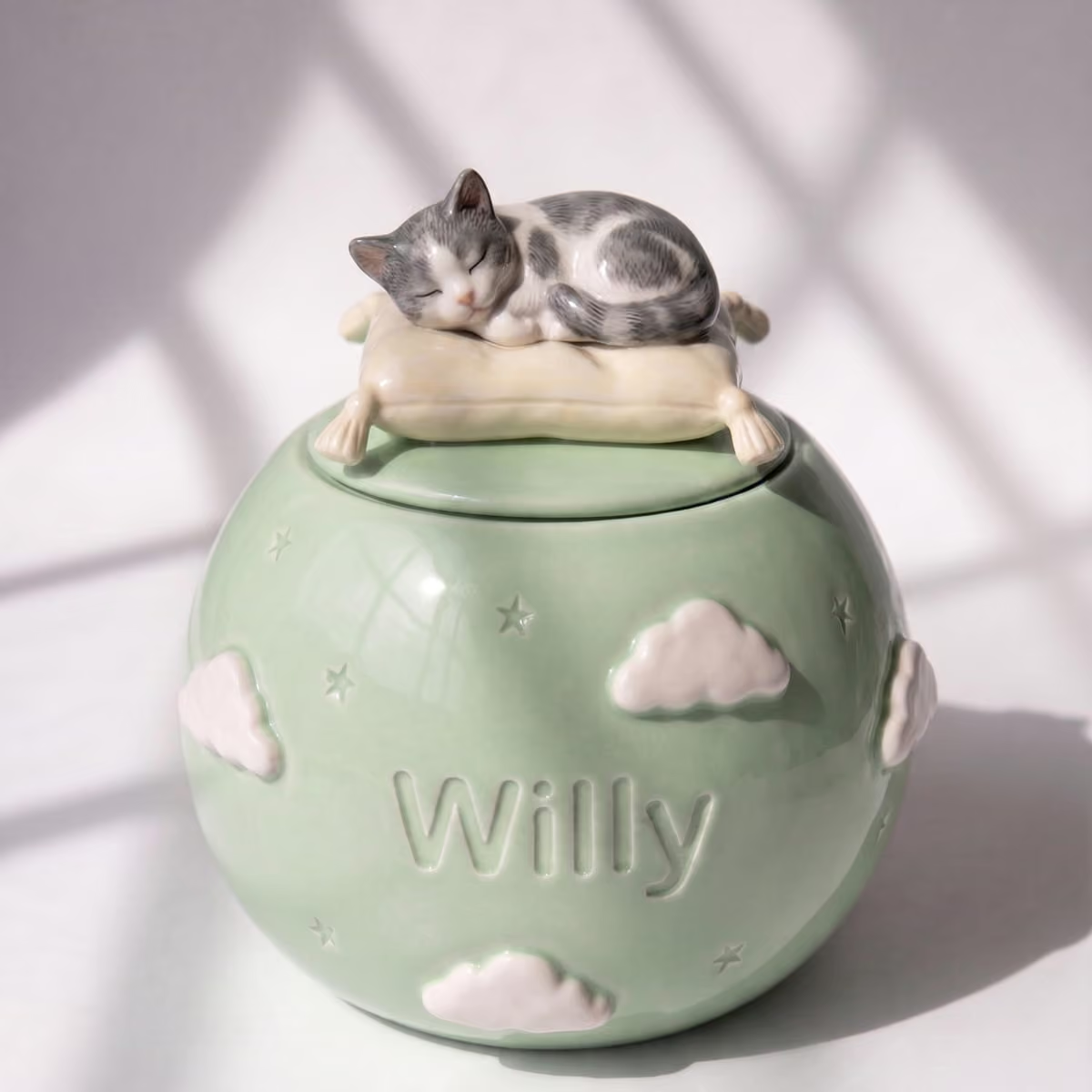
| Full-size urn (our size S) | ~360 ml |
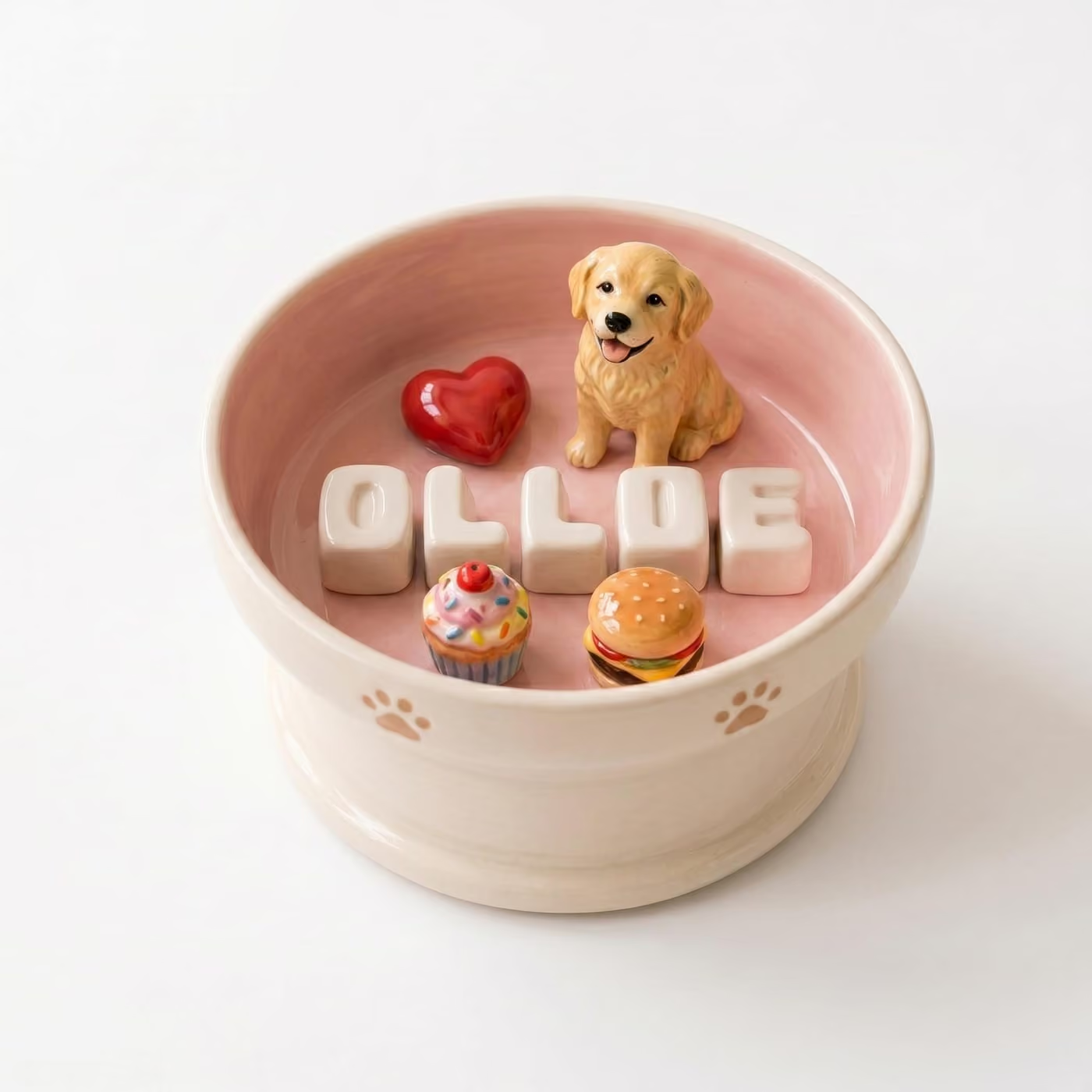
| Small keepsake, ring dish | 30–60 ml |
| Pendant, charm | 1–5 ml |
So a cat’s ashes divide comfortably between one main urn and three or four keepsakes without the main urn looking empty. A large dog divides between many more.
How to do it
Work outdoors or in a well-ventilated room. Cremated remains are a fine mineral dust. It is sterile and carries no disease risk — see is it safe to keep ashes at home — but inhaling any fine particulate irritates the lungs, the same as flour or sawdust.
Use a funnel and a spoon. A paper funnel is fine. Pour slowly and low.
Work over a tray or a sheet. Recovering spilled ash from a carpet is distressing in a way it is hard to prepare for.
Do it once. Decide all the portions in advance and do them in a single session rather than reopening the container repeatedly.
Ask someone else to do it if you cannot. Many crematoria will divide into supplied containers if asked at the time, and some will do it afterwards. It costs little and removes the part people dread.
The conversation, which is the actual hard bit
The physical process takes twenty minutes. The family discussion sometimes takes weeks.
A few things that help:
Raise it as an option, not a proposal. Some people divide them — would that be something you would want? leaves room for no.
Expect asymmetry. One person may want a keepsake urgently; another may find the idea distressing. Both reactions are normal and neither is more correct.
Do not divide to settle a dispute. If two people are arguing over who keeps the ashes, splitting them rarely resolves the underlying disagreement about who the animal belonged to.
Someone can decline and change their mind later. Keep the main portion intact and say so — it means nobody has to decide today.
Divide, or scatter and keep?
A related pattern, and often simpler: scatter most of the ashes somewhere meaningful and keep a small amount each.
This suits families who want a shared act rather than parallel objects. It also has a practical advantage — everyone participates in the same moment rather than receiving a package in the post.
Our guide on what to do with ashes covers both, plus seven other options.
What suits keepsakes
For a token portion, size matters less than whether the object gets used or seen. People tend to keep what fits their life: a pendant for someone who wants it with them, a ring dish for someone who would rather have something on a bedside table.
If several family members are receiving one, matching pieces in different designs often work better than identical ones — it acknowledges that everyone’s relationship with the animal was slightly different.
A note on timing
You do not have to decide now, and you do not have to decide all at once. The main portion can sit in a single urn for years, and dividing later is exactly as possible as dividing today.
The only thing that becomes harder with time is the conversation, and only because people avoid it.
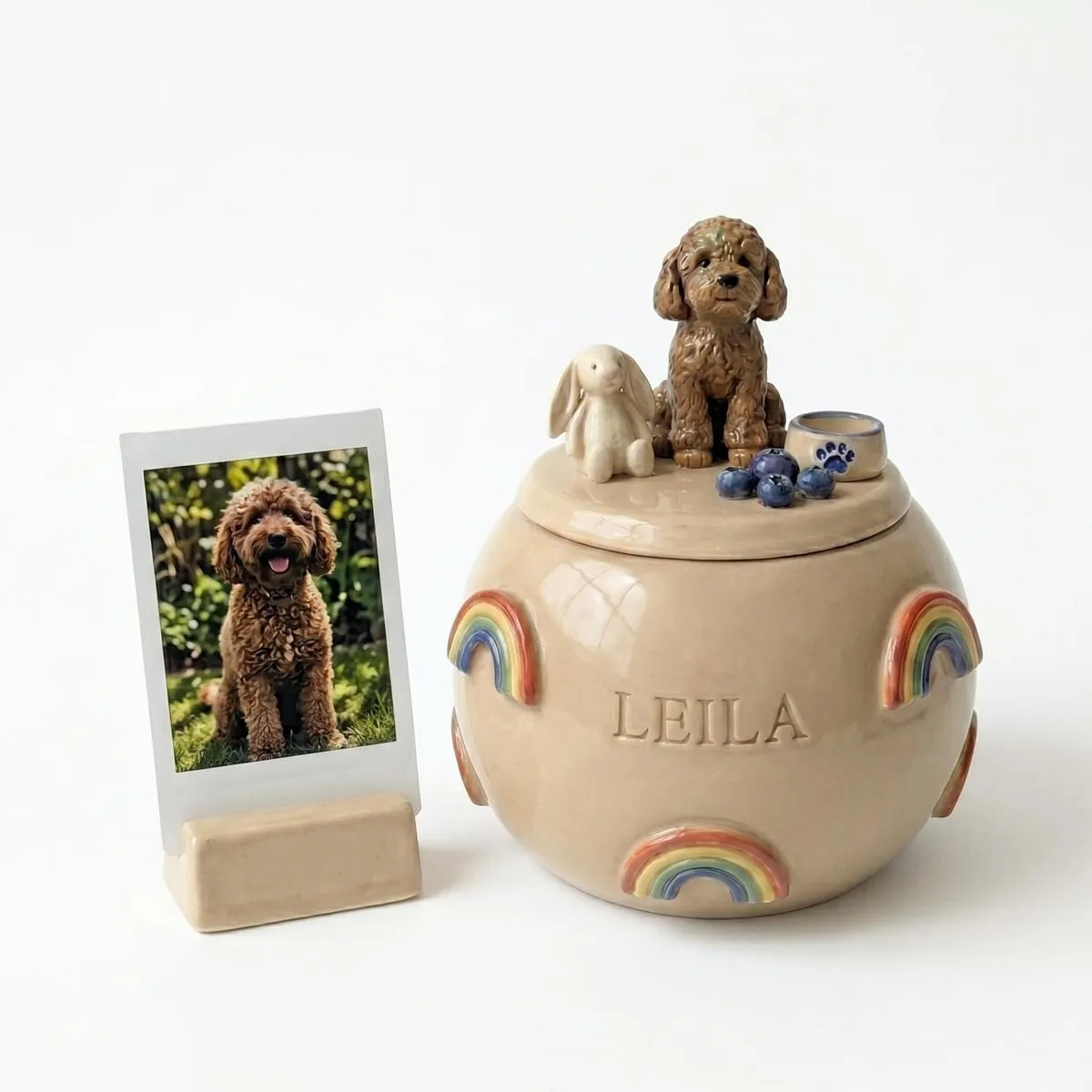
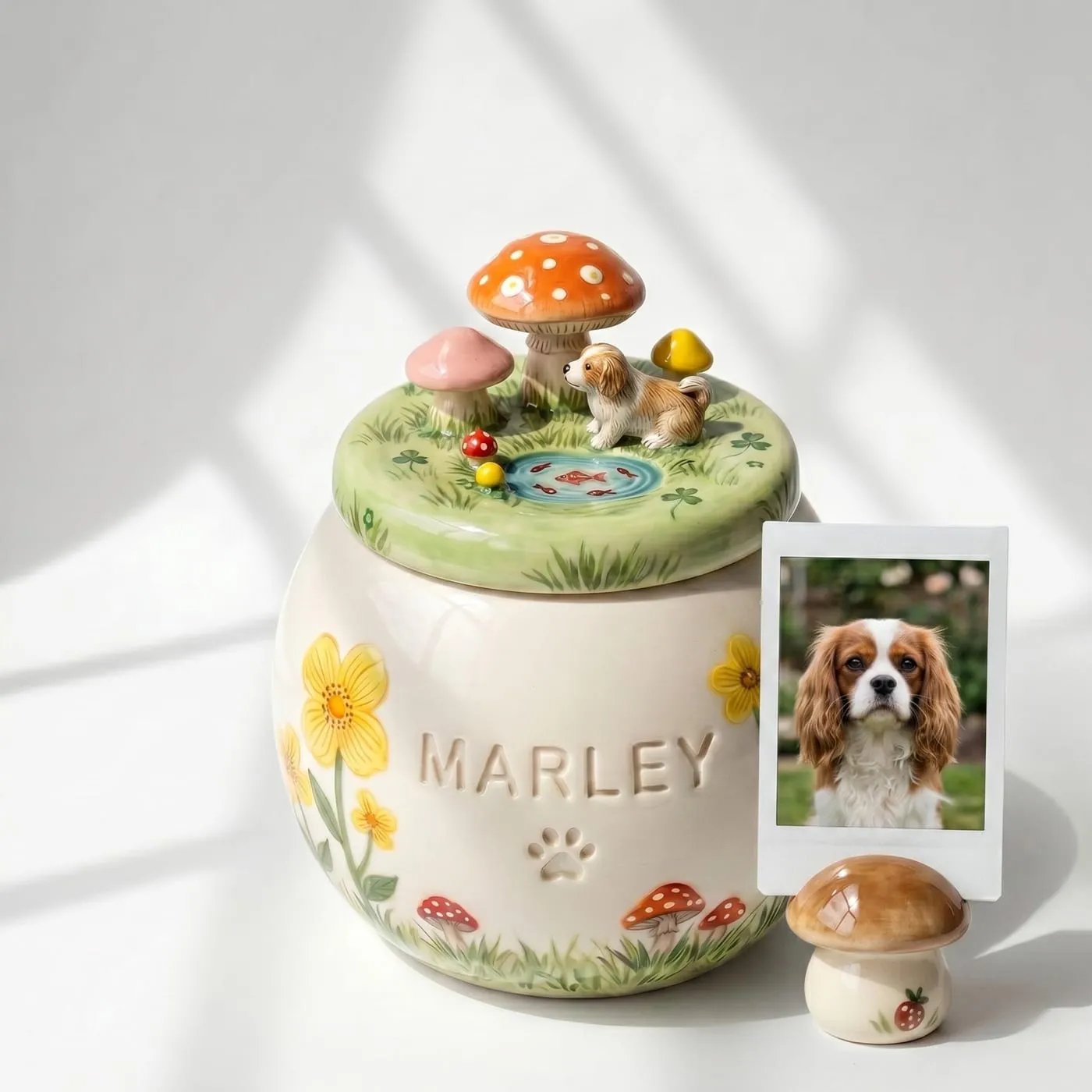
We make ceramic urns and smaller keepsakes, each with a figurine sculpted from your own photographs. If you are working out how to split something between family, tell us the situation and we will suggest sizes.