Why We Fire at 1200°C
What vitrification actually does to clay, why porosity matters for an urn, and how high-fired ceramic differs from the earthenware most decorative pottery is made from.
Every product page we have mentions 1200°C, which is the kind of number that looks like marketing. It is not. It is the temperature at which clay stops being one material and becomes another, and for an object meant to hold ashes on a shelf for the rest of your life, the difference is the entire argument.
What happens at 1200°C
Below about 1100°C, fired clay is earthenware. The particles have hardened and bonded, but there are still microscopic gaps between them. The material is porous. Water can move through it — slowly, invisibly, but it can.
Somewhere between 1100°C and 1250°C, depending on the clay body, something else happens. Silica in the clay begins to melt and flows into those gaps, then cools into glass. The pores close. This is vitrification, and once it happens it cannot be undone.
Trade standards cap stoneware at 3% water absorption and put porcelain at 1% or below. Earthenware sits above 3%, commonly 8–12%.
Why that matters for an urn
The glaze on a piece of earthenware is a glass coating over a porous body. It looks sealed and mostly behaves as though it is.
But glaze crazes. Those fine hairline cracks that appear in old pottery are not damage — they are the glaze and the clay body expanding at slightly different rates over years of temperature change. On earthenware, a crazed glaze is an open door: the porous body underneath is now reachable by humid air.
On vitrified stoneware, crazing is cosmetic. There is nothing porous behind it to reach.
For a plant pot this is a non-issue. For an object that will sit in a bathroom-adjacent hallway in a humid climate for thirty years with someone’s dog inside it, it is the whole design brief.
The other things high firing gives you
Strength. Vitrified ceramic is dramatically harder to chip. It will still break if you drop it on tile — nothing survives that — but it survives ordinary knocks that would take a corner off earthenware.
Colour stability. High-fire glazes do not fade in sunlight. A piece on a south-facing windowsill will look the same in twenty years.
It stops absorbing liquid. A vitrified surface does not soak up water, oils or odours, so it does not stain from the inside or hold a smell. Relevant for anything in daily use, including our bowls and mugs.
What we give up
High firing is not free, and it is honest to say what it costs.
Colour range narrows. Many bright pigments — particularly certain reds, oranges and hot pinks — simply burn out above about 1100°C. This is why our palette runs to sage, terracotta, cream, pastels and deep blues. It is not purely an aesthetic decision; a good deal of it is chemistry.
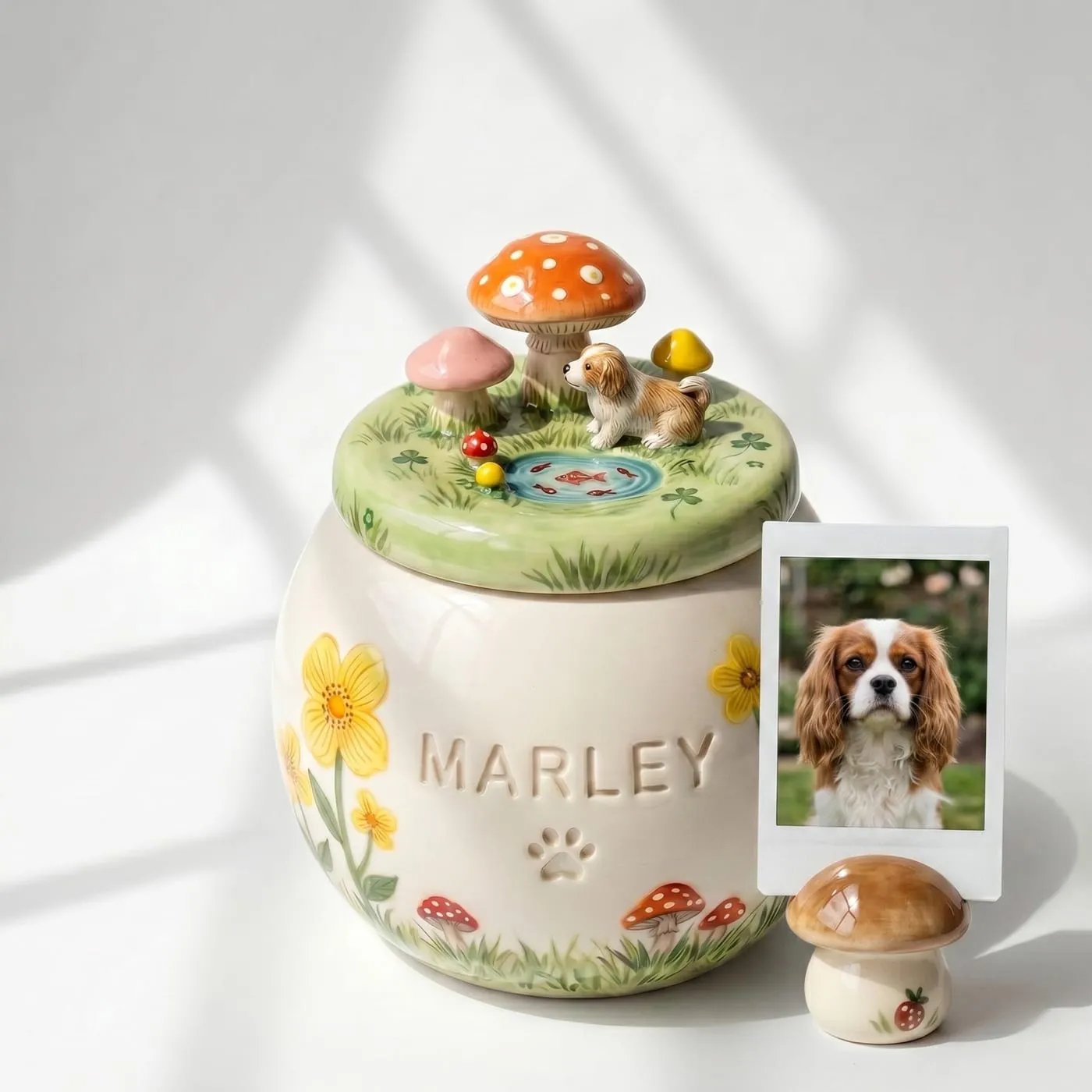
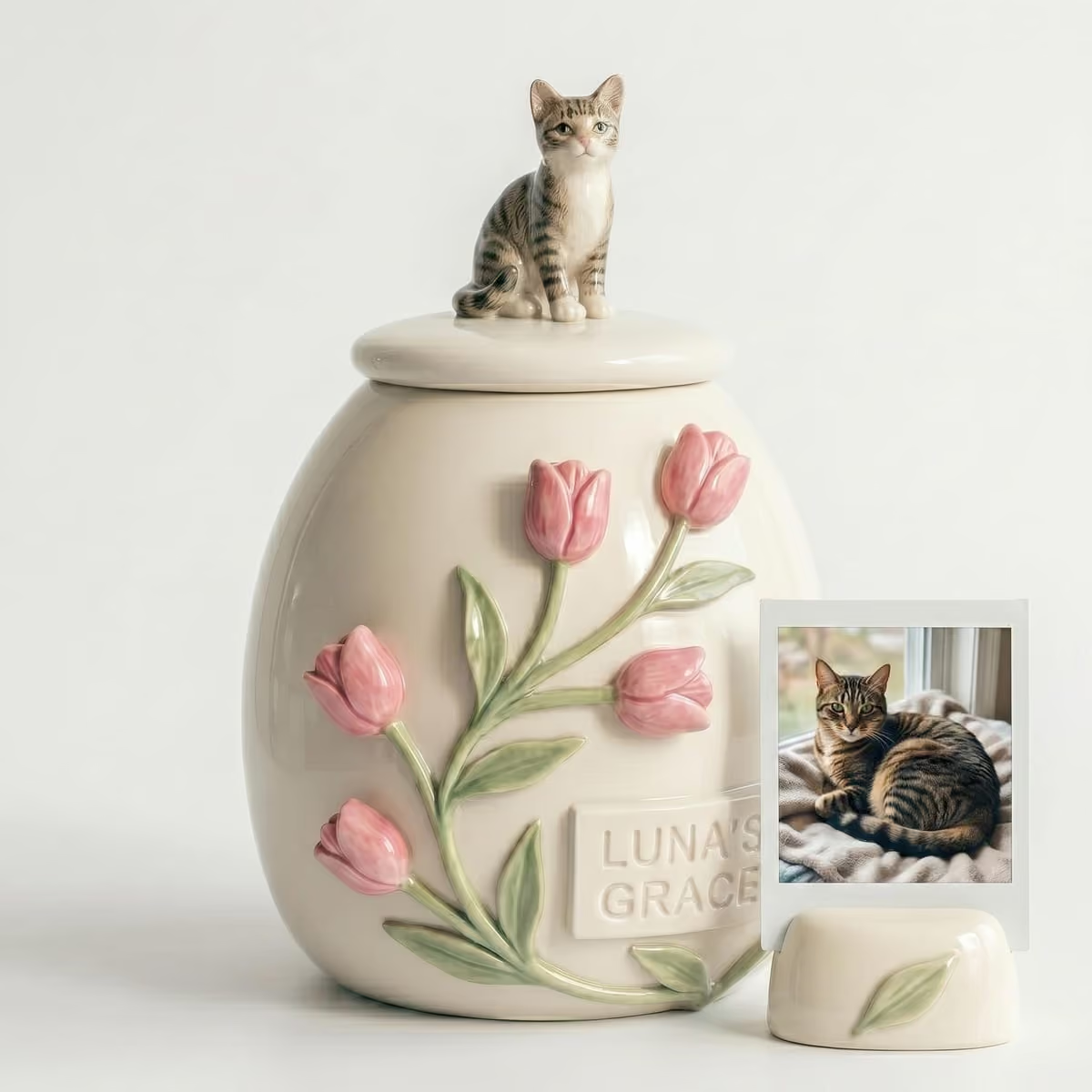
Glaze moves more. At 1200°C glaze becomes properly fluid and flows into recesses and off high points. This is why our sculpted tulip and mushroom designs have that pooled depth in the crevices — but it also means precise fine-line painting is harder to control than it would be at a lower temperature.
More failures. More heat means more stress. Pieces that would survive a gentle earthenware firing crack in a high-fire kiln, particularly anything with heavy relief work on a thin body. We remake more pieces than a low-fire studio would.
Longer drying. A piece with trapped moisture entering a 1200°C kiln does not merely crack — the water flashes to steam and it can burst, taking neighbouring work with it. This is a large part of why our production time is 21 to 35 days rather than one week.
How to tell what you are looking at
If you are comparing urns from different makers, the useful questions are:
- What temperature is it fired to? A maker who high-fires will tell you, usually without being asked. Vagueness here is informative.
- Is it stoneware or earthenware? Stoneware is the high-fire family.
- Is it porous? An unglazed patch on the base is the giveaway. On vitrified stoneware, a drop of water sits on it. On earthenware it soaks in and darkens the clay.
That last test takes ten seconds and cannot be argued with.
Every piece we make is hand-sculpted and fired at 1200°C. Have a look at what we make, or ask us anything about the process.