Why Losing a Pet Hurts So Much, and Why Others Miss It
Research now shows grief for a pet can match grief for a person. Why it hurts this much, why others may not see it, and where to find support that takes it seriously.

Losing a pet hurts so much because the bond is daily and physical, and research now shows the grief can be as severe as grief for a person. A 2026 study of 975 UK adults in PLOS One found that 7.5% of people who had lost a pet met the clinical criteria for prolonged grief disorder, close to the rate after losing a close friend.
It often hurts more for a reason that has nothing to do with the animal: the people around you may not treat it as a real loss.
Why does losing a pet hurt so much?
Losing a pet hurts so much because a pet is built into the shape of an ordinary day in a way few relationships are: the walk, the greeting at the door, the weight at the end of the bed. When that stops, the absence turns up dozens of times a day, inside routines that suddenly have nowhere to go. The strength of the reaction is not a sign that something is wrong with you. A study by Philip Hyland, published in PLOS One in January 2026, surveyed 975 adults in the UK. Among the people who had lost both a pet and a person close to them, 21% named the pet’s death as the most distressing loss they had been through. And 7.5% of those who had lost a pet met the ICD-11 criteria for prolonged grief disorder, close to the figure after losing a close friend (7.8%) or a sibling (8.9%). Grief of that size is a reasonable response to losing something that size.
What is disenfranchised grief?
Disenfranchised grief is grief for a loss that other people do not openly acknowledge, mourn or support. The term comes from the grief researcher Kenneth Doka, whose 1989 book Disenfranchised Grief: Recognizing Hidden Sorrow set out how some losses are treated as though they do not count, and the death of a pet is one of the standard examples. The loss is real and the grief is real. What is missing is the permission. There is no funeral anyone is expected to attend, and there is often a remark, meant kindly, that it was only a dog. Hyland’s paper uses the same term for the reactions people meet when they show their grief for a pet, and notes that many grieving owners describe shame, embarrassment and isolation as a result.
Why do some people not understand pet grief?
Some people do not understand pet grief because they have never had that kind of bond with an animal, and without it the scale of the loss is genuinely hard to picture. Usually the problem is not unkindness but a missing script. A person with no ritual to reach for grabs the nearest comforting phrase, and it is often the wrong one. You can always get another treats the animal as replaceable. At least it was not a person ranks your loss against someone else’s. He had a good life may be true and still arrive far too early. The first of those deserves a proper answer rather than a reflex, and whether to get another pet is its own decision with its own timing.
What can you say when someone dismisses your grief?
When someone dismisses your grief for a pet, you do not owe them an argument. One plain sentence is usually enough: my dog died last week and I am not quite myself yet. It states the fact without asking for agreement. Choosing who to tell tends to matter more than persuading anyone, and Cornell University’s Pet Loss Support Hotline gives much the same guidance: keep close the people who understand what the loss means, and set boundaries with anyone who is not supportive of your grieving. In practice that can mean not raising it with one particular colleague, or telling a friend exactly what would help, such as asking about the animal by name. Children run into the same dismissal, and talking to a child about a pet’s death covers how to take their grief seriously too.
Making the loss visible
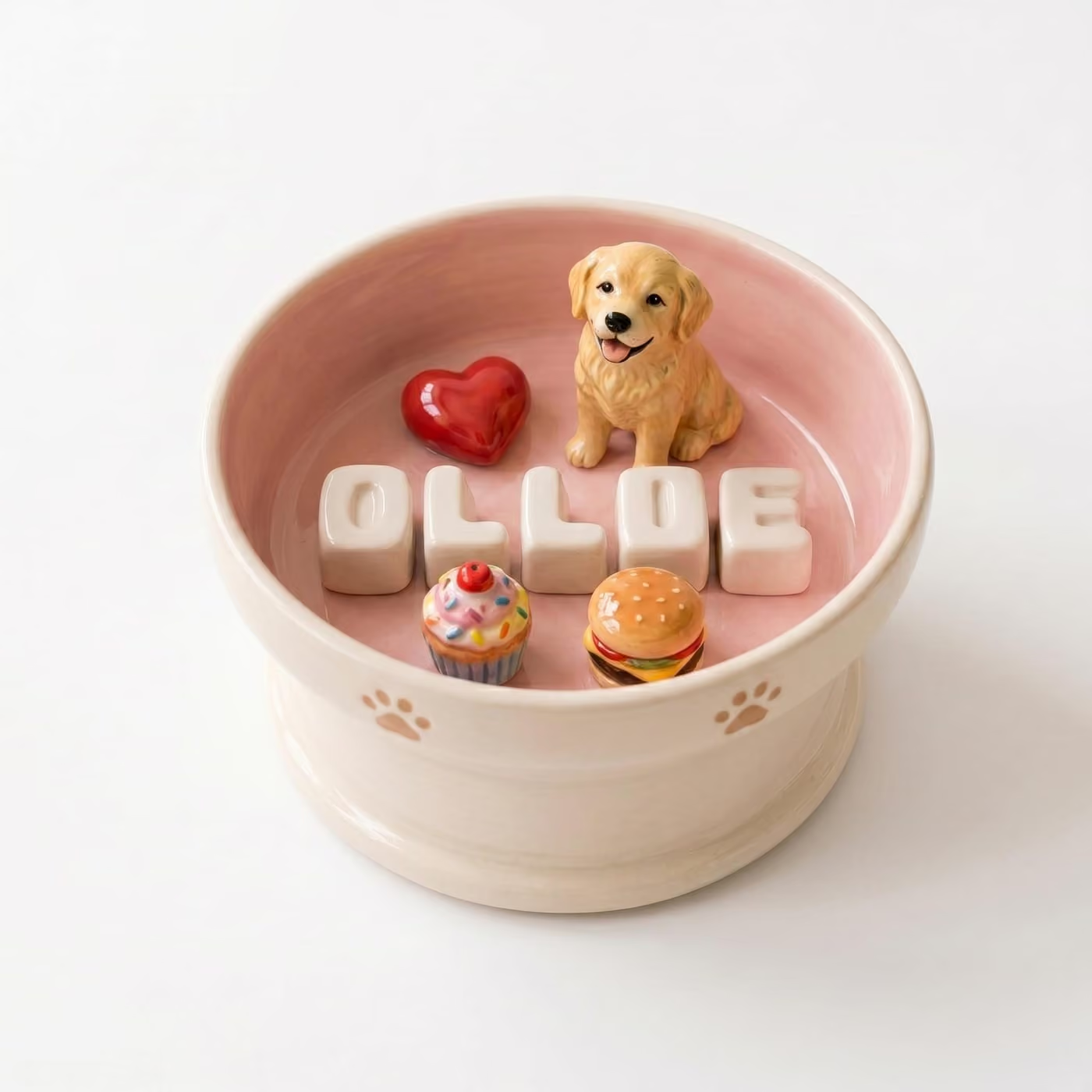
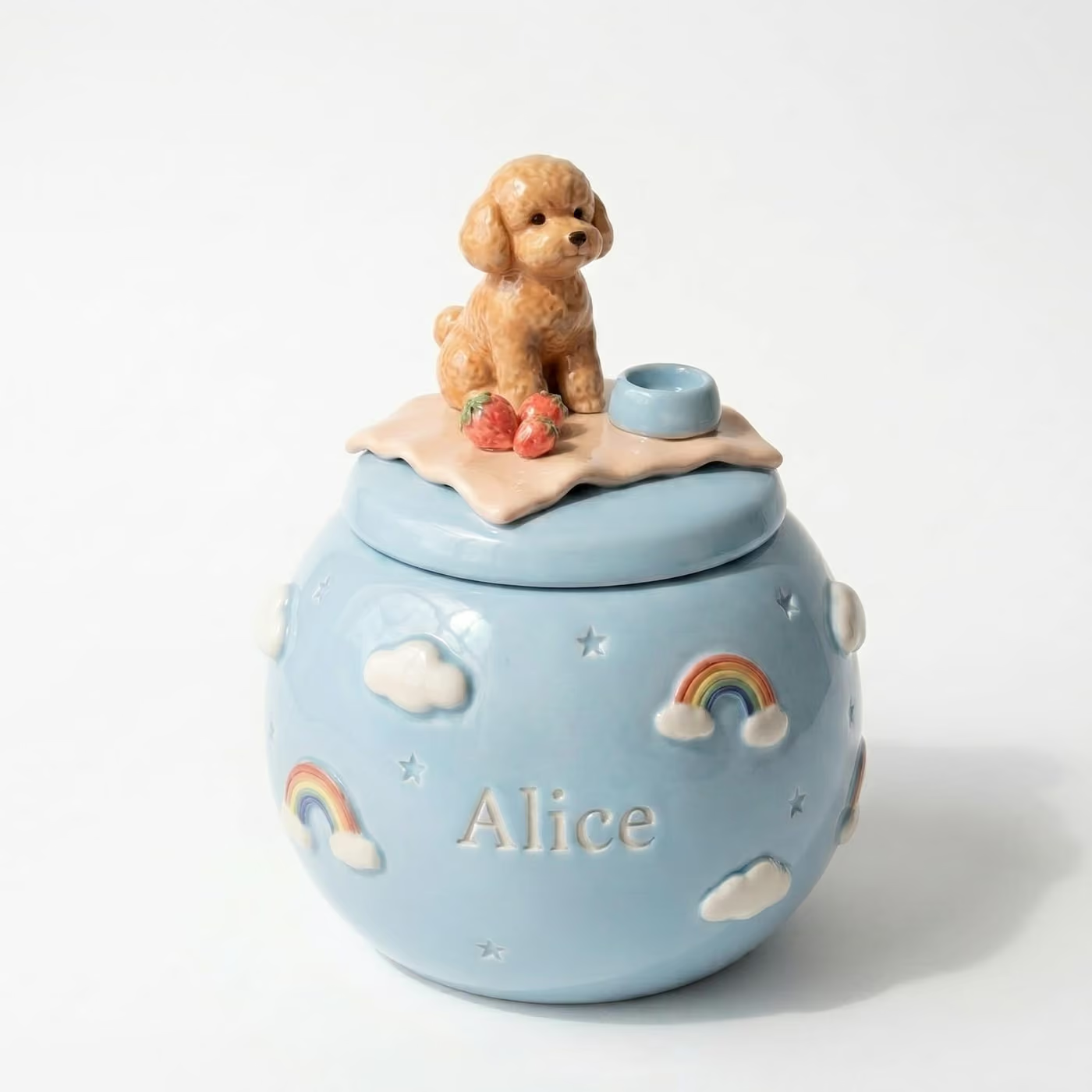
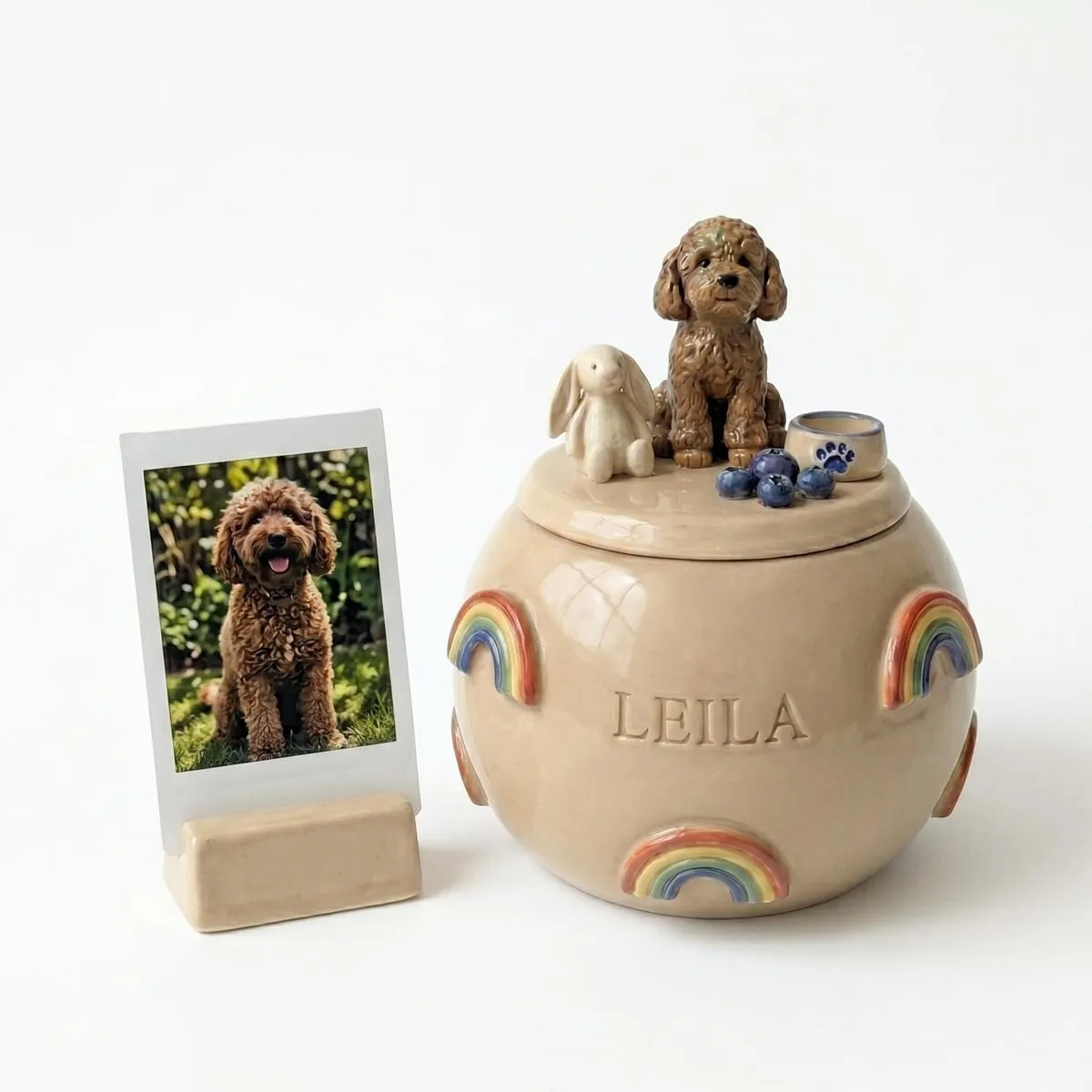
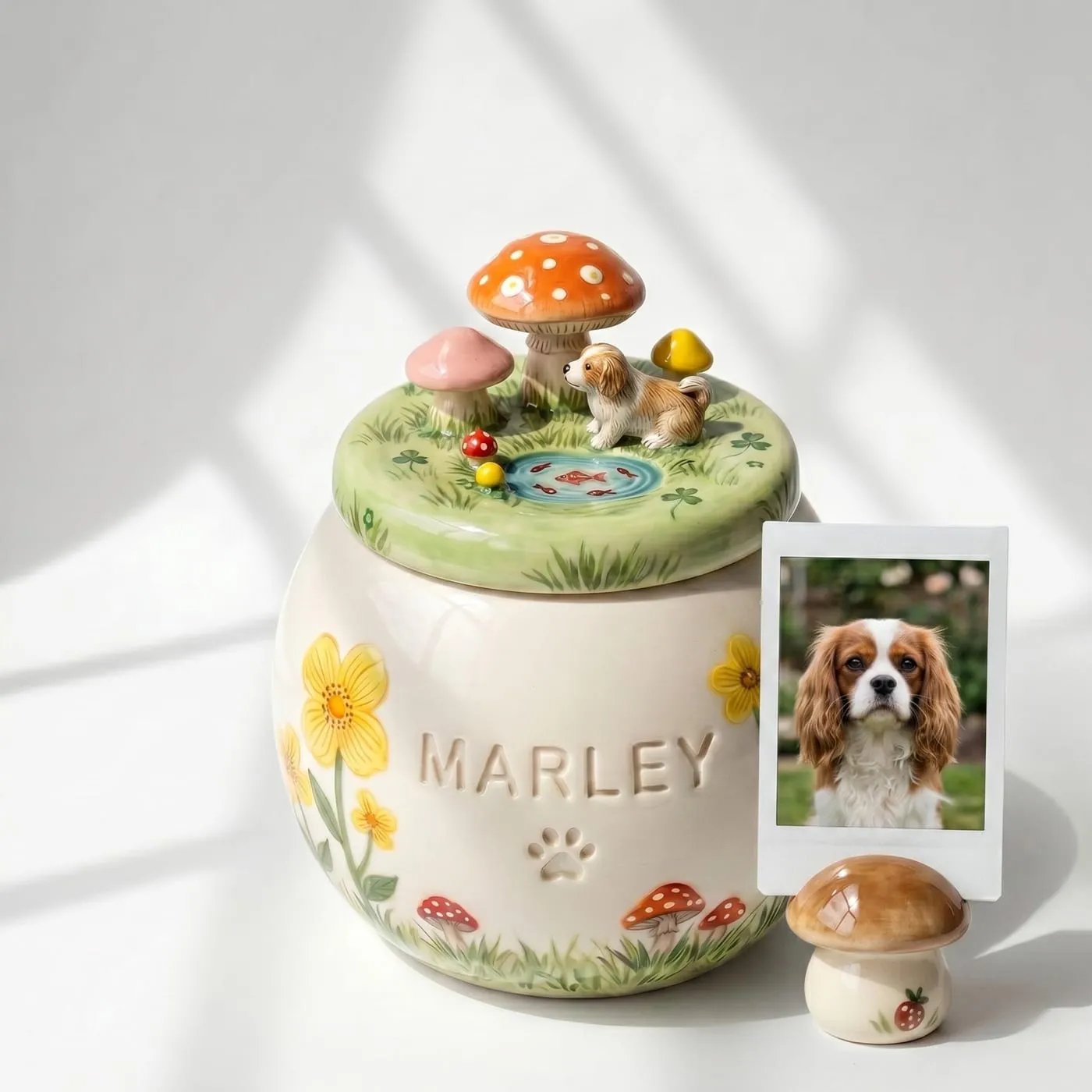
Part of what makes this kind of grief so heavy is that there is nowhere to put it. Human deaths come with rituals that carry some of the weight: a service, a date people remember, somewhere to go. A pet’s death usually comes with none of them, which is precisely the gap Doka described. A memorial is one of the few rituals left entirely in your own hands. It needs nobody else’s agreement, and it does not have to be large. Pepple Studio makes ceramic memorials, so we have an obvious interest in saying so, but the point holds without buying anything at all. Choosing a spot at home covers the practical side, and a memorial when there are no ashes covers what still works if nothing came home.

A small urn with the dog asleep on a crescent moon. The image is a rendering of this design, not a picture of a real commission.
Where can you get support for pet grief?
Support built specifically for pet grief does exist, and some of it begins before a death rather than after. In the UK, Blue Cross Pet Loss Support is free and confidential by phone, email or webchat, and it is open to anyone affected by the loss or the expected loss of a pet; its volunteers have lost pets themselves and are trained, though they are not counsellors. In the US, Cornell University’s Pet Loss Support Hotline is staffed by veterinary students trained by professional grief counsellors, and Cornell is clear that it is not a mental health line. So if grief has taken over your sleep, your appetite or your work for a long stretch, your doctor is the right person to see. Dates can bring it all back, and the first anniversary has its own shape. Pepple Studio is a ceramic studio rather than a counselling service, and the people above are better placed to help than we are.