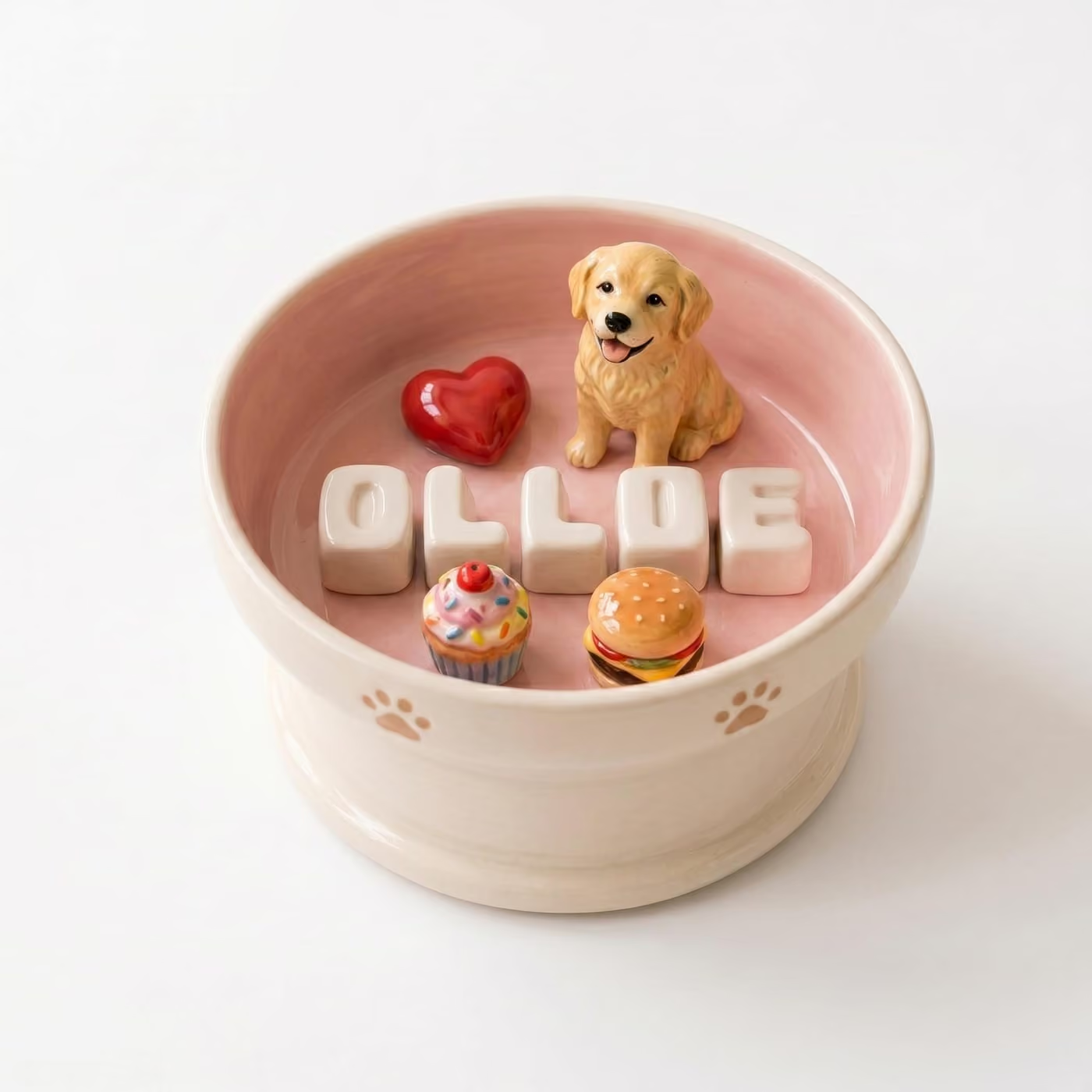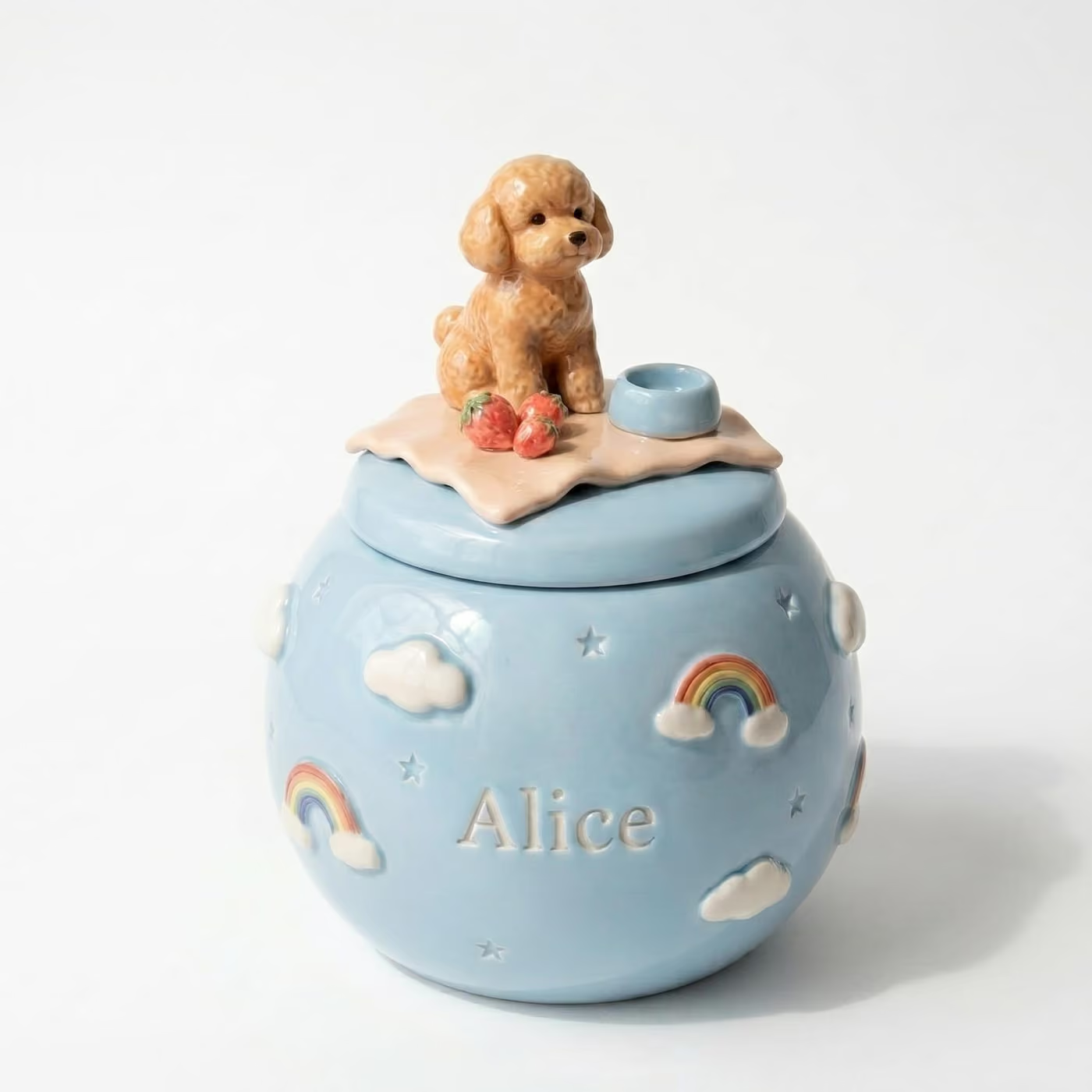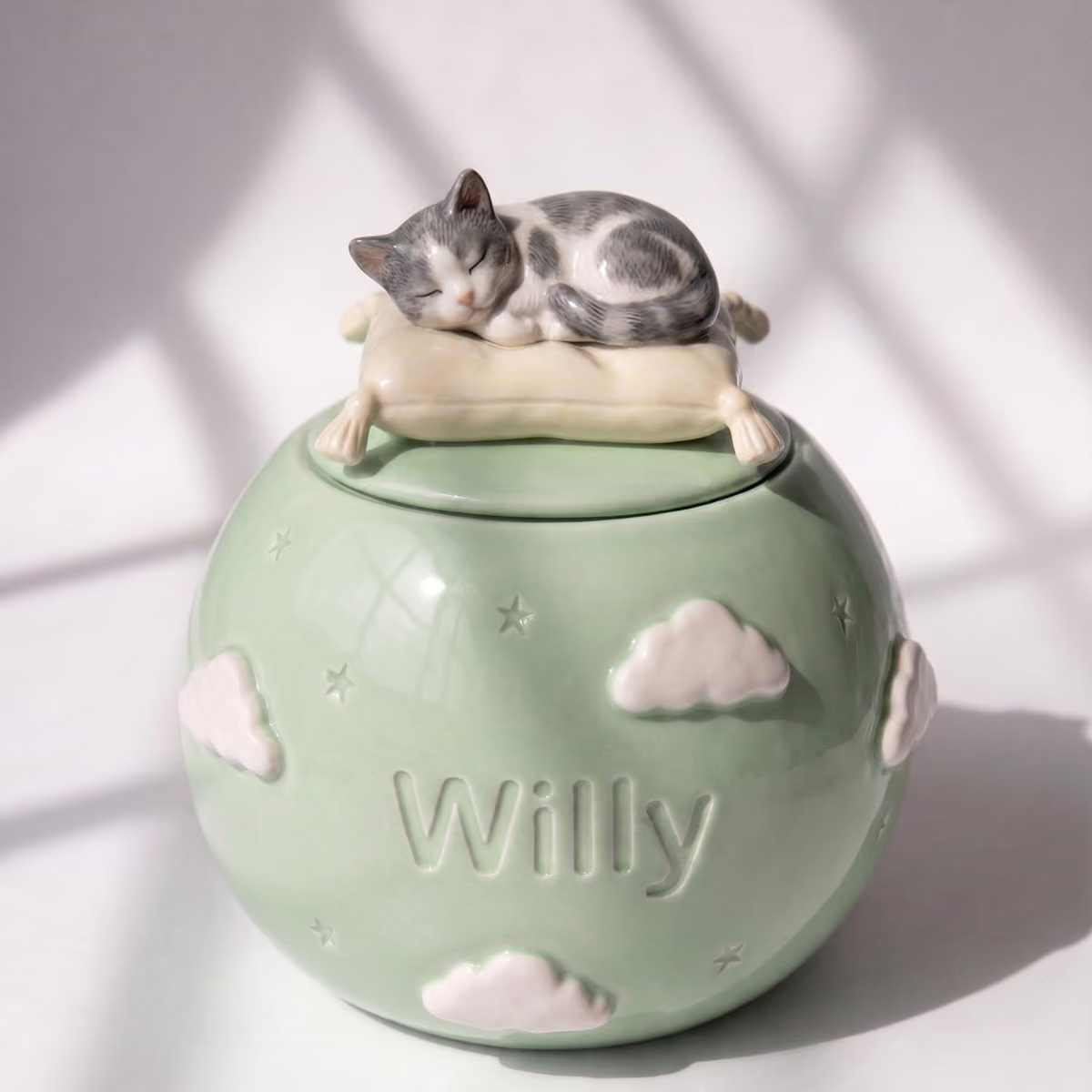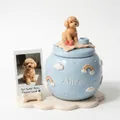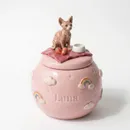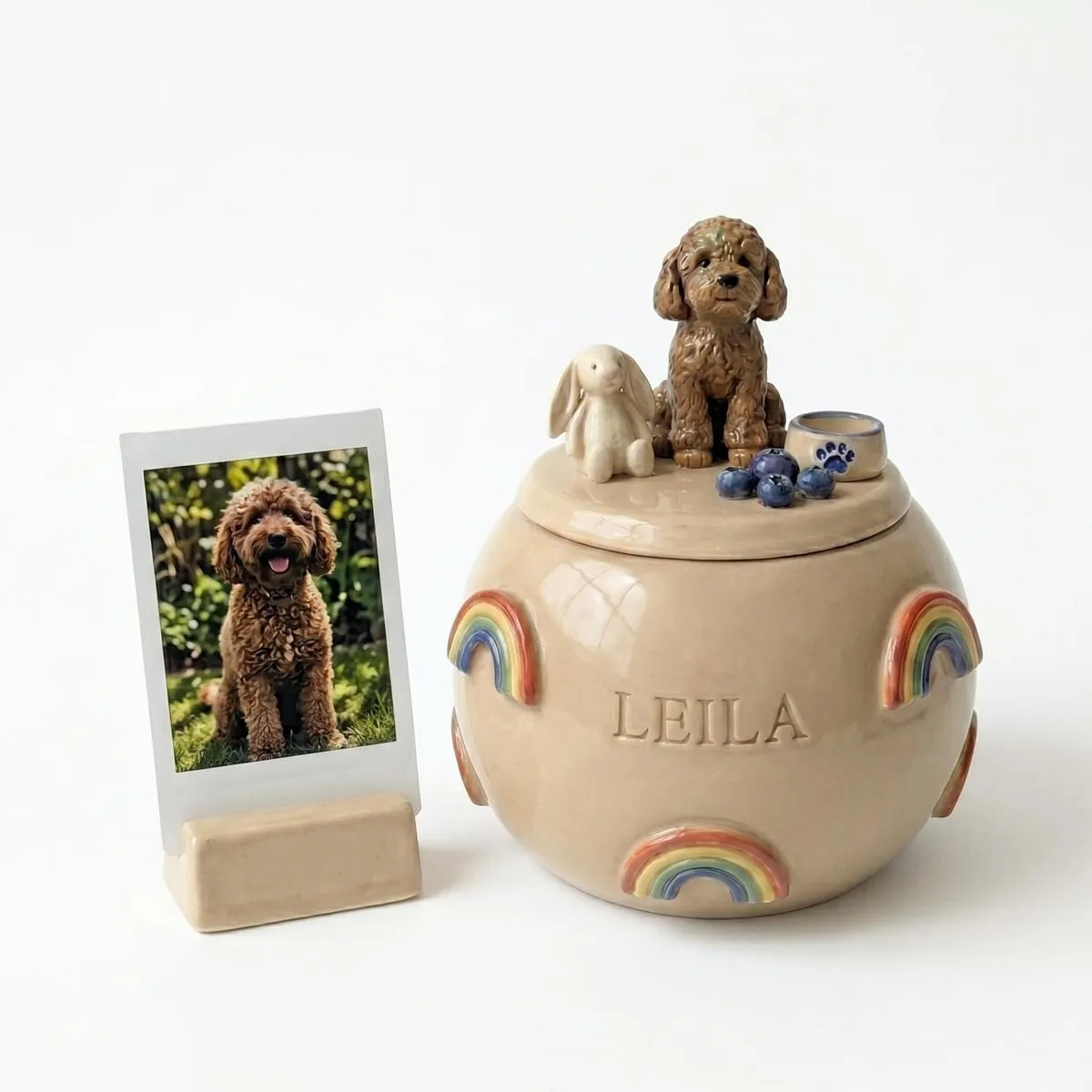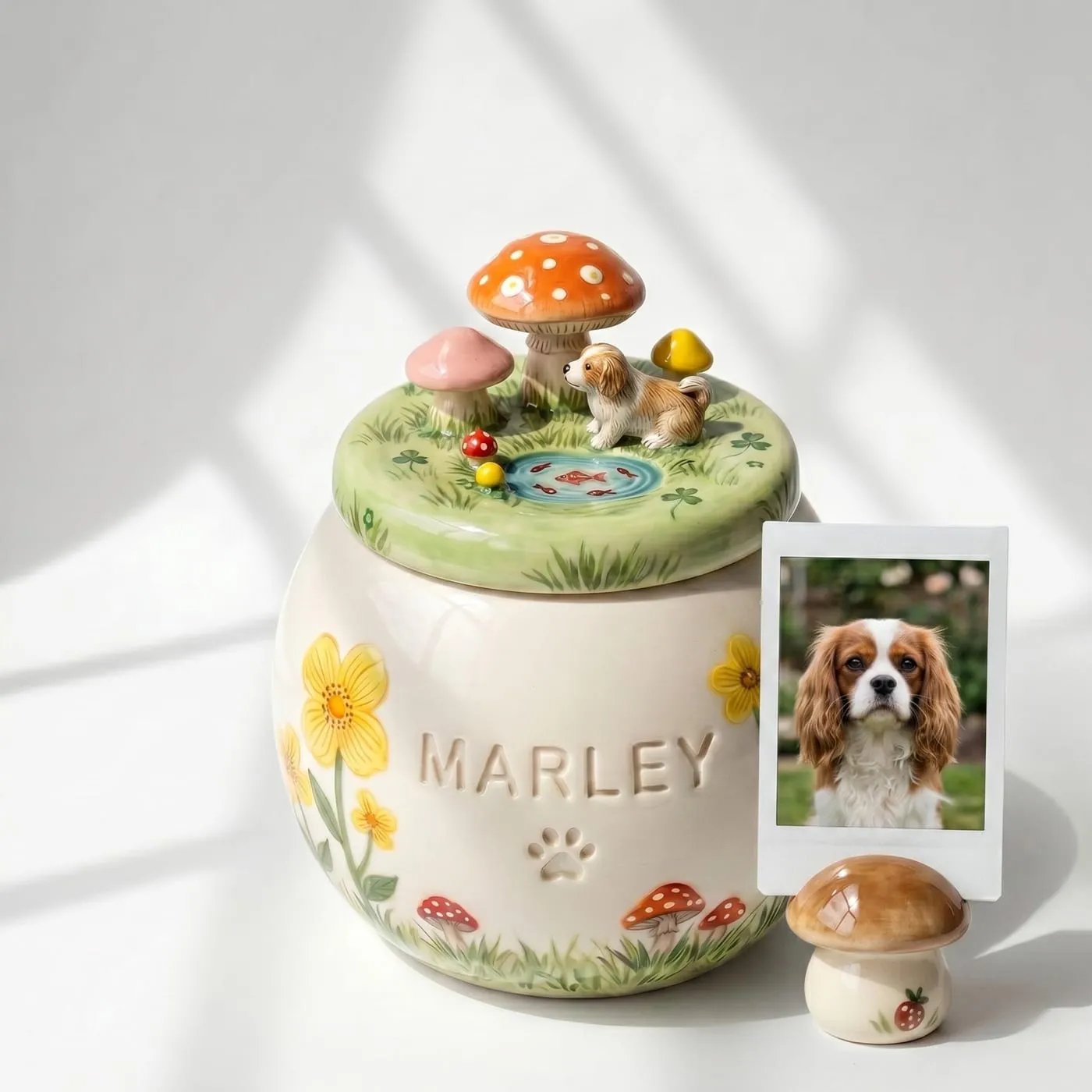
Cat Urns vs Dog Urns: Does It Matter?
There is no structural difference, only size and proportion. Why cat urns are almost always size S, and where the real distinction actually lies.
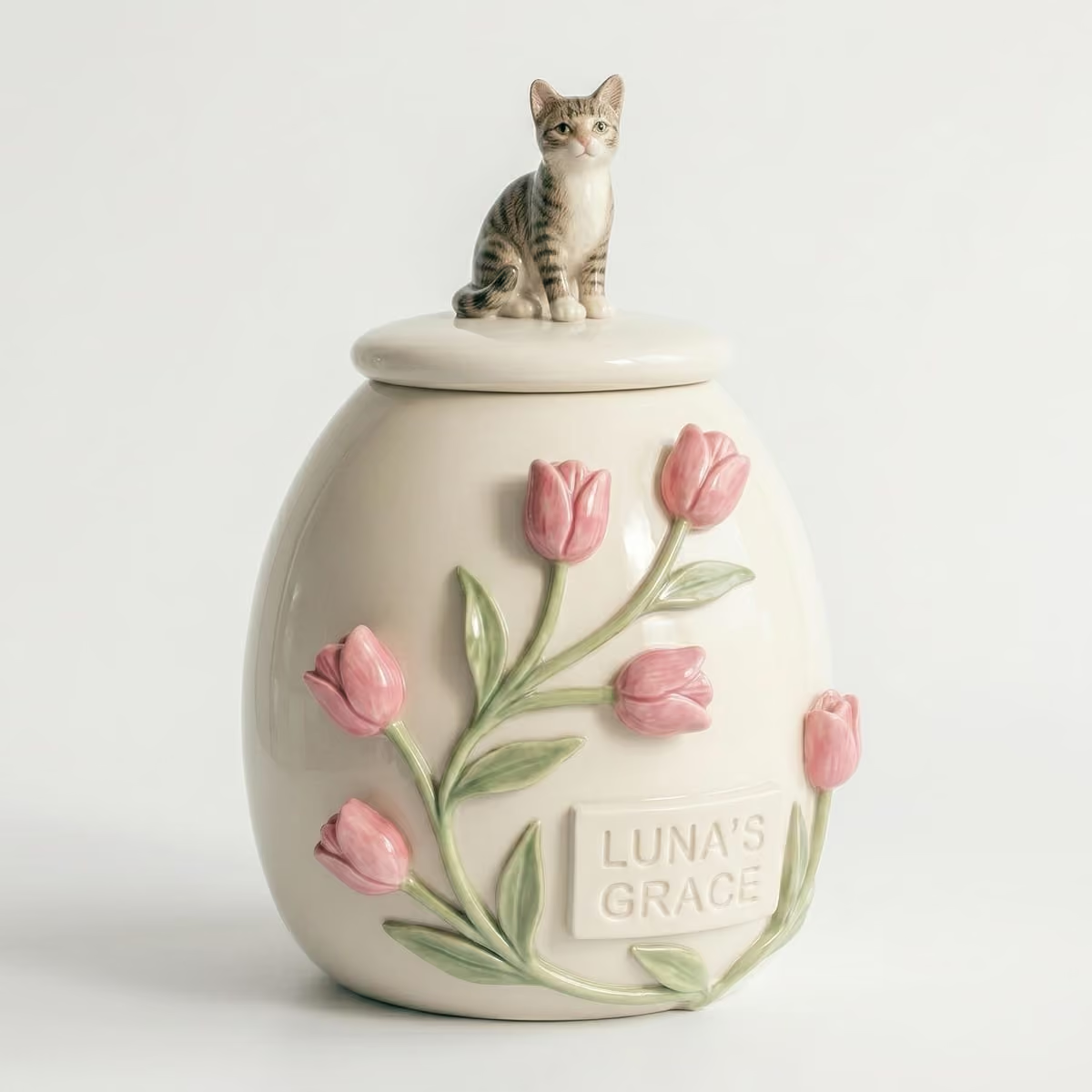
No, there is no structural difference. An urn is a sealed vessel; it does not know what is inside it. Anything sold specifically as a “cat urn” differs from a “dog urn” in exactly two ways: size and decoration.
That is worth knowing before you pay a premium for the label.
Size is the only thing that really matters
Urn capacity is chosen by body weight, not species. The convention is one cubic inch per pound of living weight.
| Typical weight | Size | |
|---|---|---|
| Domestic cat | 3.5–6 kg | S |
| Large male cat (Maine Coon, Ragdoll) | 6–9 kg | S |
| Rabbit, guinea pig | 1–4 kg | S |
| Small dog | up to 8.5 kg | S |
| Medium dog | 8.5–17 kg | M |
| Large dog | 17–34 kg | L |
| Larger than that | over 34 kg | ask us first |
Practically: size S covers essentially every domestic cat, including the big ones. Where dogs need three sizes, cats need one.
If a maker’s “cat urn” is simply their smallest urn with a cat on the lid, that is not a criticism — it is the correct engineering answer.
Our full chart, with more breed examples, is on the size guide.
Where the real difference is
Not in the vessel. In the figurine, if the piece has one.
Cats are sculpted in fewer, longer curves than dogs. The line from ear tip down the back to the tail should be continuous; break it into segments and the figurine looks stiff in a way that is hard to fix afterwards.
Dogs are more variable in silhouette — the difference between a Dachshund and a Great Dane is far larger than between any two domestic cats. That variability is why dog figurines have breed-specific difficulties (ears that must stand, tails that must not touch the body) and cat figurines mostly do not.
Cats move the difficulty to the surface. A tabby is defined by its markings, and no two are marked the same. Painting a generic tabby coat produces a cat that is recognisably a cat and obviously not yours. We paint the pattern from your photographs. More on the tabby page, and on why breeds differ.
Decoration is a marketing distinction
Paw prints, whiskers, fish motifs, mice — none of it changes the object’s function, and none of it is required.
Plenty of cat owners choose designs with no species reference at all. Our cottagecore pieces are popular precisely because they read as pottery rather than as a memorial, and that has nothing to do with whether the animal had fur or feathers.
Choose the design you want to look at. That is the whole criterion.
What about multiple pets in one urn?
Common with cats, who often come in pairs and often die within a year of each other.
Add the weights and size against the total: two 5 kg cats need capacity for 10 kg, which is still size S at the top of its range, or M for comfort.
Tell us at the point of ordering, because the lid composition has to be planned for two figurines rather than one. Retrofitting a second animal onto a finished piece is not possible.
Practical differences that do exist
Two genuine ones, both small:
Cats are often indoor animals, so the urn frequently ends up somewhere more visible — a bookshelf in a living room rather than a study. Worth factoring into how much you want it to announce itself.
Cat owners more often keep a portion rather than everything. Size S already suits that, and our smaller keepsakes suit it better.
We make ceramic urns for cats, dogs, rabbits, guinea pigs and a few animals that were none of those. The figurine is sculpted from your own photographs either way — send one and ask.