How to Choose a Pet Crematorium
The questions that separate providers: what private actually means, whether you can witness, how they identify remains, and what the vet route costs you.
Most people never choose one. The vet asks whether you want cremation, you say yes, and a provider you never selected handles it.
That is often fine. But it is worth knowing what you are agreeing to, because standards vary more than the price suggests, and the decision is not reversible.
The six questions worth asking
1. “When you say private, do you mean one animal in the chamber?”
The important one. Terminology is not standardised:
- Communal / group — several animals together, no ashes returned
- Partitioned / semi-private — several animals in one chamber, separated by physical dividers, ashes returned
- Private / individual — your animal alone
Partitioned is where confusion lives. It is often sold using language that sounds private, and some ash mixing is possible depending on how the dividers work. If ashes matter to you, ask the literal question: is my pet the only animal in the chamber?
2. “Can I witness the cremation?”
Many crematoria allow it, at no charge, and do not advertise it.
Whether you want to is personal. But the answer tells you something either way: a provider comfortable with people watching is a provider confident in its process.
For anyone carrying doubt about whether the ashes they receive are really their animal — a very common worry, rarely said out loud — witnessing settles it permanently.
3. “How do you identify remains through the process?”
Good providers have a specific answer: a numbered metal tag that travels with the animal into the chamber and comes back with the ashes, logged at each stage.
A vague answer is a genuine warning sign. This is a solved problem and the solution is cheap.
4. “How long, and where is my pet in the meantime?”
Expect 1 to 3 weeks if the vet arranged it, faster direct. The chamber time itself is only 45 minutes to 3 hours — the rest is scheduling. More detail in how long cremation takes.
Refrigerated storage while waiting is standard and correct. Ask anyway; you want a provider that answers plainly rather than one that treats the question as morbid.
5. “What is included, and what is extra?”
Base price usually covers cremation and a plain plastic or cardboard container. Common additions: collection from the vet or home, out-of-hours handling, urn, paw print, fur clipping, return delivery, weight banding above a threshold.
None of that is dishonest, but it is often not mentioned until the invoice. Full ranges in how much pet cremation costs.
6. “Can I come to you directly?”
Usually yes, and it usually removes 3–7 days of transport plus the vet’s handling margin.
The vet route exists because it is easy at a moment when nothing is easy, and there is no shame in taking it. But it is a choice, not the only path.
What to look for beyond the answers
A physical address you can visit. Some operators are brokers who collect and subcontract. Not inherently wrong, but you should know who is actually doing it.
Willingness to be specific. The pattern that matters is not any single answer — it is whether they answer directly or deflect into reassuring language.
Reviews that mention the ashes arriving as expected, in the right timeframe, with paperwork. That is the outcome you are buying.
Things you can ask for that are usually free
- The certificate of cremation and the weight record — the weight record is what tells you which urn size you need
- A paw print, sometimes free, more often $20–50, and impossible after the fact
- Fur clipping, same
- To supply your own urn for the ashes to be placed into
If your pet has already been cremated
Then this is retrospective, and it is worth being gentle with yourself about it. Almost nobody researches crematoria in advance; you make the decision on the worst day of the year with about ninety seconds of thought.
The ashes you have are almost certainly your animal. The identification systems above are close to universal even at providers that never mentioned them.
Sizing an urn from what you were given
The paperwork usually states volume. If not, weigh the sealed bag: cremated remains run roughly 1 lb per 500 ml.
Send us either number and we will tell you which size fits — see the size guide. And there is no rush: ashes keep indefinitely.
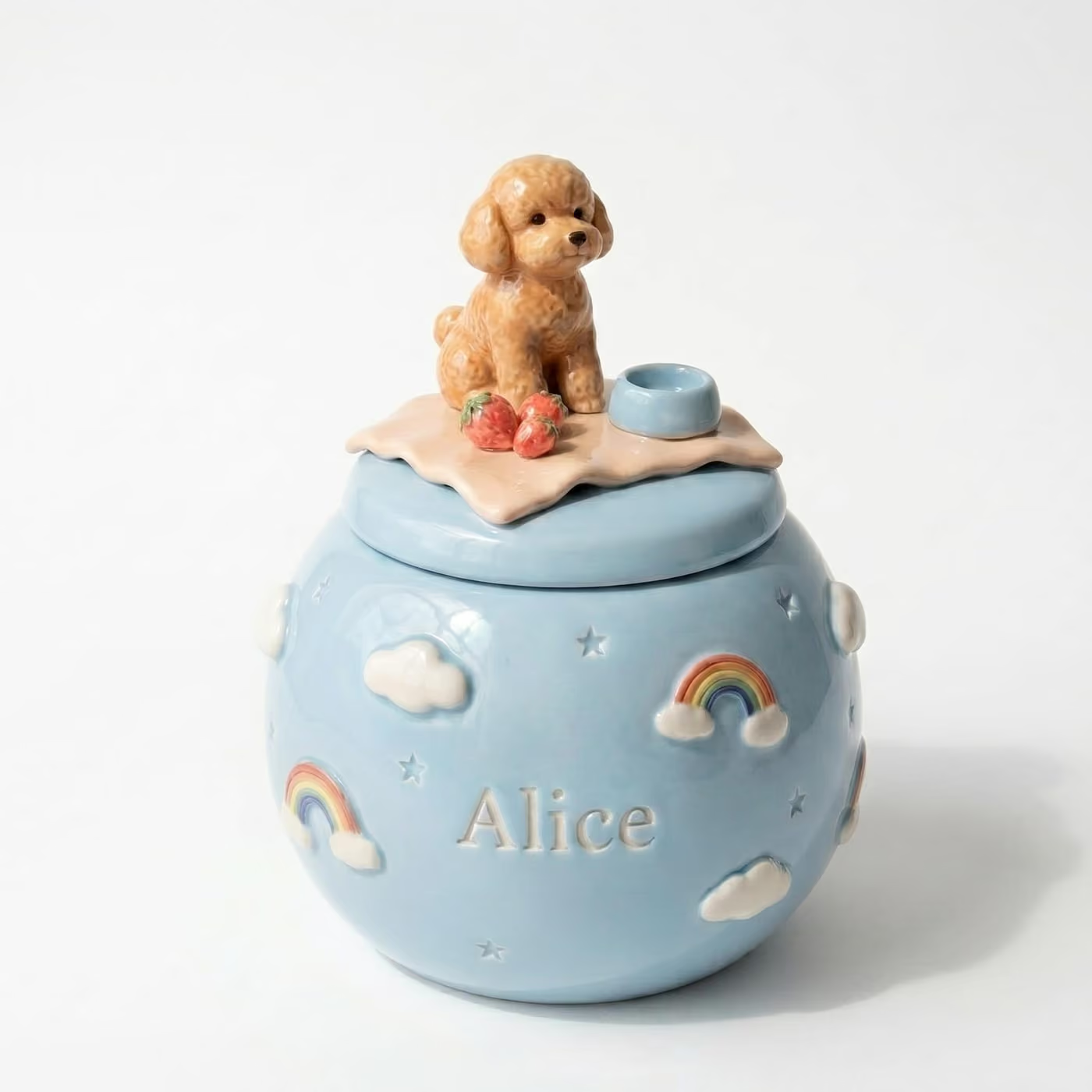
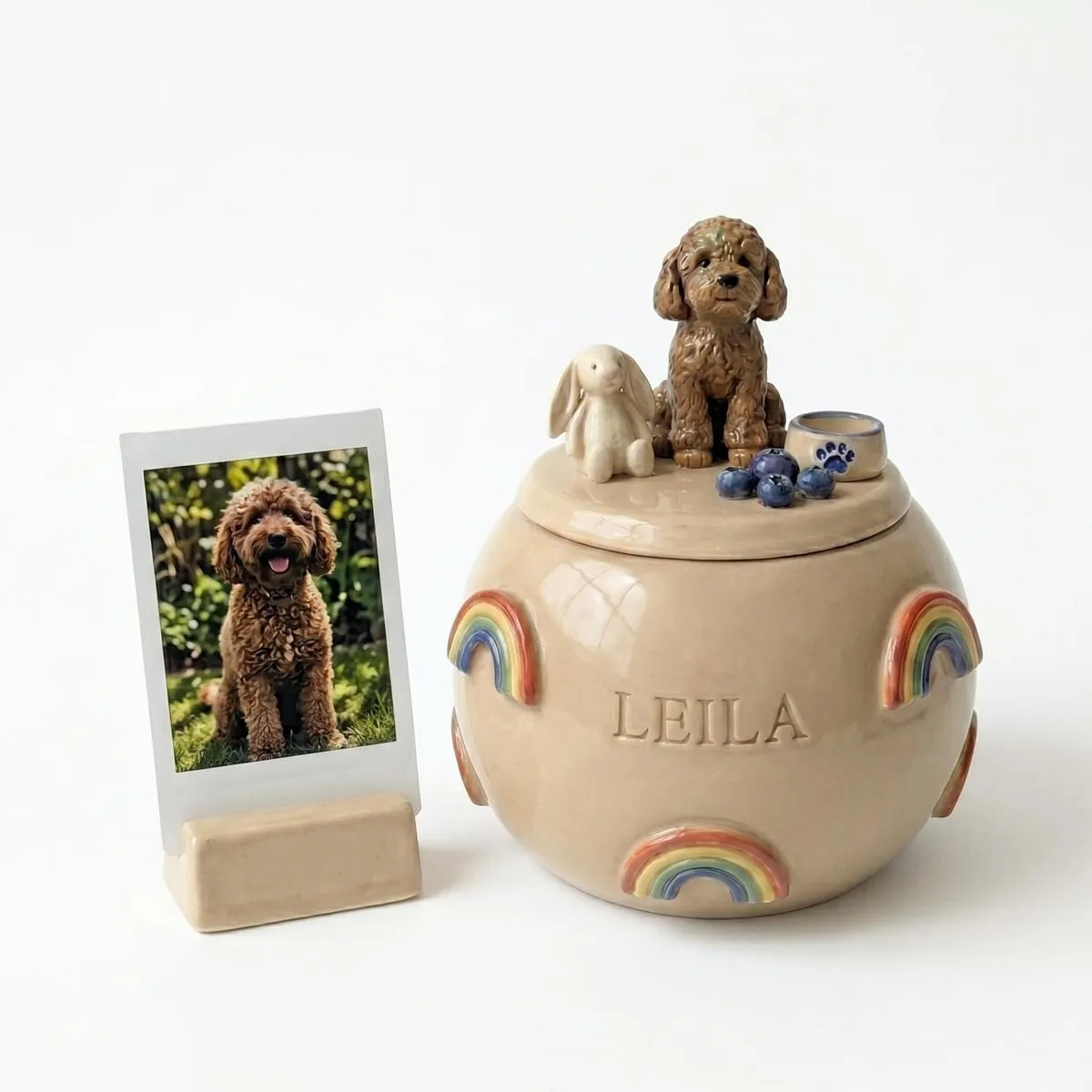
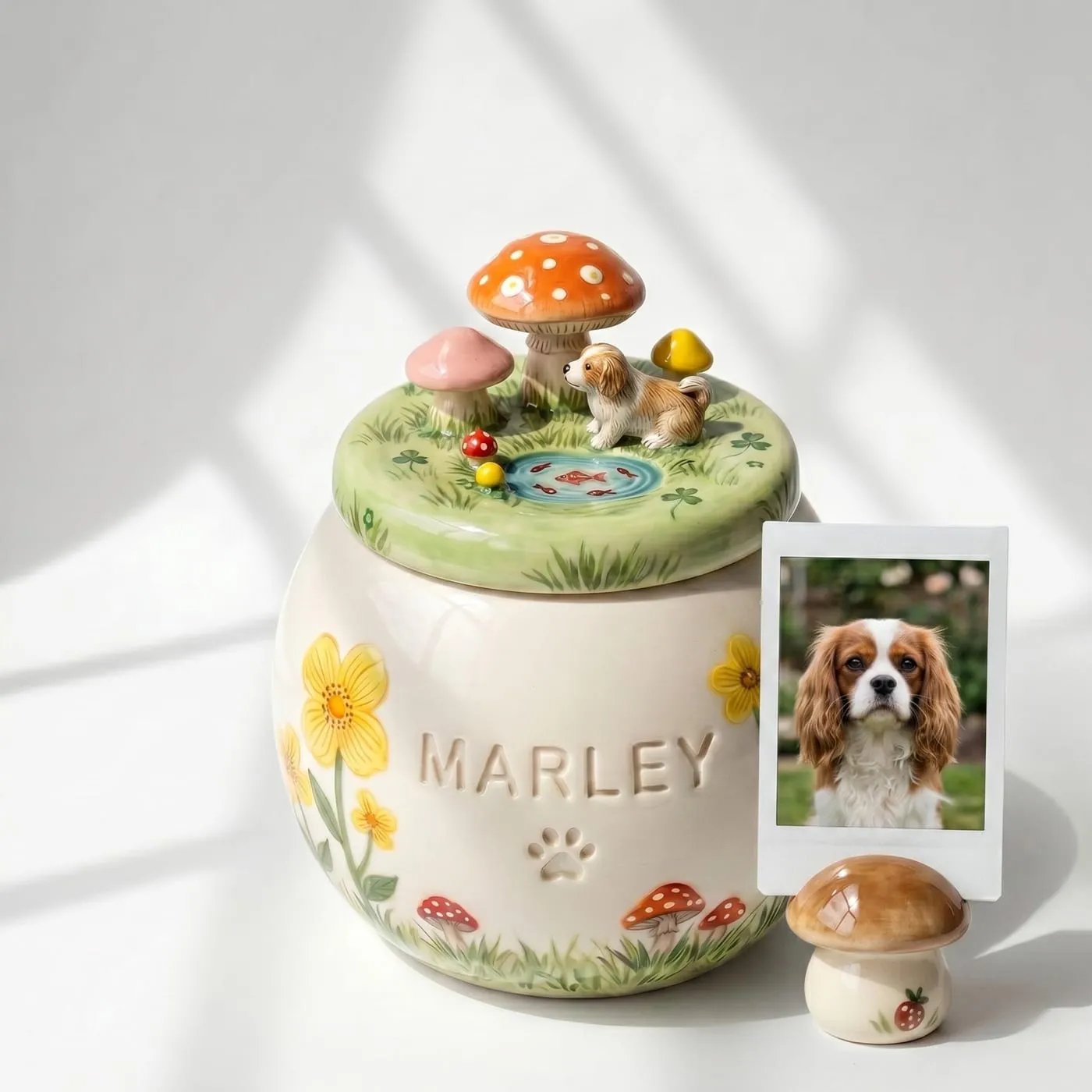
We make handmade ceramic pet urns but we do not arrange cremation and have no affiliation with any crematorium. The advice above is what we would want a friend to ask.